There is a stat in Metaview’s 2026 AI & Hiring Alignment Report that recruiters and hiring managers do not love hearing. 90% of recruiting leaders and hiring managers rate their working relationship as good or excellent. The same survey, next page: 58% actively wish they could work around their counterpart. Same people. Same week. One question apart.
That is not a contradiction inside the data. It is a contradiction inside the relationship. The surface read is polite. The lived read is exhausted. And the gap between them is where most hiring slowdowns, most mis-hires, and most quarterly hiring misses actually live. The 2026 report puts a number on the cost: teams with poor partnerships are 3x more likely to miss their business goals, not just their hiring goals.
This is a guide to fixing the lived read, not just the surface one. According to Metaview’s 2026 AI & Hiring Alignment Report - surveying 505 recruiting leaders and hiring managers across North America and EMEA at companies with 200+ employees, fielded with Cint - the recruiter and hiring manager relationship is the most under-measured input to hiring outcomes the industry has. We are going to read the data, identify the four fixes that actually move it, and lay out a 30-day audit a TA leader can run starting next week.
The 90% vs 58% problem.
When two adjacent stats from the same survey contradict each other, the truth is usually in the contradiction. 90% rating the relationship as good or excellent is a measure of professional courtesy: the answer recruiting leaders and hiring managers give when asked in public. 58% wishing they could work around their counterpart is a measure of friction: the answer they give when the survey lets them be honest about an average Tuesday.
The professional courtesy is real. So is the friction. They coexist because the relationship runs without enough shared evidence to mediate the disagreements that happen anyway. Recruiters and hiring managers disagree all the time. They disagree about whether a candidate is too senior or not senior enough. About whether the bar drifted or stayed put. About whether the bottleneck is sourcing, the panel, or compensation. With shared evidence, the disagreements are productive: they end in a decision. Without it, they end in frustration, and the frustration accumulates.
When you cut the data by outcome, the gap stops being a curiosity and becomes a leading indicator. Teams with excellent partnerships exceed their business goals 79% of the time. Teams with fair-or-poor partnerships exceed their goals 36% of the time. That is a 43 percentage point swing in business performance, predicted by a relationship that the same teams call “good or excellent” on the surface. The number worth tracking is not the surface rating. It is the four below.
Where the relationship actually breaks.
Almost no recruiter and hiring manager fail because they dislike each other. They fail because the system around them is missing the four things that would let two people with different incentives stay aligned through a 6-week search. Watch for these four breakdowns in your own searches. Almost every misaligned team is running three of them at once.
1. The brief that was never written down.
The hiring manager has a strong gut sense of what good looks like. The recruiter writes a one-paragraph job spec from a 20-minute intake call. By interview five, the bar has drifted twice, in different directions, for different reasons. The panel is calibrating against three versions of the role, and the offer call resolves the drift by whoever has the loudest read. If your intake notes do not contain three explicit must-haves, two explicit trade-offs, and one explicit deal-breaker, this is the breakdown.
2. Feedback that lives in the verb “feel”.
Feedback like “didn’t feel senior enough” or “didn’t click” is honest. It is also undebuggable. The recruiter cannot adjust sourcing against “didn’t click,” and the panel cannot recalibrate against “not senior enough.” Vague feedback erodes trust faster than any other failure mode in the relationship, because both sides can tell something is off and neither side has a handle to fix it.
3. Information that lives between people, not in a system.
Key context for the search gets shared in a Slack thread, then in a hallway, then in a recruiter’s screen, then in a hiring manager’s 1:1 with their VP. Each conversation refines the picture. None of the refinements get captured. By round 4, the hiring manager is calibrating against version six of the role and the recruiter is sourcing against version two. They both think they are aligned because they both attended the kickoff. The kickoff was 5 weeks ago.
4. Incentives that are never made explicit.
Recruiters are measured on speed, pipeline conversion, and candidate experience. Hiring managers are measured on team performance, ramp, and 1-year tenure of the people they pick. Both incentive sets are right. They are also in tension on every single search. Teams that surface the tension explicitly in intake calibrate around it. Teams that pretend the tension does not exist let it adjudicate every later disagreement, badly.
On 10x Recruiting #20, Siadhal Magos and Metaview’s Nolan Church walk through the same pattern from the operator’s seat: better recruiter and hiring manager relationships come from coordinated AI, not solo copilots.
10x Recruiting #20: Siadhal and Nolan on better recruiter-hiring manager relationships and the operating model that makes it work at scale.
Alignment is infrastructure, not a kickoff.
The real competitive advantage is effective AI adoption vs. everyone else. The teams doing this well are building alignment at every stage. AI earns its keep when it both strips out the mechanical work and surfaces the signal that helps recruiters close. Alignment isn’t just a kickoff, it’s infrastructure.”

The most common operating model treats alignment like a meeting. Run a great kickoff. Sync weekly. Run a great debrief. The model works for 1 search at a time and breaks at 20. Alignment as a meeting fails the same way alignment as a relationship fails: it depends on memory, attention, and personality. None of those scale through a hiring quarter.
Alignment as infrastructure is different. It runs continuously, underneath every search, captured automatically, with the same shape every time. It does not depend on the recruiter remembering to write the brief or the hiring manager remembering to read the recap. It produces the same shared signal whether the search is 3 weeks or 13.
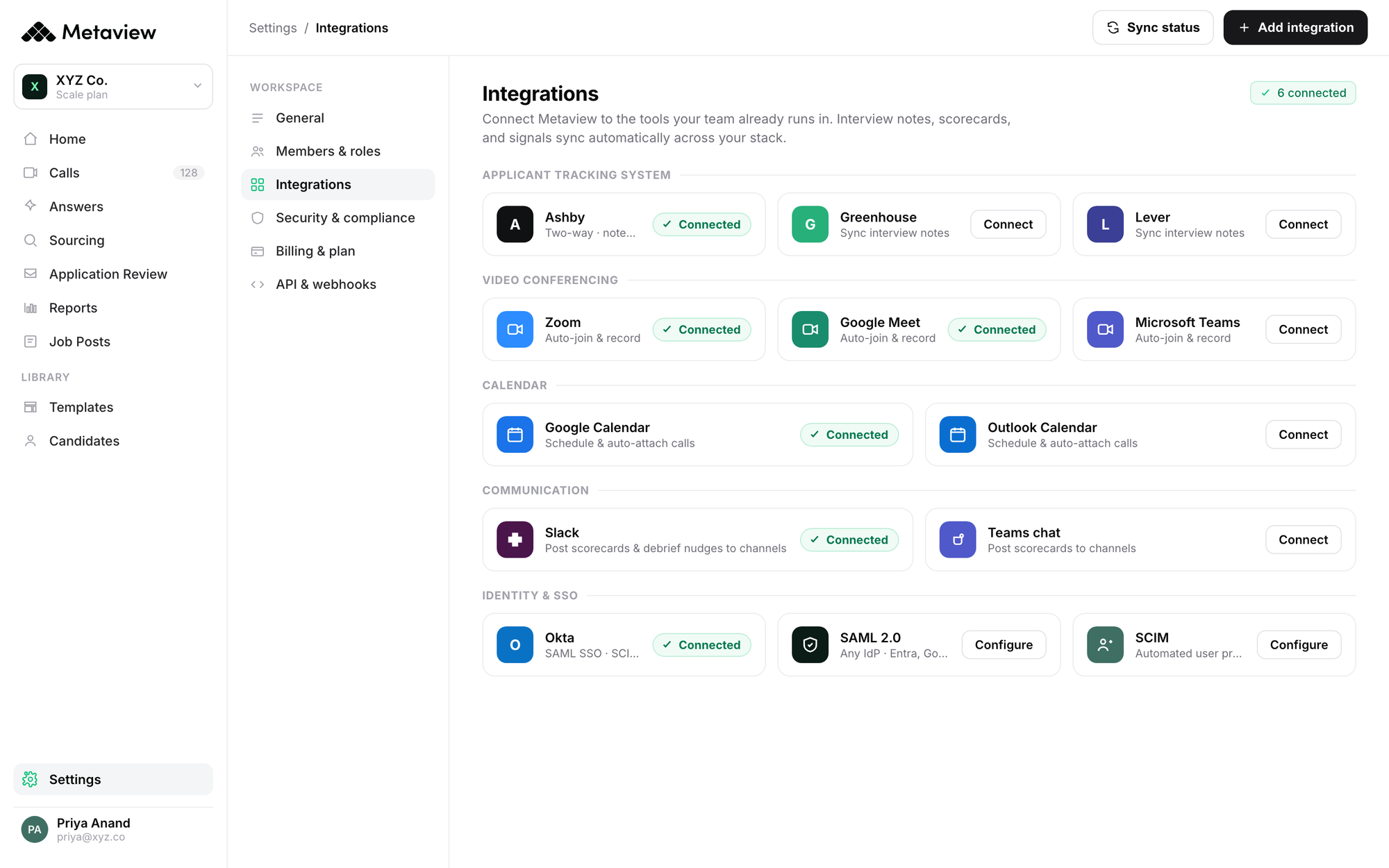
The infrastructure has one feature the meetings-and-syncs model does not: it survives the people. When the recruiter on the search rolls off, the captured signal stays. When a new hiring manager takes over a search mid-process, they read the same record everyone else read. The relationship is not living in the heads of the two specific humans on the current search. It is living in the system.
The 4 fixes that close the gap.
These are the fixes that move the relationship metrics in the 2026 report. They are listed in priority order: fix 1 has the highest leverage and the lowest cost. Most teams can ship fix 1 on the next open requisition. The other three follow.
Fix 1: Run intake as the alignment contract.
The intake call is the only meeting in the whole search where the recruiter and hiring manager are talking only about what good looks like, with no candidate in the room to bias the answer. Treat it like the contract for the relationship. Three must-haves, two trade-offs, one deal-breaker, written down, attached to every panel invite, surfaced in every debrief. The next time the team disagrees in round 3, the contract is the referee. Run intake well and most of the downstream misalignment never happens.
Fix 2: Anchor every debrief in captured evidence.
Debriefs without shared captured signal devolve into the strongest opinion in the room. Debriefs with shared captured signal converge on whatever the candidate actually said in the interview. The same panel of humans produces dramatically different decisions depending on whether they are working from notes or from the rubric-graded record. The recruiter stops carrying the burden of corralling four conflicting impressions and starts carrying the lighter burden of facilitating an evidence-based conversation.
How many times have we heard hiring managers say there’s not enough activity? Being able to articulate the process, the role, and the time-in-step closes the absence of communication. Hiring managers conflate activity with progress.”
Fix 3: Shift from feedback collection to feedback shaping.
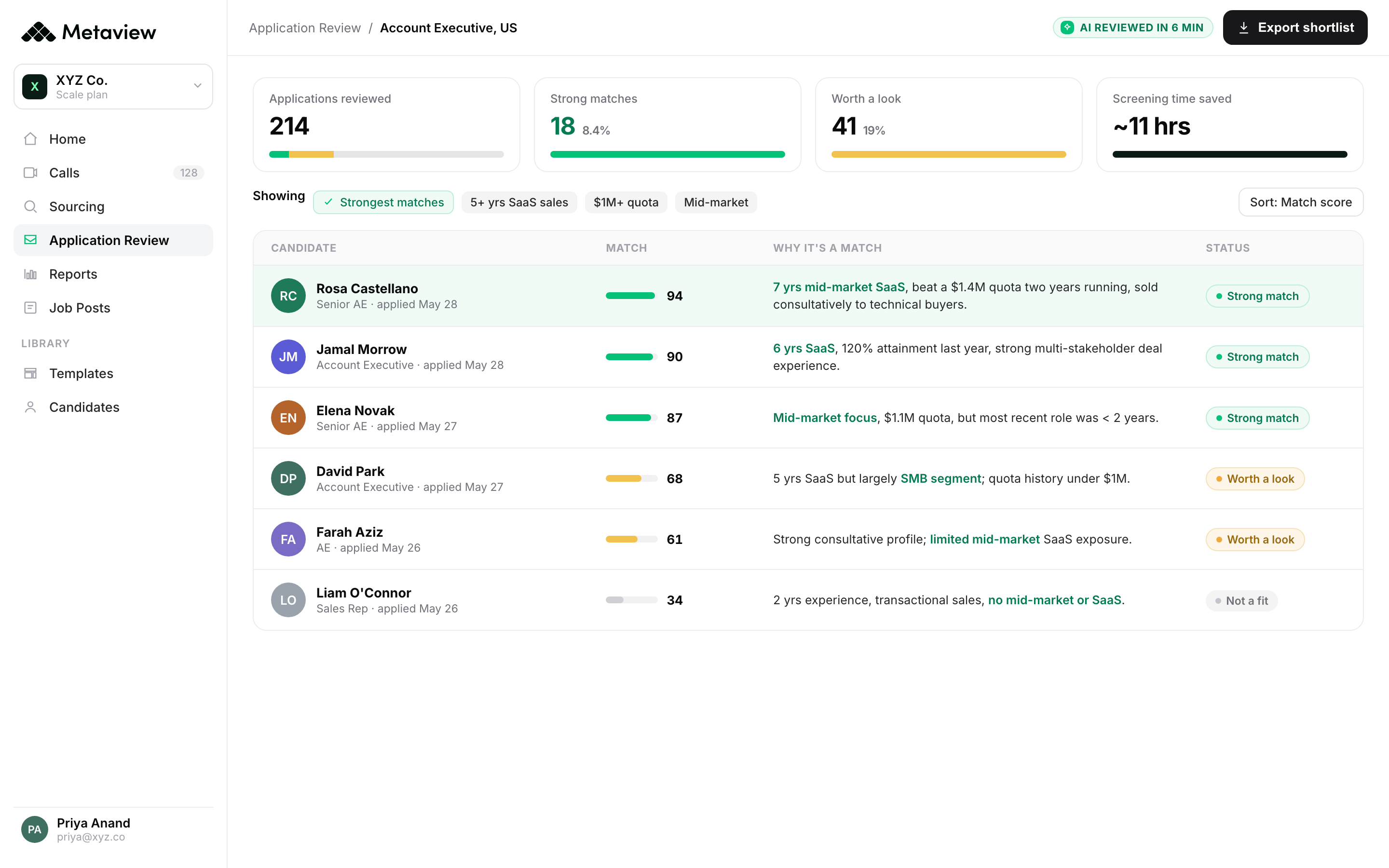
“Didn’t click” is feedback collection. The interviewer felt something, recorded that feeling, and submitted it. Feedback shaping is teaching the interviewer to tie the read to the rubric and to a specific moment in the conversation: “On the cross-functional question at minute 22, the candidate could not name a recent conflict they navigated. That hits trade-off #2 from intake.” The first is a vibe. The second is a debugged conclusion. Good interview rubrics plus capture make the second the default.
Fix 4: Make alignment a weekly read of captured signal, not a weekly sync.
The weekly sync is the meeting most teams add when alignment feels off. It usually makes alignment worse. The 30 minutes get spent reconstructing what happened last week, from memory, from two different angles, with no shared evidence. Replace it with a 15-minute weekly read of the captured signal across the searches. What patterns show up in the rubric grades. Which competencies are getting clean reads, which are not. Where the recruiter view and the hiring manager view diverge. Same length, same cadence, different starting point, much higher signal.
What changes when teams get this right.
On LinkedIn, Metaview’s Co-founder and CEO Siadhal Magos framed the move from solo recruiter to coordinated team as the central shift AI enables in hiring.
 Siadhal Magos
When alignment moves from meeting to infrastructure, three numbers change at once. Teams with excellent partnerships exceed their business goals 79% of the time, against 36% for teams with fair-or-poor partnerships. Teams where AI is core to hiring are 3.8x more likely to rate the cross-functional relationship as excellent. And alignment at search kickoff climbs by 40% when AI is core, because the kickoff is no longer the only place the alignment exists. It is just the place it gets named.
Hiring managers now see our recruiting team as strategic partners rather than people filling roles. When a hire takes longer than expected, everyone understands why, based on the data, which builds trust and sets appropriate expectations.”
The relationship change in Andrea’s description is the cumulative effect of the four fixes running for one quarter. The recruiter stops being “the person filling the role” and becomes the person reading the captured signal across the search and surfacing patterns the hiring manager could not see alone. The conversations get shorter, more grounded, and faster to a decision.
Manual vs Generic AI vs Metaview-augmented.
Three operating models, five dimensions where the relationship lives or dies. The middle column is most common. The right column is what the data in the 2026 report is actually measuring when it shows the 3.8x lift.
| Dimension | Manual | Generic AI copilot | Metaview-augmented |
|---|---|---|---|
| Intake brief | Recruiter writes a paragraph from a 20-minute call. Drift starts in week two. | AI summarizes the call. Summary lives in someone’s inbox. | Intake captured verbatim, structured to must-haves and trade-offs, linked to every panel invite. |
| Panel scorecards | Free-text notes. Each interviewer writes against their own mental rubric. | Auto-summary per interview. No shared rubric, no comparability across rounds. | Same rubric on every scorecard. Same competencies, same definitions, comparable across roles and recruiters. |
| Debrief | Loudest voice in the room. Or the most senior memory of the panel. | AI surfaces a recap. Team still argues about which read was correct. | Conflicting feedback flagged against the captured signal. The team adjudicates against evidence, not impressions. |
| Hiring manager view | Forwarded scorecards and a recruiter recap. One step behind, one round late. | Slack digest from the AI tool. Still requires the hiring manager to switch into a different system. | Same view as the recruiter. Same captured signal, same per-competency grades, in the system the hiring manager already opens for the hire. |
| Cross-search learning | Lives in tenured recruiter memory. Disappears with attrition. | Per-search summaries. No portable signal across the corpus. | Patterns query against the full interview corpus. Calibration improves search over search, role family over role family. |
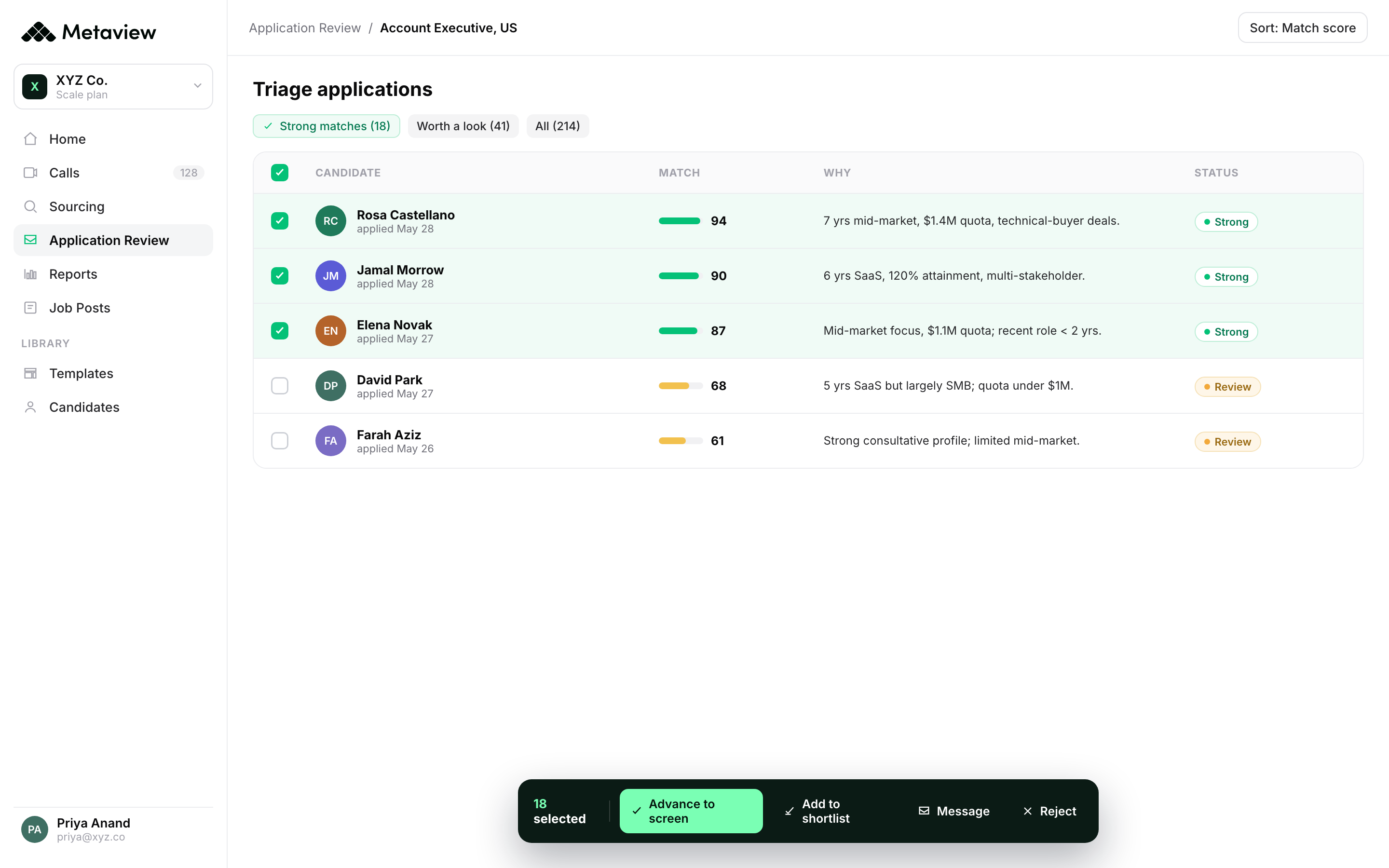
The 30-day alignment audit.
A practical sequence for a TA leader who wants to read the relationship as a system. One month, one role family, one fix shipped per week. The point is not to fix everything. The point is to find the lever that is costing your team the most and ship the fix on the next open requisition.
- Week 1, day 1. Pull the last 6 searches for one role family. For each, write down the must-haves, trade-offs, and deal-breakers. If you cannot find them in writing for the majority of searches, the intake-as-contract discipline is your fix.
- Week 1, day 3. Read the last 10 panel debriefs. Count how many of the decisions referenced captured signal vs how many referenced an interviewer’s memory. If it is more than 70% memory, the debrief evidence layer is your fix.
- Week 1, day 5. Survey 5 hiring managers and 5 recruiters separately with one question: “On the last hire, did your counterpart understand what good looked like?” The disagreement rate is your real alignment number, not the 90% you would get from a generic engagement survey.
- Week 2. Pick the one fix from week 1 with the highest disagreement rate. Run the next intake for the role family with the full discipline: capture the call, structure the brief, attach to every panel invite, surface in the debrief.
- Week 3. Run a 15-minute weekly read with the hiring manager off the captured signal for that one search. Replace the existing weekly sync. Same cadence, different starting point.
- Week 4. Re-survey the same 10 people. The disagreement rate on “did my counterpart understand what good looked like?” should be visibly lower after one search run with the new discipline. If it is not, the lever is one of the other three fixes, not this one.
- End of month. Promote whichever fix moved the disagreement number to the default operating model for that role family. Then start the audit again on the next role family. Alignment as infrastructure compounds search over search; alignment as ceremony does not.
Bring Metaview into your hiring stack.
Live notes, structured scorecards, and ATS sync - set up in under 10 minutes.
Frequently asked.
Why do recruiter and hiring manager relationships break down so often?
The two roles are measured on different outcomes. Recruiters are accountable for the process: pipeline health, speed, candidate experience, source quality. Hiring managers are accountable for the outcome: did the person they picked work out 90 and 365 days in. The relationship breaks when both sides think the goal is the same and find out, role by role, that it is not. The fix is to surface those different incentives explicitly in intake, then anchor every subsequent conversation in the captured evidence both sides agreed on.
How is alignment different from agreement?
Agreement is two people saying the same thing in a meeting. Alignment is two people working from the same structured criteria, the same captured evidence, and the same view of the candidate pool over the full search. A team can agree in kickoff and still be misaligned by round 3. The 2026 AI & Hiring Alignment Report calls this the “surface vs reality” gap: 90% of teams rate the relationship as good or excellent, but 58% wish they could work around their counterpart.
What is the single fastest fix?
Capture the intake call and link the captured brief to every panel invite. Most misalignment is calibration drift, and most calibration drift starts because the must-haves the team agreed in intake live in one recruiter’s notes and in the hiring manager’s head. Same brief, attached to every scorecard, surfaced in every debrief, closes 60-70% of the drift in the first month.
Can AI tools actually close the trust gap, or do they widen it?
Both, depending on how they are deployed. Individual AI copilots that make each person faster in isolation tend to widen the gap. Each user gets faster on their own task and the team works further apart. AI that lives at the team level (shared capture, shared rubric, shared signal) closes the gap. The 2026 report data is clear: 55% of AI-core teams rate the relationship as excellent vs 14% of teams without AI, a 3.8x lift. The architecture matters more than the model.
How often should recruiters and hiring managers meet?
Less often than most teams think. A strong intake, a captured debrief after each panel, and a 15-minute weekly check on captured signal is usually enough. Most teams running a 30-minute weekly sync are using it to compensate for missing capture. When the signal is captured continuously, the conversation moves from “what happened?” to “what do we do next?” and the cadence can drop without losing alignment.