Recruiting automation in 2026 isn't about replacing recruiters. It's about removing the 40-60% of every recruiter's day that goes to admin.
Most teams running multiple automation tools still feel slow. Almost always, the issue is that the tools aren't integrated - each one writes data into its own silo, and the recruiter spends the day moving information between them.
The 8 tools below are the ones that actually move time-to-hire when paired with native ATS integration. Each one earns its seat price by removing recruiter hours, not adding tools.
All 8 tools at a glance.
| Tool | Automates | Best for | Pricing |
|---|---|---|---|
| Metaview | Sourcing, capture, scorecards, outreach | Recruiting-native end-to-end automation | Free with a work email |
| GoodTime | Interview scheduling and panel coordination | Multi-stage interview loops | Quote-based |
| Humanly | Chatbot screening and engagement | High-volume top-of-funnel | Quote-based |
| Gem | Outreach sequencing and CRM | Long-cycle senior nurture | From $135/month |
| Paradox | Conversational scheduling and screening | Hourly and retail-volume hiring | Quote-based |
| Fetcher | Curated candidate lists | Lean teams that need pipeline now | From $379/month |
| Workable | ATS-integrated AI sourcing and screening | Midsize teams wanting one platform | From $299/month |
| Xobin | Resume screening, assessment, interviews, and shortlisting | Teams consolidating recruiting workflows | Quote-based |
1. Metaview.
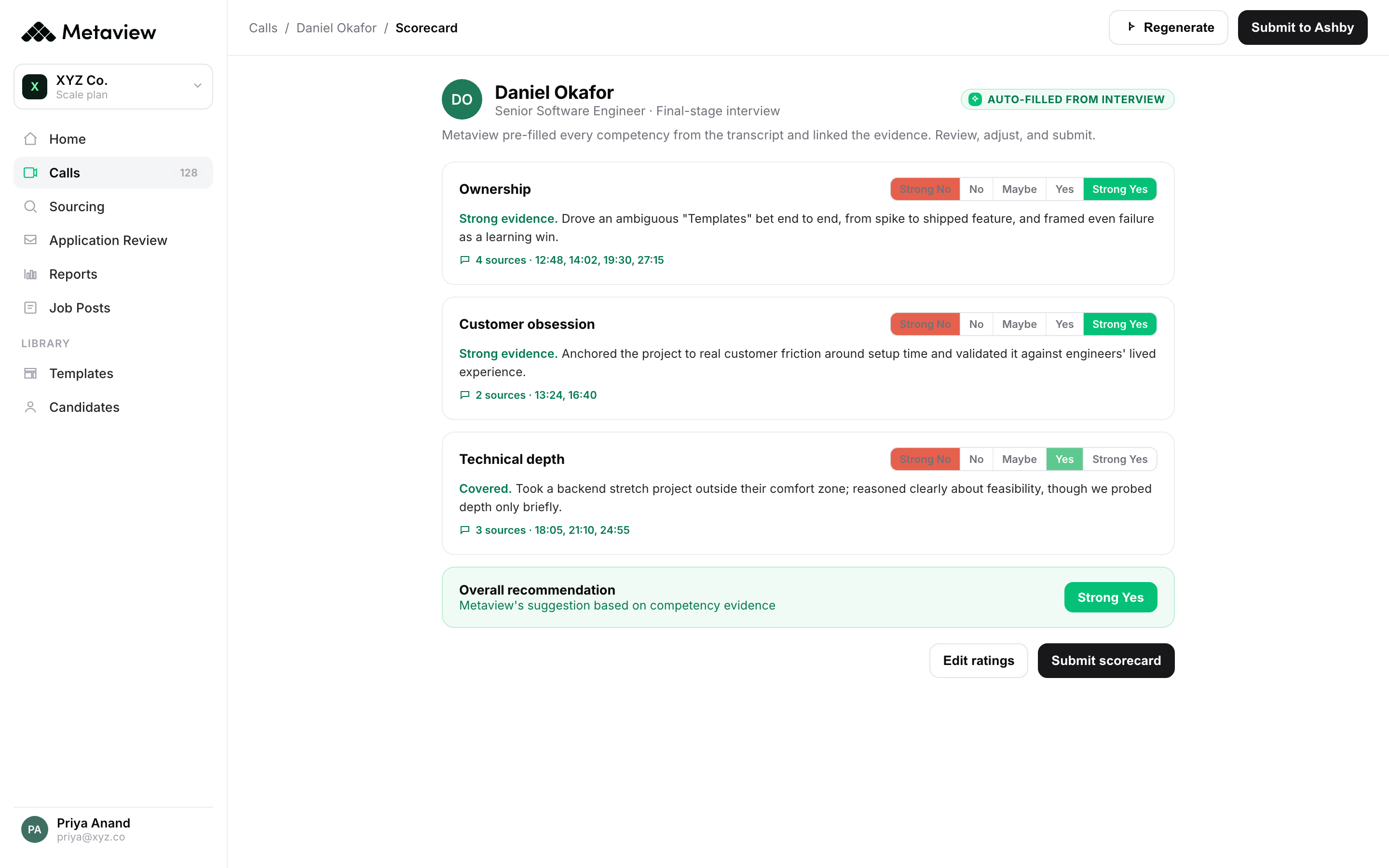
Metaview is the one platform here built specifically for recruiting that spans sourcing, interview capture, scorecards, and outreach.
The AI Sourcing agent runs from a JD or intake call and ranks candidates against your past successful hires. Notetaker captures every interview in 50+ languages. Reports map answers to your rubric. The structured scorecard writes back to your ATS automatically.
Key features:
- AI Sourcing agent that runs continuously.
- Notetaker across Zoom, Google Meet, Microsoft Teams, and phone.
- Native integration with 47 ATSs.
- Structured reports with ATS write-back.
- SOC 2 Type II and GDPR-aligned controls on every tier.
Pricing: Free with a work email. Paid plans on request.
The time I save with Metaview means I can move forward next steps with candidates faster. And ultimately that impacts my hiring velocity.”
Where it falls short: ATS integration depth varies. Ashby, Greenhouse, Lever, Gem, and SmartRecruiters are first-class; less common ATSs require workarounds.
Best for: Teams that want one platform for capture, sourcing, and scorecards instead of stitching three or four tools together.
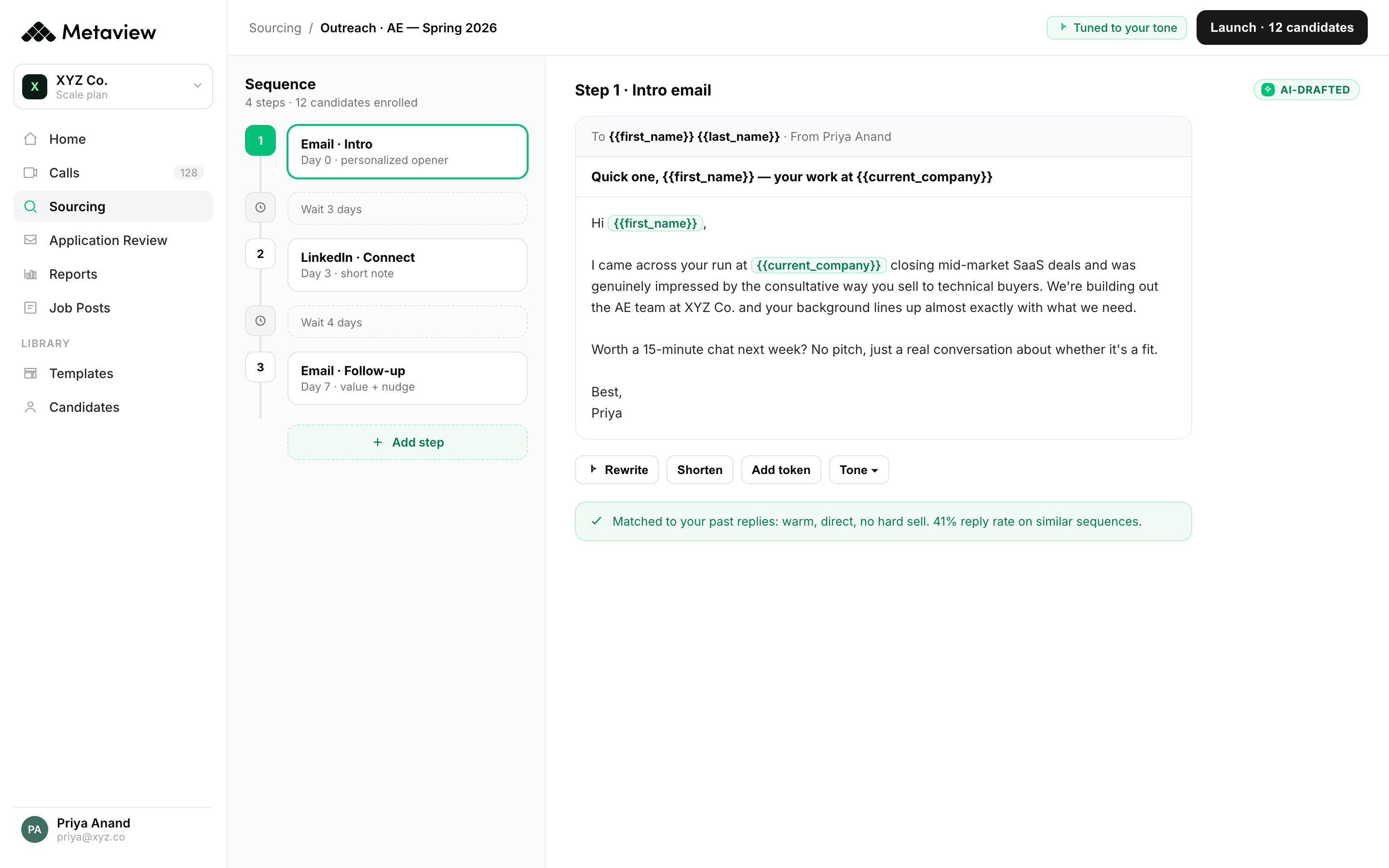
When the outreach lives next to the sourcing that found the candidate, the recruiter stops copying names between tools. Metaview drafts the sequence in your tone, off the same shortlist:
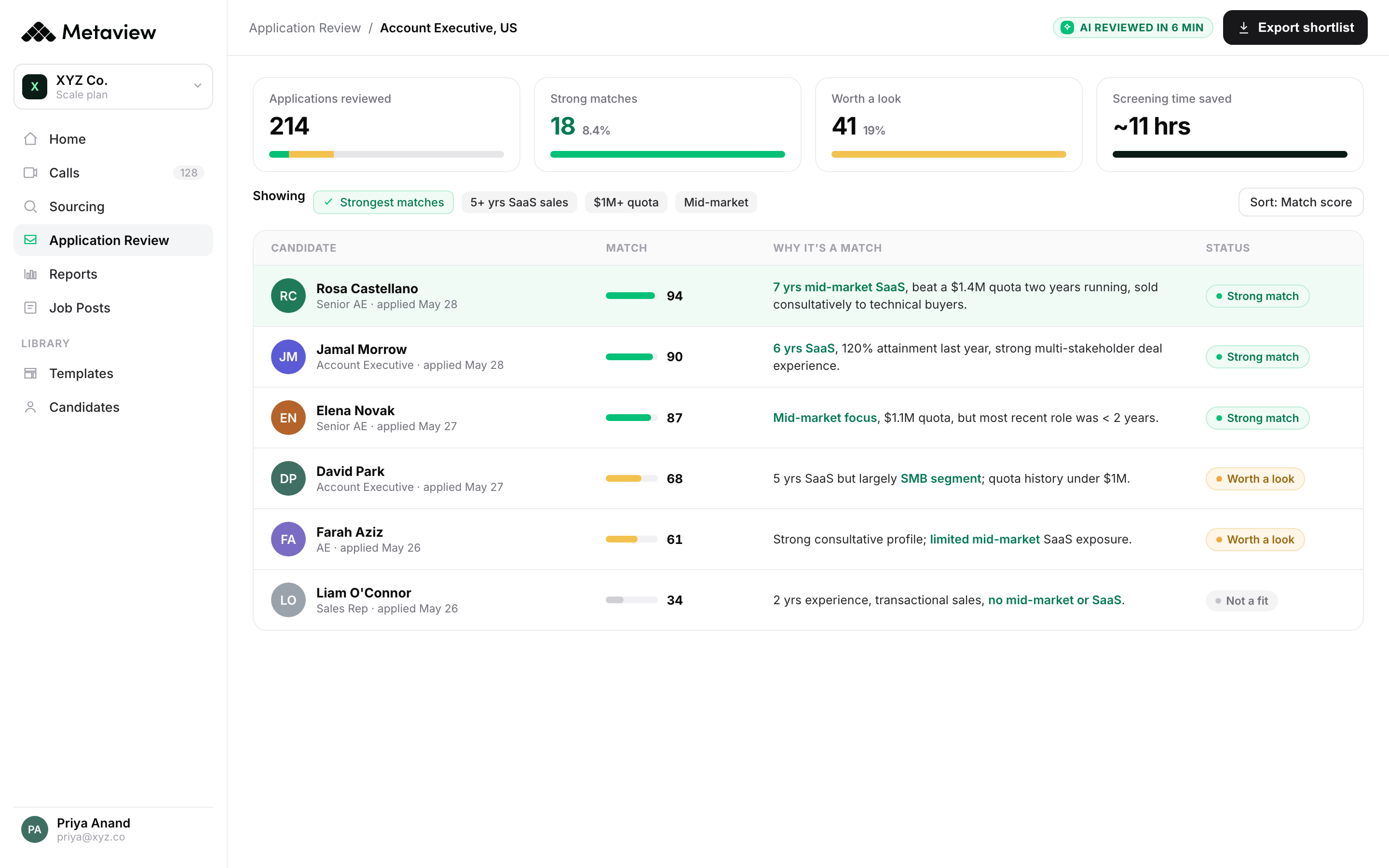
The thinner part of an all-in-one is usually how it reads inbound. Metaview ranks every applicant against the role with the reason it scored each one:
2. GoodTime.
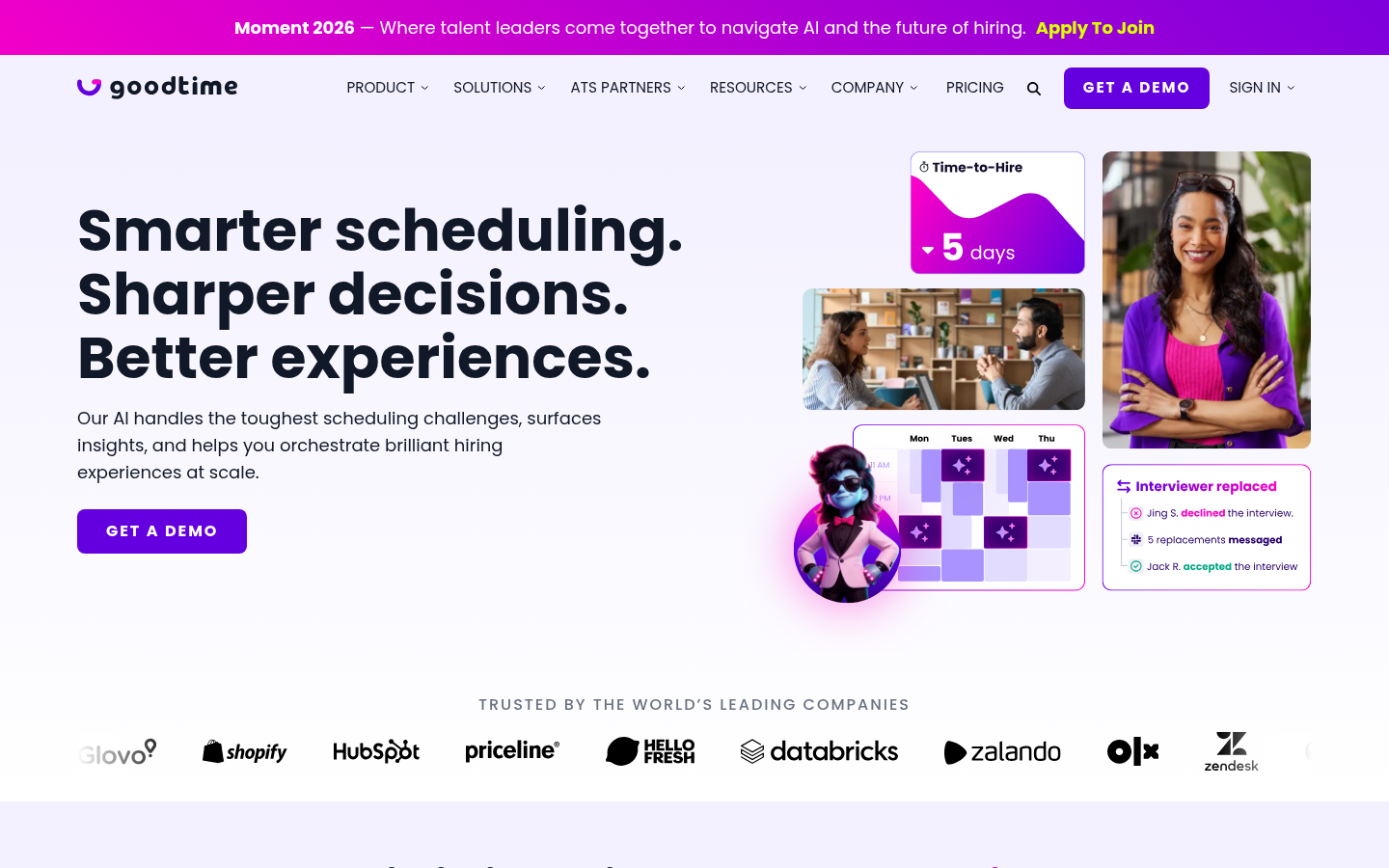
GoodTime automates the unglamorous time sink that compounds across every active role: interview scheduling.
Algorithms find optimal slots, balance interviewer workloads, and handle reschedules without recruiter intervention. For teams running 50+ active reqs with multi-stage panels, scheduling automation pays back inside a month.
Key features: AI scheduling for single, multi-step, and panel interviews; interviewer load balancing; branded candidate self-scheduling; SMS, WhatsApp, and email messaging; scheduling analytics.
Pricing: Quote-based.
Where it falls short: Scheduling-only; pair with capture and sourcing tools elsewhere.
Best for: Teams running multi-stage panel interviews at 50+ active reqs.
3. Humanly.
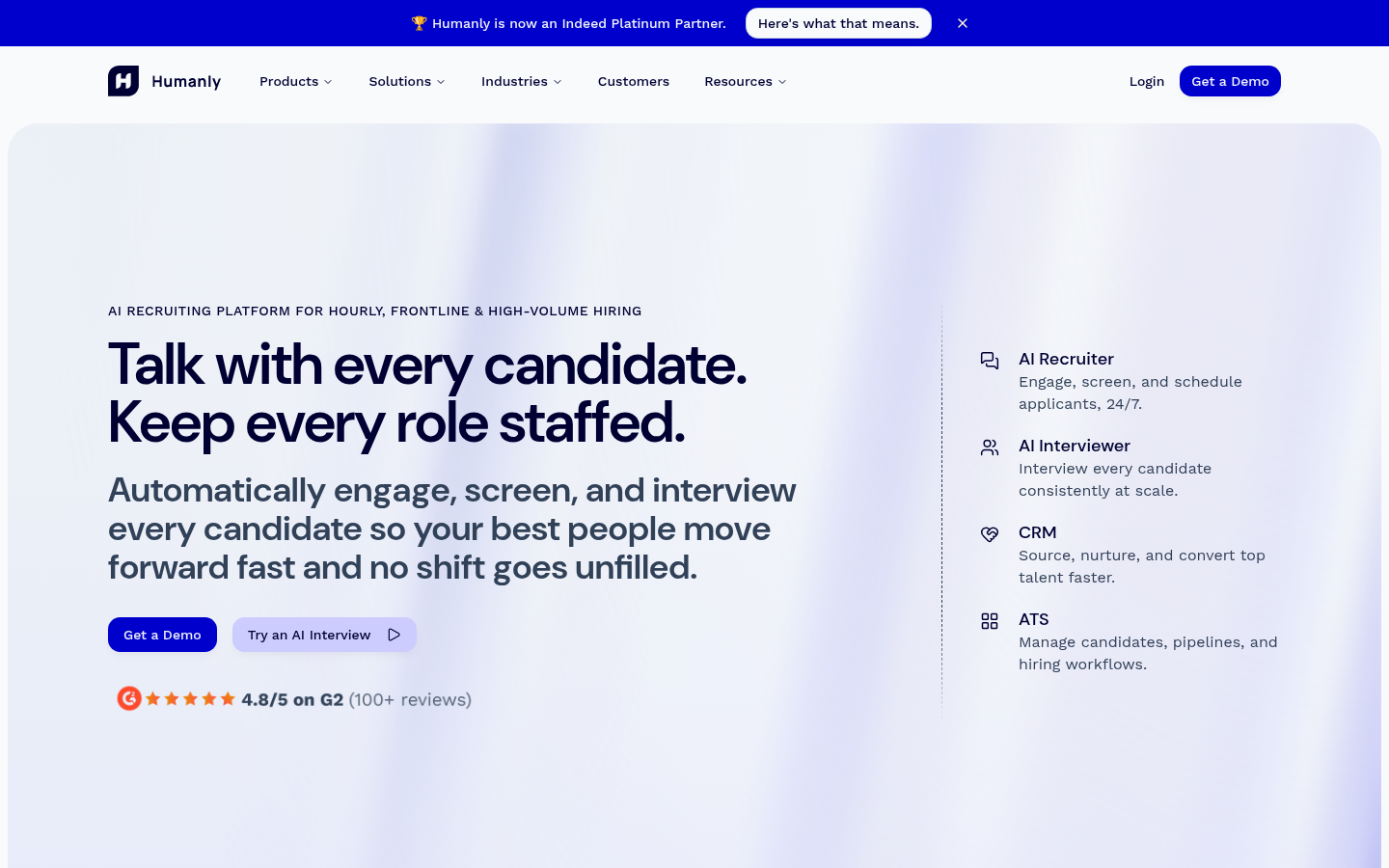
Humanly is a chatbot front-end that handles the first applicant touch at high volume.
The candidate gets a structured screening conversation in web, SMS, or email. The system scores responses and routes the strong matches forward.
Key features: Conversational AI screening; automated ranking; 24/7 candidate engagement; ATS integration; scheduling automation.
Pricing: Quote-based.
Where it falls short: Candidate-experience cost rises with seniority. Below 200 hires per year for knowledge-worker roles, the trade-off isn't worth it.
Best for: Hospitality, retail, and contact-center hiring at 500+ hires per year.
4. Gem.
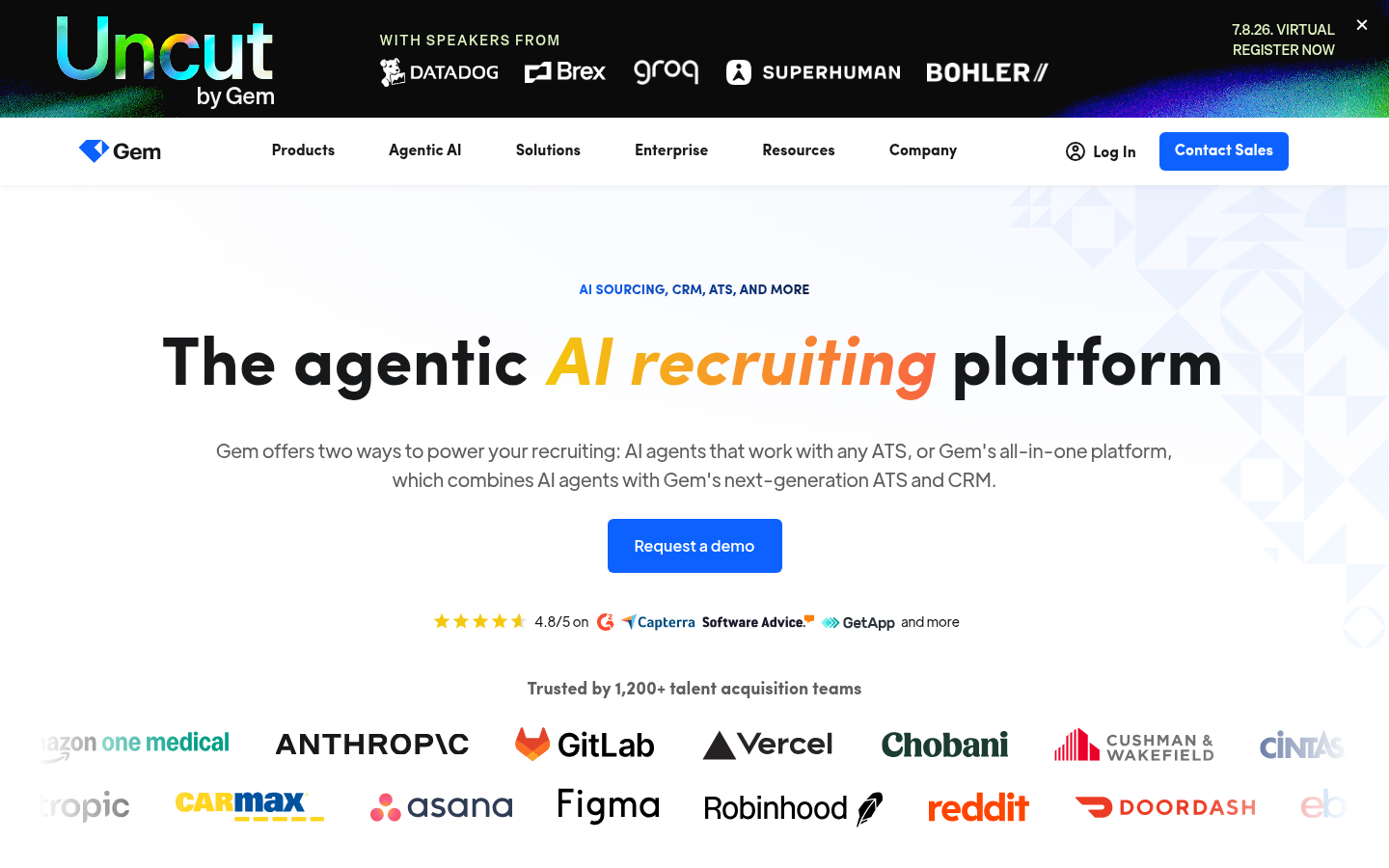
Gem is the dominant sourcing CRM for scale-up recruiting teams running long-cycle outbound nurture.
Key features: Centralized CRM for candidate touchpoints; email sequencing with A/B testing; pipeline visualization; LinkedIn, Gmail, and major ATS integrations.
Pricing: Startup from $135/month. Growth and Enterprise on request.
Where it falls short: Doesn't find new candidates; pair with sourcing upstream.
Best for: Scale-up teams running multi-month nurture on senior roles.
5. Paradox.
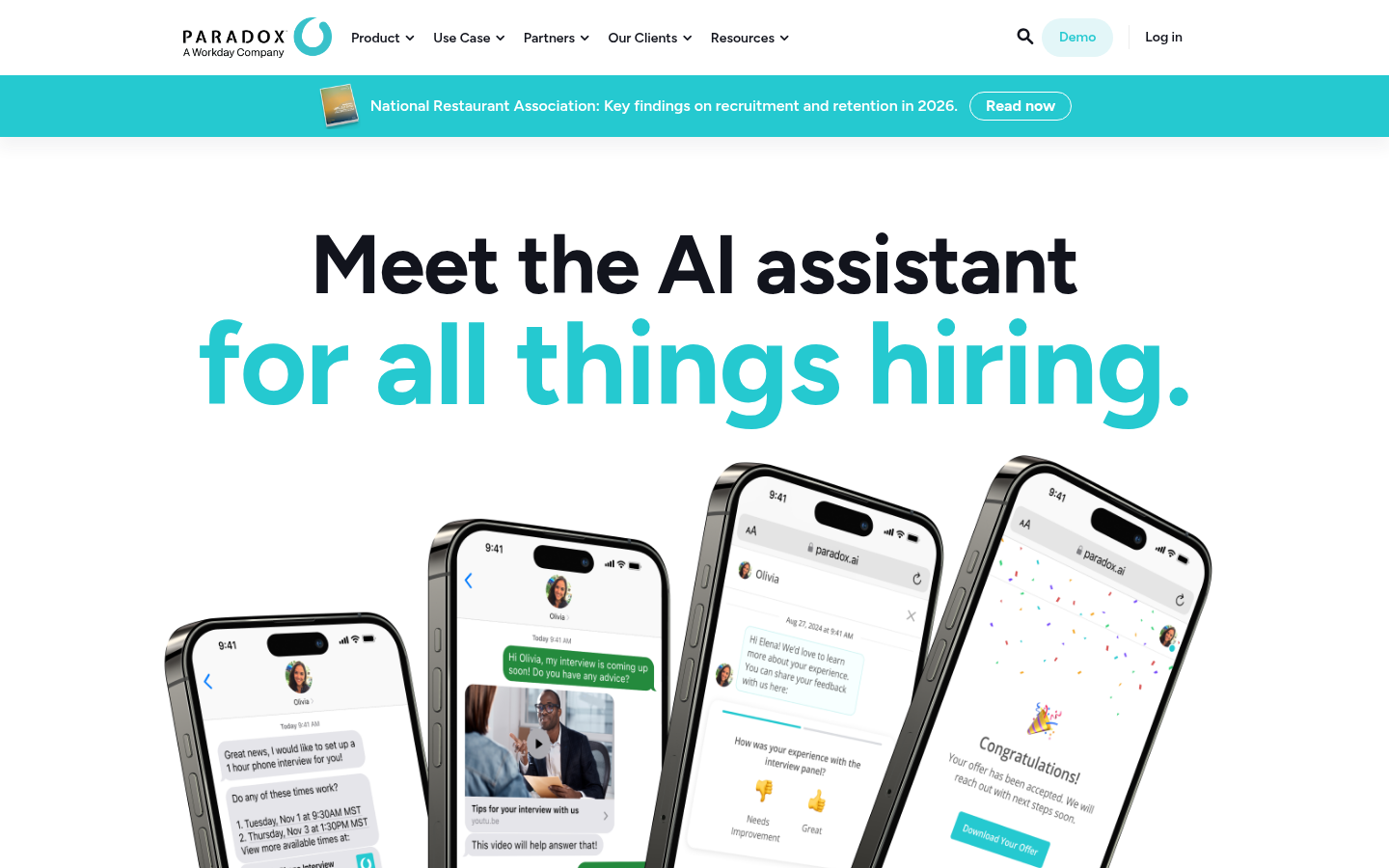
Paradox automates conversational hiring at high volume through its assistant, Olivia.
The use case is hourly and retail hiring where applicant volume is overwhelming and candidate experience needs to stay fast.
Key features: Conversational screening across web, SMS, and email; automated scheduling; ATS integration; multilingual support.
Pricing: Quote-based.
Where it falls short: Knowledge-worker hiring under 500 reqs/year doesn't justify the price.
Best for: Hourly, retail, hospitality, and contact-center hiring at high volume.
6. Fetcher.
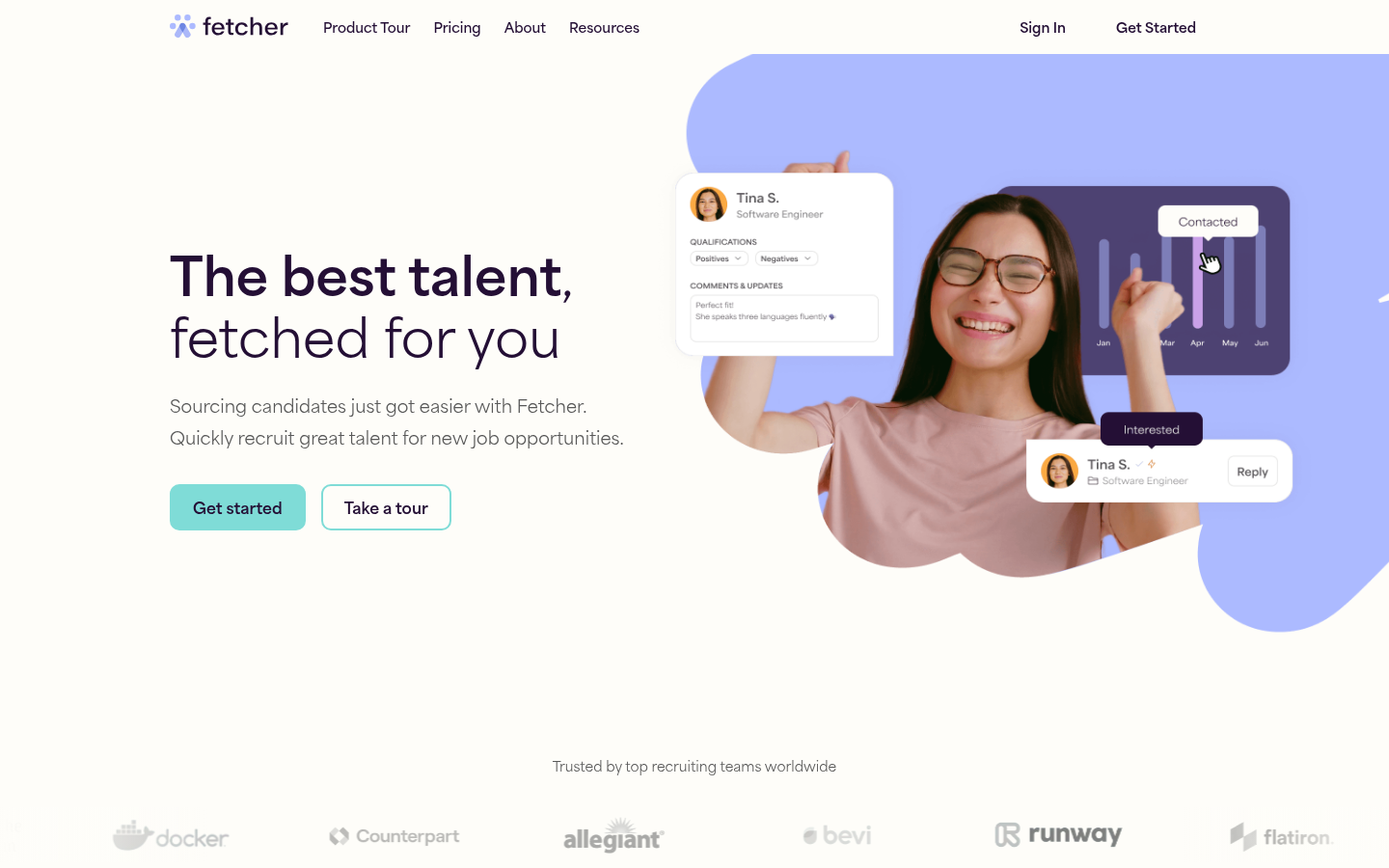
Fetcher delivers a curated list of pre-qualified candidates straight to your inbox using AI plus human review.
Key features: Curated candidate lists; AI + human-in-the-loop matching; outreach sequencing; DEI analytics; ATS and CRM integration.
Pricing: Growth from $379/month; Amplify from $649/month.
Where it falls short: Outsourcing search to Fetcher's team means less in-house recruiter calibration over time.
Best for: Startups and lean teams that need pipeline filled now without dedicated sourcer headcount.
7. Workable.
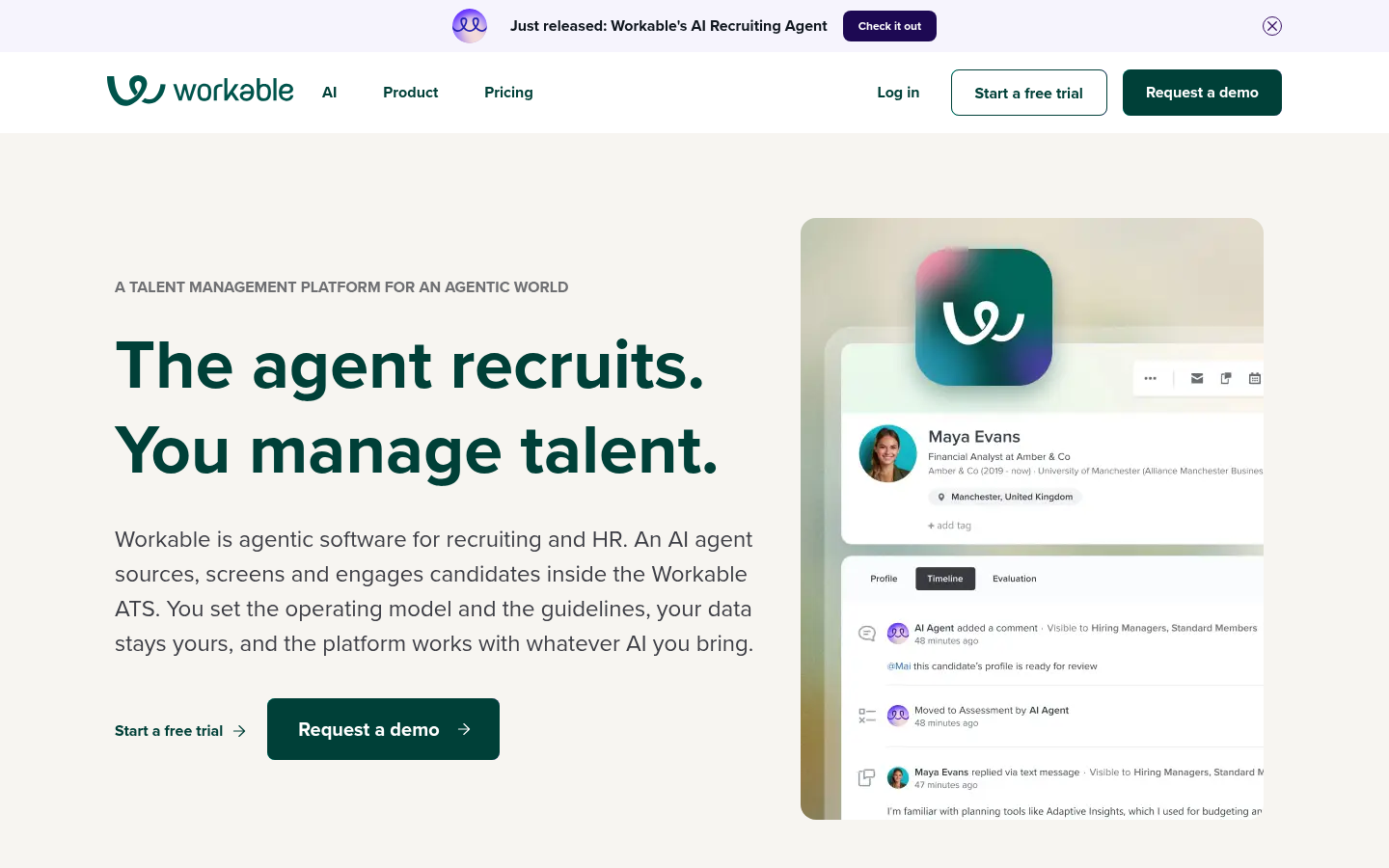
Workable is an ATS-first platform with AI embedded across sourcing, screening, and outreach. The pitch is consolidation: one system of record instead of five disconnected tools.
Key features: AI-powered sourcing; resume parsing and scoring; automated outreach and scheduling; custom hiring pipelines.
Pricing: Standard from $299/month; Premier from $599/month; Enterprise from $719/month.
Where it falls short: AI layer is solid but not best-in-class. Teams needing deep capture or sourcing typically pair with a specialist.
Best for: Midsize teams (50-300 employees) wanting one platform with workable AI.
8. Xobin.
Xobin automates resume screening, skills evaluation, coding rounds, video interviews, and candidate shortlisting in one connected system. Its AI Copilot turns a job description into a role-matched assessment.
Key features: AI Evaluate to score open-ended answers and surface ranked shortlists; agentic AI for technical interviews; trigger-based scheduling reminders, candidate communications, and offer-stage nudges; Tracks applicant tracking.
Pricing: Quote-based; 14-day free trial.
Where it falls short: Recruiting automation here centers on assessments, Tracks, proctoring, and interviews in automated or live formats. Open-web sourcing belongs elsewhere in the stack.
Best for: Recruiting teams consolidating screening, assessments, interviews, and applicant tracking.
How to choose.
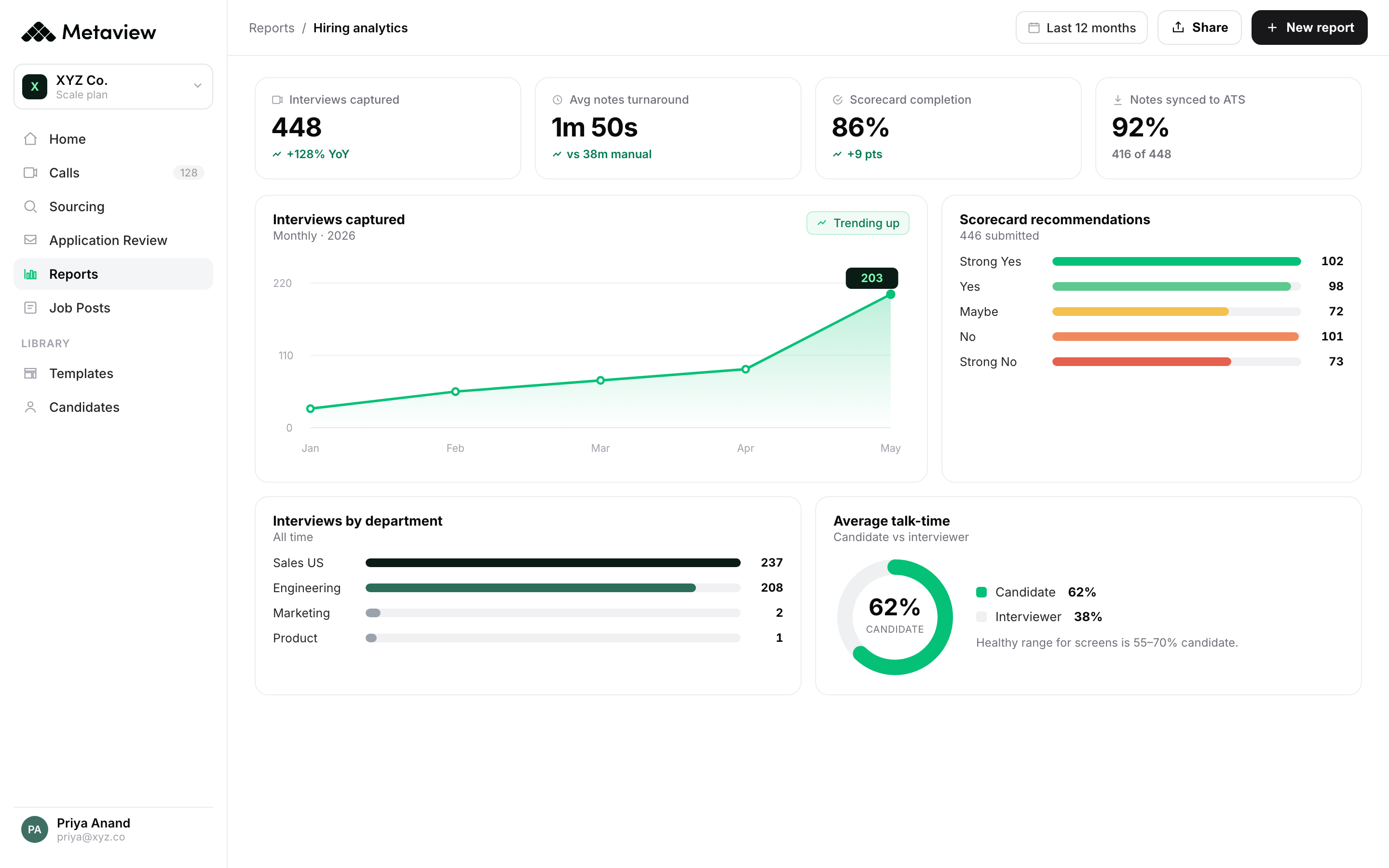
Start with the automation that compounds across every other workflow: AI notetaking with structured scorecards and ATS write-back. Metaview's free tier covers it without line-item cost.
Add sourcing automation next. Manual sourcing is the largest single time tax on recruiting; AI sourcing tools cut it from days to hours.
Add scheduling automation when calendar coordination becomes a coordinator-hours problem. Most teams under 100 hires a year don't need a paid scheduling tool yet.
Layer chatbot screening only where volume justifies it. Knowledge-worker hiring under 200 hires/year typically loses more in candidate experience than it gains in throughput.
Metaview spans interview capture, AI sourcing, AI outreach, and reporting in one platform. 4,000+ organizations now run hiring on Metaview, including Brex, emnify, Quora, Workleap, Lightspeed, Catawiki, Robinhood, and Automattic.
Bring Metaview into your hiring stack.
Live notes, structured scorecards, and ATS sync, set up in under 10 minutes.
Frequently asked.
What's the best recruiting automation tool in 2026?
Metaview, for any team that runs interviews. It's a platform that automates capture, sourcing, and scorecards in one stack with native ATS write-back. Other tools automate single steps; Metaview spans the workflow.
Does automation replace recruiters?
No. It absorbs the 40-60% of recruiter time that goes to admin. The strategic and relationship work stays where it always was: in the recruiter's hands. Automation frees the time to do more of it.
How many automation tools should I use?
Three or four deeply integrated tools usually outperform six or seven layered ones. A capture layer, a sourcing layer, and a scheduling layer covers most teams. The rest can wait.
What's the highest-impact automation to start with?
AI notetaking with structured scorecards. Time-to-feedback collapses, candidate experience improves, and you get a real interview data layer to analyze over time.
How long does automation take to pay back?
Per-tactic, six weeks is the typical window. Capture automation usually pays back inside the first month because the time saved compounds across the whole team immediately.
Do small teams benefit from automation?
More than large teams. A 2-recruiter team losing 5 hours a week to manual notetaking is losing a quarter of its capacity. The payoff is highest where the headcount is lowest.