
Plenty of recruiters still treat candidate outreach as a pure volume game. Send more messages, hope harder, repeat. The math used to work. It doesn't anymore.
Poorly targeted, high-volume messaging teaches candidates to ignore you. Over time it erodes your employer brand and makes future outreach harder. Every templated InMail in their inbox makes the next one easier to delete.
The difference between outreach that earns replies and outreach that gets deleted comes down to three things: relevance, timing, and a clear reason to respond.
This post covers how to send messages that start conversations, how to personalize at scale without losing authenticity, and how to measure what is working so you can keep improving.
Why volume outreach has stopped working.
The strongest candidates are rarely job hunting. They are employed, fairly content, and not refreshing job boards every hour.
Passive candidates represent roughly 70% of the global workforce. Reaching them requires a different playbook from the one that worked when inbound carried most hires.
That distinction matters more than it might seem. The strongest candidates are passive. Reaching them takes real targeting, real research, and real timing.
Volume gets confused for productivity when the math used to work. The math has shifted.
Send-more outreach now carries a brand cost. Templated messages train candidates to filter you out, and the candidates you most want to hear from are the most aggressive filterers.
The hiring teams winning passive candidates in competitive markets are not sending more messages. They are sending fewer messages that earn the first reply.
How to write outreach messages that earn replies.
Sending more messages feels like progress, but the real goal is fewer, better messages that start conversations. The strongest outreach messages share four moves.
1. Define the role and the candidate's reason to care.
Before writing a single line, get clear on why someone would want this role. What is the growth opportunity. What is compelling about the team or mission. Where does compensation sit relative to market.
You will not put every detail into the first InMail, but the clarity shapes everything that follows. Without it, outreach turns generic, and generic messages get ignored.
2. Write the hook, value, ask in that order.
Strong outreach messages follow a simple structure. Hook lands first, value lands second, ask lands last.
- Hook: a personalized opening that shows you have done your homework.
- Value: what is in it for them. Not a job description, a reason to care.
- Ask: a clear, low-commitment next step.
Most messages fail because they bury the value or skip personalization entirely. Lead with relevance, then make it easy to respond.
3. Lead with value before the ask.
Candidates respond when they see something relevant to their goals. The reader probably does not care about your company yet, so the message has to be about them, not your req.
"I have a role you might be interested in" is not valuable. "We are building something special" is all about you.
Try connecting the opportunity to something specific about their background: a skill they have built, a company they have worked at, a problem they have likely encountered. When the message becomes about them rather than your open role, response rates climb.
4. Write, review, and iterate.
First drafts are rarely ready to send. Edit for brevity. Most messages are too long, and length is the first signal that the writer was thinking about themselves rather than the candidate.
Then test variations and pay attention to what gets replies. Over time, patterns emerge that inform better messaging across the team.
How to personalize outreach without typing more.
Every recruiting team faces the same tension. Researching every candidate manually does not scale, but generic outreach gets ignored.
The fix is a system that delivers relevance without consuming the recruiter's afternoon.
Do your homework.
Even a few minutes of research can transform a message. Look for recent role changes, shared connections, public projects, or company news. Small details signal that you have done the work and are not blasting a template.
The sources worth checking are LinkedIn profile and activity, company announcements, GitHub or portfolios, and mutual connections. If you have not done that much, you cannot really know you want to meet this person.
Build modular templates with personalization fields.
A modular template keeps the core message consistent while allowing for customization. The value proposition stays fixed, but the hook changes based on the candidate's background.
The same role might have three different openers depending on whether the candidate comes from a startup, an enterprise, or a competitor. That is a simple switch that lands a personalized message without writing each one from scratch.
AI-powered dynamic customization.
AI tools can now pull candidate context and generate personalized intros at scale. The best implementations combine sourcing data with insights from past conversations, so outreach reflects what has resonated with similar candidates before.
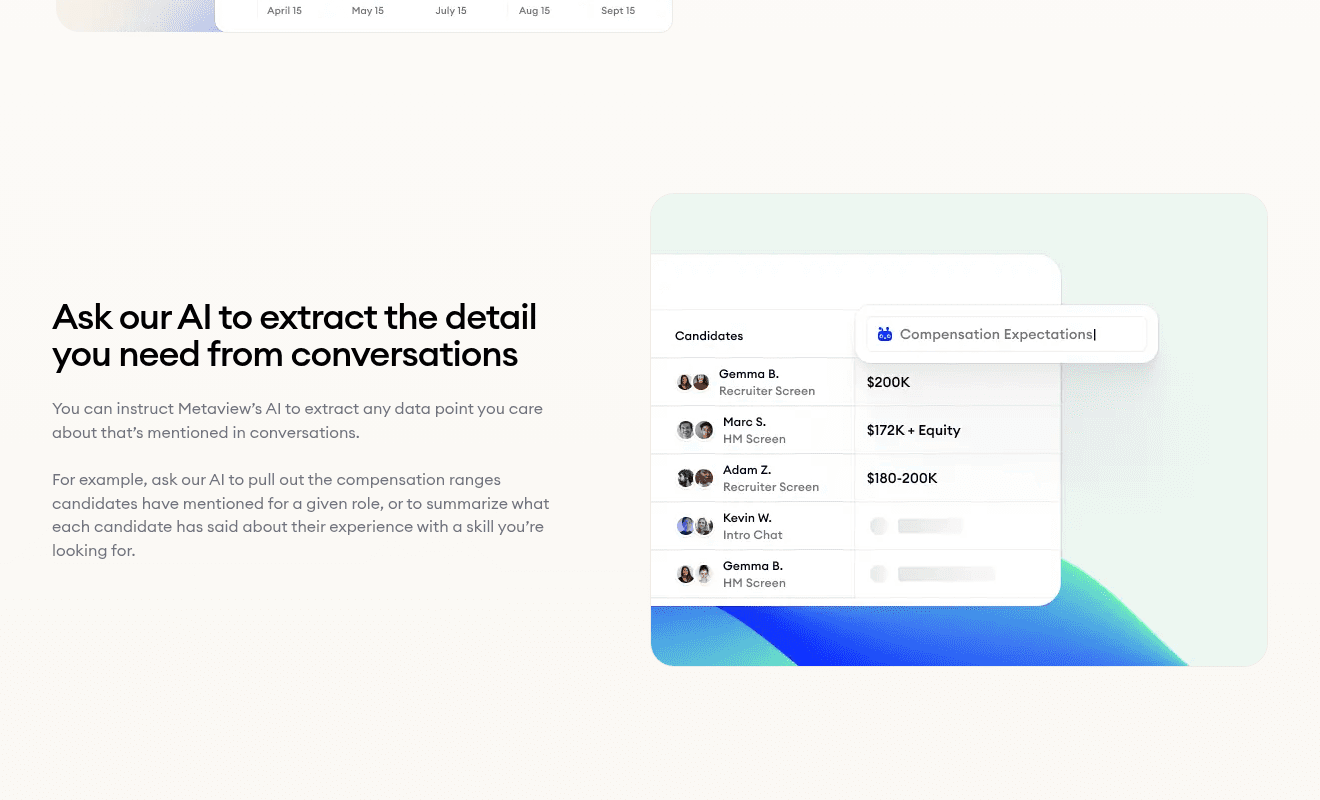
- 1Write what you are looking for in everyday English. No boolean strings, no quoted job-title hacks.
- 2Pick the search layers: your ATS, the Metaview interview corpus, the open web, or any combination.
- 3Set the must-haves. The agent ranks the shortlist against them, so the recruiter starts with the strongest candidates first.
Teams using structured interview feedback often find patterns that improve future outreach. When you know what motivated past hires, you can speak to those motivations earlier in the funnel.
Why sequenced outreach lifts response rates.
The teams that consistently land passive candidates are not sending one message and hoping. They are running structured sequences anchored in real candidate context, with the AI sourcing layer absorbing the manual research lift.
The lift is not from sending more messages. It comes from sending the right messages to the right people in the right order.
The system carries the spacing and the follow-up cadence, so the recruiter can focus on the messages that matter.
Customers running structured sequences out of Metaview Outreach tell us recruiters spend their time on the candidates worth chasing, not on the next batch of templated InMails.
The channel ladder and when each one earns its place.
Different recruitment channels work best in different situations. The most effective teams use multiple channels in sequence rather than relying on one. The table below maps each channel to the kind of role and candidate it best serves.
| Channel | Best for | Considerations |
|---|---|---|
| Detailed messages, formal industries | Requires accurate contact data | |
| Warm intros, tech and professional roles | InMail limits, crowded inbox | |
| Phone and text | Urgency, personal touch | Can feel intrusive if poorly timed |
| Multi-channel sequence | Hard-to-reach roles, executive search | Demands careful spacing and consent |
Email.
Email works when you have accurate contact information and want to share more detail. If sourcing turns up a name and a company but no address, an email address finder or the enrichment built into your outreach tool can fill in a verified one before the first message goes out. Subject lines matter enormously. If the email does not get opened, nothing else matters. Keep subject lines specific and short enough to read on mobile.
LinkedIn.
LinkedIn is often the first touchpoint, but inboxes are crowded. Connection requests with a brief note can outperform InMails, especially when your profile establishes credibility. A polished profile signals you are worth responding to.
Phone and text.
Phone and text feel more personal but carry higher risk. They work for time-sensitive roles or when you have already established some rapport. Always respect opt-out signals and keep messages brief.
Multi-channel sequencing.
Combining channels increases the odds of reaching someone without repeating the same message. A LinkedIn connection request followed by an email, then a brief follow-up, creates multiple touchpoints that feel intentional rather than spammy.
Cadence by channel.
Spacing matters as much as channel choice. Each touchpoint either adds value or it does not. If you are just repeating the same ask, you are not following up, you are pestering. The general cadence by channel:
- Email: three to four messages over two to three weeks.
- LinkedIn: two to three touchpoints, spaced further apart.
- Phone and text: one to two attempts, only for the right role.
- Multi-channel: alternate channels rather than stacking the same one.
Stop when you have completed your sequence without response, received an explicit opt-out, or got a negative reply. Continuing past these signals damages the brand and wastes time better spent on the next candidate.
Subject lines and opener moves that earn the open.
Subject lines decide whether the message gets opened, and openers decide whether it gets read. Both deserve more attention than they typically get.
What makes a subject line work.
The best subject lines are not mysterious. They give enough detail that the candidate knows what to expect and is curious enough to open. Three attributes that consistently lift open rates:
- Specificity: reference the role, the company, or something about the candidate.
- Brevity: short enough to read on mobile, where most opens happen.
- Curiosity: imply value without resorting to clickbait.
"Keen to talk about [Role] at [Company]?" outperforms "Exciting opportunity!" every time.
Proven opener formulas.
Strong openers establish relevance immediately. Four formulas that travel across roles:
- Mutual connection: "Sarah mentioned you would be great to talk to about..."
- Specific compliment: "Your work on [project] caught my attention because..."
- Shared interest: "I noticed we are both following [trend or topic]..."
- Company news hook: "Congrats on the recent [milestone]. Curious if you are open to..."
Common mistakes to avoid.
The patterns below show up in almost every outreach cadence that underperforms:
- Generic flattery that could apply to anyone.
- Leading with the job description instead of value.
- Overly long intros that bury the point.
- No clear ask or next step.
How AI turns outreach into a system, not a script.
Automation has a bad reputation in outreach because most automated outreach feels automated.
Used well, AI enhances personalization rather than replacing it. The teams getting it right treat AI as the layer that absorbs the manual lift, not the layer that writes the message for them.
AI-powered research and personalization.
AI sourcing tools surface relevant candidate details: recent role changes, skills, company context, likely motivations. They also suggest personalization angles the recruiter can accept or decline before launching the cadence.
The recruiter still makes the calls. The AI just stops the research from eating the afternoon.
Automating sequences while preserving authenticity.
Sequencing tools can adjust based on candidate behavior. Different follow-ups for opens versus no opens, different cadences for warm versus cold candidates.
The key is human review of AI-generated content before it goes out. Automation handles the repetitive work. Humans handle the judgment calls.
Using interview insights to improve future outreach.
When teams capture structured feedback from interviews, they learn what motivates candidates to engage. Patterns emerge: certain value propositions resonate, key concerns come up repeatedly, and specific role framings outperform others.
Tools that connect interview documentation to sourcing workflows close this loop automatically. Every interview makes the next sourcing brief sharper.
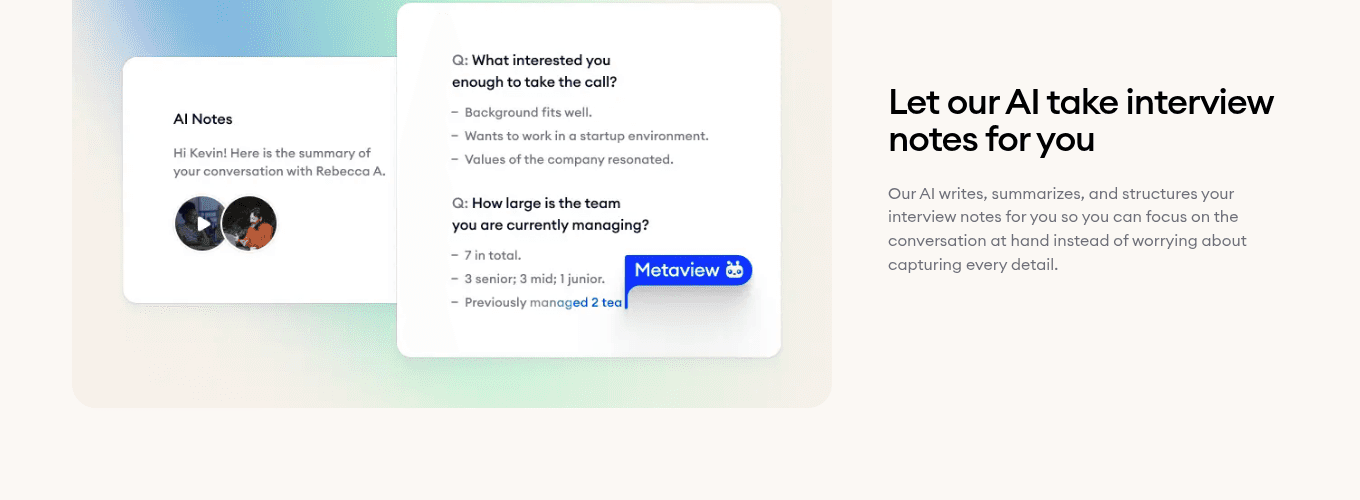
- 1Structured Q and A pairs from every past interview, tagged by topic.
- 2Competency-level signal mapped to the rubric, so the strongest answers become future sourcing prompts.
- 3Conversation snippets ready to fold into the next round of personalized outreach.
How Metaview Outreach and AI Sourcing close the loop.
Connecting with passive candidates takes more than a single well-written message. It takes consistent sequencing, strong targeting, and personalization at scale without adding more manual work.
The bigger problem is that most teams run those moves across four disconnected tools, and the context loss between them is the real tax.
- Source candidates in one tool, then export to another.
- Pay per contact for verified emails and phone numbers.
- Write sequences inside a third sequencer with no candidate context.
- Manually check inboxes for replies and chase candidates back into the ATS.
- Lose the through-line from interview signal to next outreach brief.
- Build shortlists with AI Sourcing inside the same workspace.
- Enrich verified contact data with 500 free credits each month.
- Launch multi-step sequences from the shortlist with AI-drafted messages.
- Auto-pause sequences on reply, Calendly book, or interview scheduled.
- Feed interview signal back into the next sourcing brief automatically.
If you are already using AI Sourcing, you can move from shortlist to personalized outreach to scheduled interview in one continuous workflow. Sending is free for every workspace, and the candidate context follows the candidate from first message to scorecard.
Effective outreach is not about scaling up your effort. It is about sending personalized, value-first messages through the right channels at the right time, treated as a discipline the team refines continuously. Start by auditing where your current outreach drops off.
Frequently asked.
What is the ideal length for a candidate outreach message?
Short enough to read in under a minute, typically three to five sentences. The mobile preview pane is the real ceiling: if the message scrolls past the first screen, most candidates will not scroll. Establish relevance, communicate value, and include a clear ask in that order.
How do recruiters re-engage candidates who went silent?
Send a brief follow-up that references the previous conversation and adds a new piece of information, a change in the role, or flexibility on timing. Acknowledge that timing might have shifted without making it awkward. If the silence has run more than a quarter, treat it as a fresh sourcing decision and re-qualify before reaching out again.
Should recruiters use video in outreach messages?
Video can stand out in crowded inboxes, but it carries production and consumption cost on both sides. Use it selectively for high-priority candidates where a personal touch adds clear value, not as a default for every message. The candidates most likely to watch a video are the ones already partway curious about the role.
How do recruiting teams maintain compliance when automating outreach?
Include opt-out options in every message and respect data privacy regulations like GDPR and CCPA. Maintain accurate records of consent and communication history so the audit trail holds up. Automation does not remove the obligation to treat candidate data responsibly. The tools you use should make consent and opt-out easy, not optional.
How do Metaview Outreach and AI Sourcing work together?
AI Sourcing builds the shortlist. Metaview Outreach runs the sequence on it without an export step. Adding a candidate from search results, the shortlist, or a CSV import to a sequence takes a click. Sending is free for every workspace. Verified contact enrichment runs on 500 credits per month, with 3 credits per email lookup and 10 per phone lookup. Sequences auto-pause on reply, Calendly booking, or interview scheduled, and the candidate record stays synced to your ATS.
Bring Metaview into your hiring stack.
Live notes, structured scorecards, and ATS sync - set up in under 10 minutes.


