In my recent conversations with talent leaders and team builders, a clear trend has emerged: high-performing teams are reacting to the current market conditions by re-focusing on quality and ensuring every hire counts. As teams develop action plans to adapt their hiring processes to this new reality, one of their considerations is often whether it’s worth bringing in an Interview Intelligence platform to complement internal programs and processes. For anyone weighing how to affect step-change impact on their quality of hire, I wanted to share how Metaview can help.
Whether you already have structure and training in place for your interviewers, or you're just starting to get more deliberate about this crucial part of your process (if so, check out our playbook on how to do it), Metaview can be a powerful tool to bring increased visibility, consistency, and quality to your process, and the all important hires you make as a result of it. Each organization’s challenges and goals are unique, but here are a few common scenarios where teams turn to Metaview:
- You’ve grown a lot in the past, and now new people are hiring new people. It’s hard to find time to make sure they are calibrated, rigorous, and fair.
- You have a growing sense that important hiring decisions are being made based on scrappy notes, memory, or - worst of all - bias.
- You’ve realized that traditional interviewer training isn’t proven to be effective, and is often inconsistently applied.
- You have no visibility into the quality of your process, or whether interviewers are drifting over time, and therefore no ability to make educated improvements to the process.
- You’re struggling to maintain your core culture as new hires are made in different geographies and to keep interviewers calibrated across office locations and departments.
Focusing on quality doesn’t just prevent expensive mis-hires - it’s of existential importance to your culture and continued growth. Anduril’s Head of Software Recruiting, Scott Nelson, gives a powerful take on the role quality plays in preserving culture and trust as an organization grows:
If your hiring managers aren’t calibrated, they’re more likely to bring in people that don’t fit that profile. Mis-hires are expensive, sure - but there’s also a cost on your culture and your team. Because when you consistently hire poor quality employees, you’re saying ‘this is what we value, and this is the type of person that’s representative of our organization’.
And when your employees start to feel like that’s changing, or the bar’s being held differently for different hires, then that culture you worked hard to build will tear right down the middle. Your best performers will lose trust in you, and they’ll leave. You have to know how to scale that trust - it’s a crucial part of hiring.”
How Metaview improves quality of hire
Metaview is built to help you calibrate all of your interviewers to a common bar of excellence, while automating the painful administrative burden that often accompanies traditional processes. We do this through a number of powerful features: the ability to capture and replay what really happened in interviews, Shadow Paths interviewer training, and insights for ongoing improvement.
1. Review the game tape
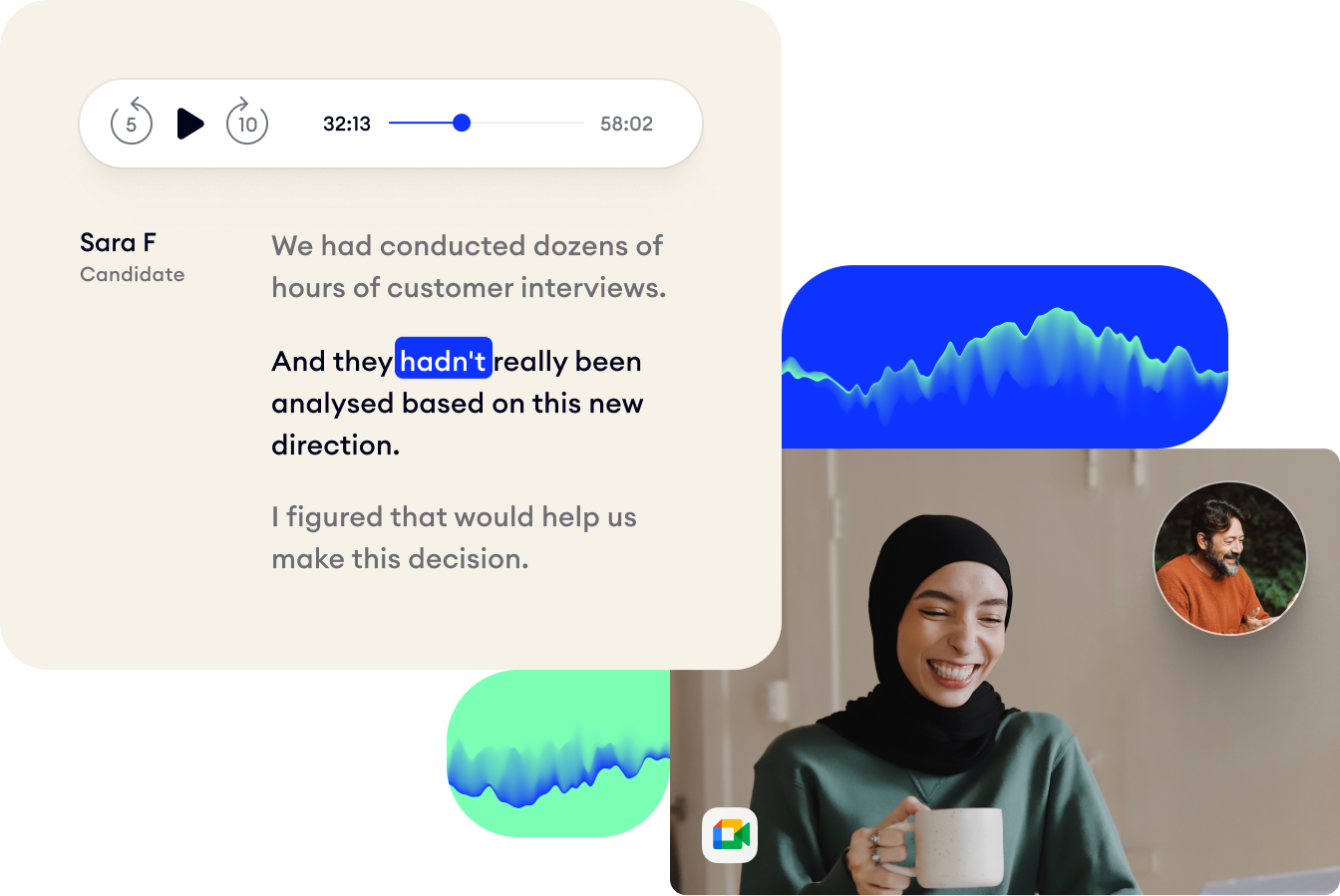
The ability to playback interview recordings is a game changer when it comes to keeping quality high. When there’s conflicting opinions on a candidate or disagreement about how they rank on a certain skill, you can review what actually happened, even if you weren’t present yourself. Visibility into what’s really going on in interviews can also be a powerful tool to ensure interviewers are delivering a strong candidate experience and gathering the right signal. Tally’s VP of Engineering, Jan Chong, shares how Metaview playbacks help her team keep quality in check:
2. Interviewer shadowing based on your highest-quality interviews
Interviewer shadowing is one the most effective ways to gain confidence in the consistency and quality of your interviews. With a traditional showing program, there’s lots of manual scheduling and spreadsheet tracking that needs to happen to keep the process moving along. In this model, it can be difficult to track where trainees stand in the process, and there’s little visibility into what happens once they’ve graduated. But the biggest problem of all is that you’re rolling the dice when it comes to the quality of the live interviews trainees shadow. Former Head of Recruiting at Pure Storage, Angela Miller, summarizes the challenges of scaling a robust interviewer training program, which ultimately prompted them to bring in Metaview to right the course:
We got to a point where we stressed the system so much that it broke. We didn’t have enough interviewer bandwidth, but it was taking six months for a trainee to get through training on one training track. We were coordinating interviews with candidates as a first priority, which meant that training was our second priority - and it started to fall through the cracks.”
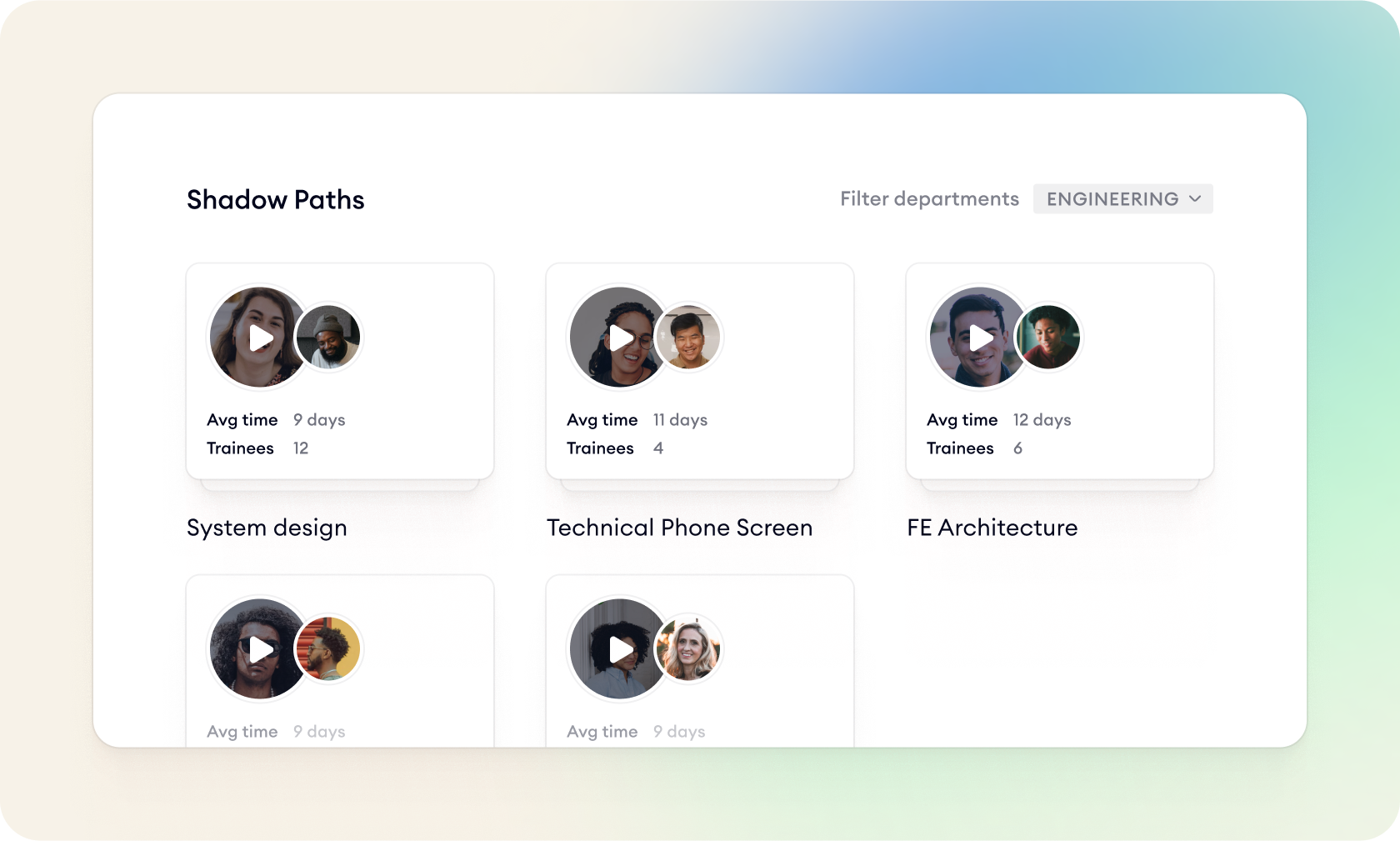
Metaview takes shadowing to the next level by automating the process and ensuring trainees only learn from the very best. In a Shadow Path with Metaview, you choose best-in-class examples for each interview loop and use those recordings to create a training module for new interviewers. Trainees are then automatically enrolled in these Shadow Paths and watch the recordings on their own time, removing the unnecessary complexities of manual scheduling. Recruiting teams have full visibility into where a trainee stands in the process.
3. Deepen learning with feedback loops
The learning doesn’t stop once the recordings have been viewed. Trainees are also asked to write mock scorecards on the interviews they watched. That feedback is then compared against actual feedback that seasoned interviewers provided to make sure trainees are learning to calibrate properly. The final step in our Shadow Paths is a reverse shadow where the trainee runs a real interview of their own, shadowed by a veteran interviewer who provides comments and feedback.
Another way we close the feedback loops in interviewer training is by enabling comments on interview recordings. New interviewers can ask more experienced colleagues specific questions on an interview they are shadowing, or seasoned interviewers can leave their own tips and insights - all to enable deeper, interactive learning based on individual needs.
4. Provide ongoing self-reflection and coaching
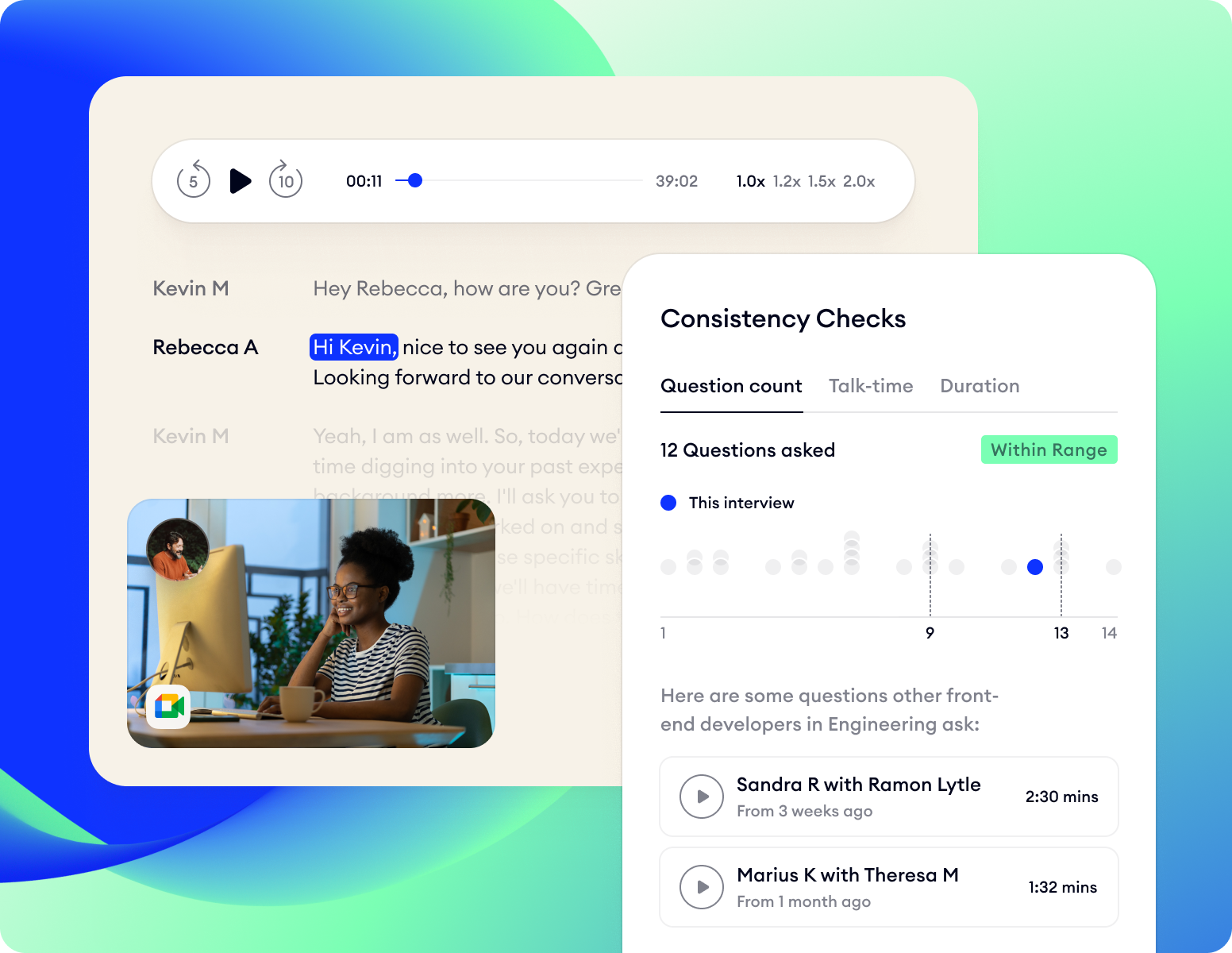
Establishing and maintaining a culture of high-quality interviewing has to be a continuous effort. That’s why Metaview provides interviewers ongoing opportunities for self-reflection and coaching. After every interview, interviewers can see how key metrics like number of questions asked, candidate talk time, and interview duration compare with the norms for interviews of the same type at your company. So if they’re trending outside of the typical ranges, interviewers can reflect on whether there’s an opportunity to do things differently next time. Metaview also provides automated coaching so that interviewers receive regular feedback on their actual interviews, with actionable tips for elements to improve. Catawiki’s Head of Talent Acquisition, James Lesner, shares the impact Metaview has had on their interviewing:
Especially in the current market, investing in quality of hire is all but a necessity. Without Interview Intelligence, it’s near impossible to have the level of visibility and insight you need to identify areas of improvement and have a real impact on quality. If you’re ready to run more consistent, high-quality interviews, we’d love to help.