Most interview summaries fail at the handoff, not the writing. The hiring manager opens the summary, can't tell what the candidate said from what the interviewer felt, and reaches for the recording. More often, they reach for the calendar invite and schedule a 30-minute resync.
The cost shows up everywhere downstream. Recruiters writing summaries between back-to-back calls produce notes-with-a-paragraph-on-top. The panel re-litigates the same candidate every Thursday. Decisions slow, candidates drop out, and the next req opens with the same gaps.
The shift recruiting teams need is to treat the summary as structured evidence, not narrative. Every line maps to a rubric signal the next person can act on. Here's how to write one, and the AI Notes capture that takes the structuring off the recruiter's desk.
Why interview summaries fail at the handoff.
Two patterns repeat across the TA teams we work with. The first is the summary that gets written before the next call starts, in 90 seconds, and reads as the recruiter's gut feeling with a paragraph of nuance bolted on. The second is the summary that gets written three days later, in 45 minutes, and reads as a recap of the call that the recruiter is half-remembering.
Both versions land in the candidate record. Neither survives the handoff. The panel opens the doc, skims for the recommendation, and reaches for the recording when the recommendation doesn't pass the sniff test.
The failure shows up downstream. According to Metaview's 2026 AI & Hiring Alignment Report, surveying 505 recruiting leaders and hiring managers across North America and EMEA, the cost of the handoff gap shows up in four places.
The numbers point at one thing. The handoff layer between the call and the decision is where teams lose alignment, and structured AI capture is the lever that closes it. A summary that lands the rubric signal is the operational shape of that lever.
The 5-step summary workflow.
Five steps. Run them sequentially, before the call, during the call, and in the first 60 seconds after it ends. Steps one and two are the leverage points. If they happen, steps three through five take ten minutes and the summary is in the ATS before the hiring manager opens Slack.
1. Anchor the summary to the rubric before the call starts.
A summary without a target reads as opinion. If the panel hasn't agreed which competencies the call is meant to assess before the candidate dials in, the recruiter ends up summarizing the conversation that happened, not the signal the role needs.
Open the interview scorecard before the call. Name the three or four competencies the slot is meant to surface. Anchor a question to each. That's the spine the summary will run on.
Without this step, the summary becomes a meeting recap instead of a hiring input. The reader has no way to map what they read against the role the panel agreed to hire for.
2. Capture evidence in the call, not from memory.
Typing while talking kills rapport. The candidate hears the keyboard, the recruiter splits attention between the question and the document, and the nuance that mattered gets lost between sentences. Most recruiters know this and write the summary afterward. The summary then reflects what the recruiter remembered, not what the candidate said.
The fix is to push capture into the call so the recruiter stays present. Our AI Notes structures the conversation as the call runs, slotting evidence under the rubric competencies you set in step one.
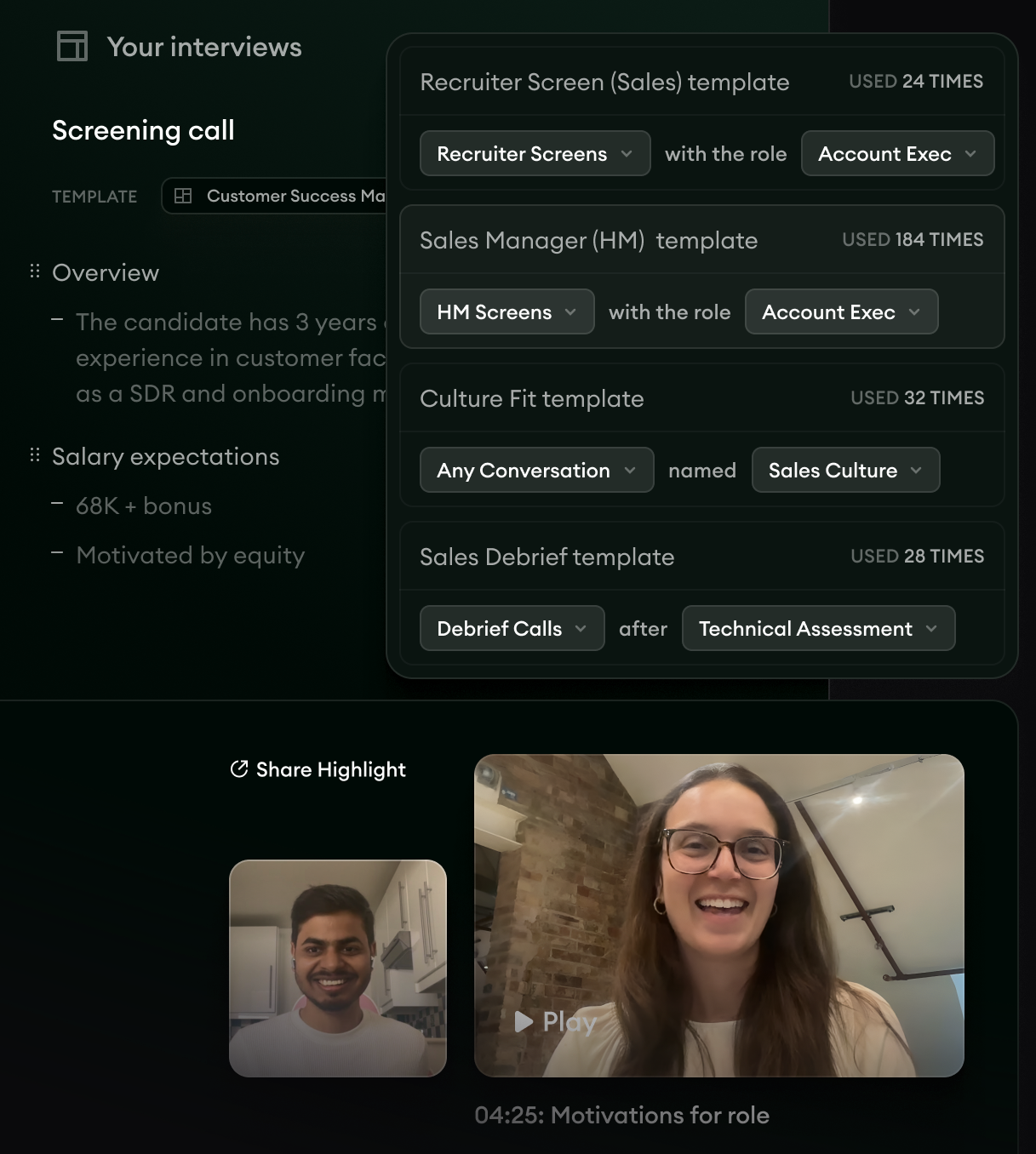
- 1Live transcript runs in the background; the recruiter stays focused on the conversation.
- 2Evidence slots into rubric competencies as the candidate speaks.
- 3Timestamps anchor every signal to a moment the panel can replay.
Capturing in the call collapses the rewrite step. The summary at the end is a draft, not a blank page. The recruiter's job shifts to judgment, not transcription.
3. Structure around signal, not chronology.
Summaries that follow the call question-by-question are unscannable. The hiring manager doesn't need a replay. They need to see strengths, gaps, evidence, and a recommendation in that order, so they can route the candidate before their next meeting.
Organize the summary into three blocks. Strengths with specific examples from the call. Gaps with the moment the gap showed up. Recommendation with the rubric scores that support it.
Avoid vague impressions. "Good communicator" describes the interviewer's response, not the candidate. Cite the moment. "Explained the trade-off between latency and accuracy when asked to walk through the architecture decision" is signal the next person can use.
4. Score the signal in rubric language.
The rubric is doing the work in the background. Surface it in the summary so the panel sees the same scoring the recruiter saw. A 4 on problem-solving with no descriptor under it is opinion in a numbered slot. A 4 with one sentence on what the candidate said is calibrated signal.
Pull the rubric's anchor descriptors into the summary itself. The summary becomes the structured artifact the debrief works from, not a separate document the panel has to cross-reference.
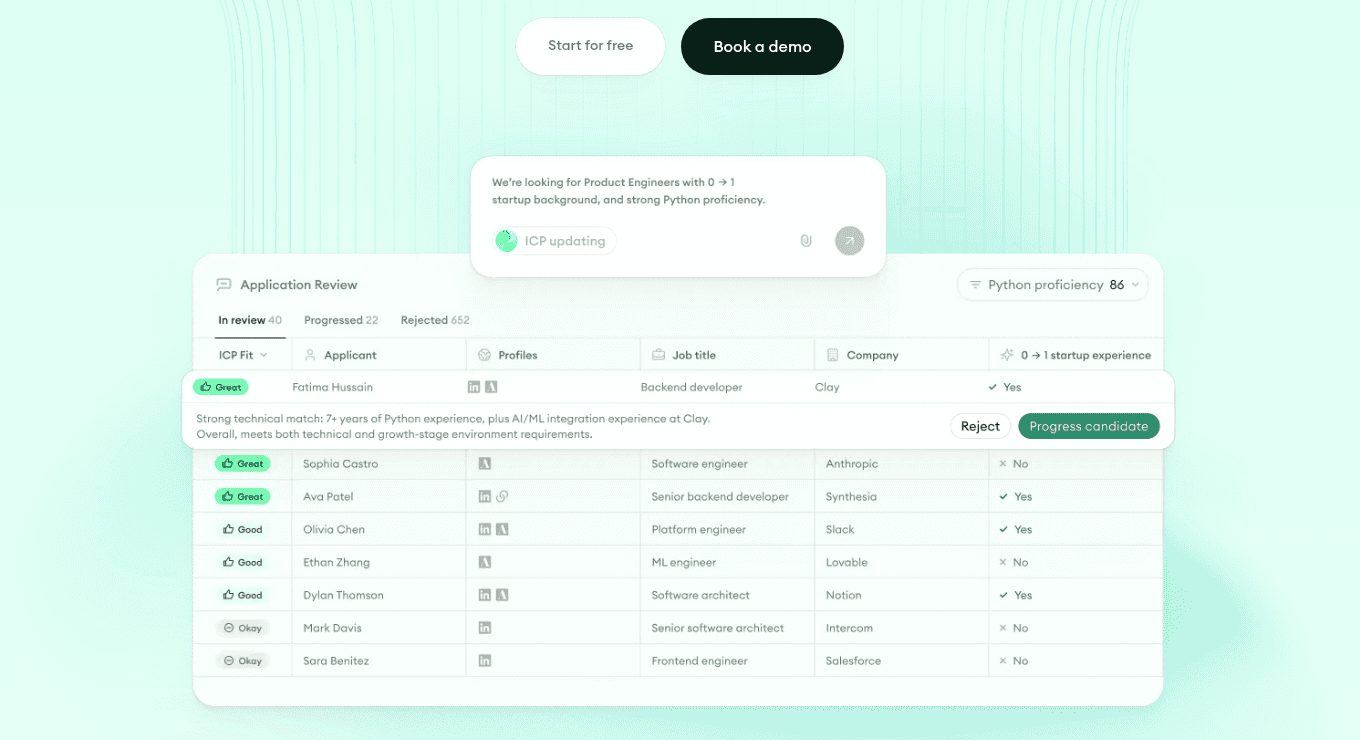
- 1Each competency carries its rubric score plus the descriptor anchor.
- 2Evidence quoted verbatim from the candidate, with timestamp link to the moment.
- 3Recommendation flows from the scores, not a separate impression line.
The result is a summary the panel can read in under a minute and trust. Evidence over impression, in the language the panel agreed to hire on.
5. Send the summary before the hiring manager asks.
Most summaries land in the ATS the day after the debrief was scheduled. The hiring manager skims it, the panel debates impressions instead of evidence, and the candidate gets a slow yes-or-no. The summary did its job, just too late.
Push the summary to the candidate record while the recruiter is still on the next call. Tag the hiring manager so it lands in their inbox before the calendar invite goes out. The debrief opens with the summary on screen and a half-formed view in the room.
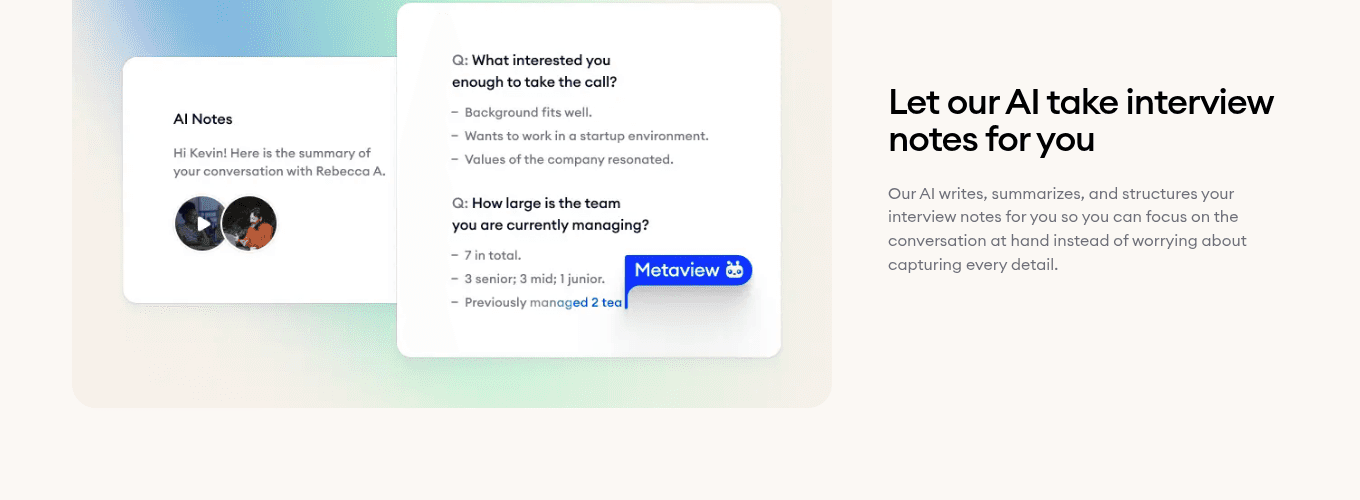
- 1Summary pushed to the ATS candidate record the moment the call ends.
- 2Hiring manager notified with the summary in-line, not a "review pending" link.
- 3Shareable link surfaces the rubric scores and the supporting evidence side by side.
Cutting the time-to-summary cuts the time-to-decision. The candidate gets a faster answer, the panel runs a leaner debrief, and the recruiter's next call starts with the previous one already routed.
Templates that pair with the steps.
The right summary template depends on interview type, volume, and how structured your scoring already is. Four formats cover the cases most recruiters run, and each one pairs with the steps above. The shape of the template matters less than the discipline of feeding it from rubric-anchored evidence.
| Template | Best for | What it captures | What it skips |
|---|---|---|---|
| Bullet-point | High-volume phone screens | Six to ten bullets, recommendation in the last line | Behavioral depth and verbatim evidence |
| Structured narrative | Mid-funnel competency screens | Short paragraph plus signal bullets | Quantitative scoring per competency |
| Competency-based | Panel and structured loops | Evidence and signal per competency | Single-line recommendation framing |
| Scorecard-linked | Quantitative pipelines | Score and qualitative evidence side by side | Narrative shape for non-quantitative roles |
Pick the template that fits the slot, then feed it from the structured capture in step two. The format earns its place when each line maps to a rubric signal the next person can act on.
How AI Notes turns the call into the summary.
We built AI Notes specifically for the in-call capture moment. The recruiter stays present in the conversation, AI Notes structures the signal against the rubric the panel agreed to hire on, and the summary lands in the ATS before the candidate's next interview starts.
The before-state is the one teams running on memory and impressions describe most often.
We were making hiring decisions blind, advancing candidates without structured evaluations, risking bad hires, and losing exceptional talent along the way.”

Three things change once AI Notes is in the workflow. The recruiter stops splitting attention between the candidate and the keyboard. The summary at the end of the call is rubric-anchored, with evidence already slotted under each competency. And the ATS receives the structured artifact while the panel is still walking out of the room.
The summary now flows out of capturing the call against the rubric, with no separate writing task waiting at the end. The recruiter's judgment lands on the recommendation, which is the part that needs the human eye in the loop.
Once the summary's in the ATS, the panel can run a faster, evidence-led debrief. The conversation opens with the rubric scores on screen, the supporting evidence one click away, and a recommendation ready to test.
Summaries that move hires forward share five properties. Anchored to the rubric, captured in the call, structured around signal, scored in the language the panel uses, and sent before the calendar invite goes out. The AI Notes capture takes care of the first four, so the recruiter spends their judgment on the recommendation that lands.
Bring Metaview into your hiring stack.
Live notes, structured scorecards, and ATS sync - set up in under 10 minutes.
Frequently asked.
How long should an interview summary be?
Most effective summaries land at 150 to 300 words, or six to ten structured bullets. The ceiling is the one-minute scan: if the hiring manager can't pick up strengths, gaps, evidence, and a recommendation in under a minute, the structure is doing too much work.
When should you write an interview summary?
Capture happens in the call, not after. When the candidate overruns and you have five minutes before the next call, the in-call capture means the summary is already structured. Your job becomes a 90-second review and a recommendation, not a 20-minute reconstruction.
How is a summary different from interview notes?
Notes are the input the summary distills. Both live in the candidate record, but only the summary lands in the debrief. Notes are organized around the conversation; summaries are organized around the rubric. See our interview notes post for the capture side.
Should an interview summary include a recommendation?
Yes, with the rubric scores supporting it. When strengths and gaps are split 4-3 across competencies, route the recommendation to a follow-up: build-the-bench, pipeline track, or re-interview at the next level. Omitting the recommendation slows the debrief. Hedging it sends conflicting signals to the panel.
Can AI write interview summaries for me?
AI captures the call, structures it against your rubric, and tags evidence per competency. The judgment, recommend, reject, or explore further, stays with the recruiter and the panel. Our AI Notes handles the structuring; you bring the call.