
iCIMS is the heart of many sophisticated enterprise recruiting stacks. It’s powerful and popular, but it can’t do it all alone.
The best iCIMS integrations add specialist capabilities where your team needs more support. That might mean AI to source and screen candidates, automated background checks, scheduling interviews, assessing technical skills, or connecting recruiting with HR and payroll systems.
And integration quality matters just as much as functionality. Another platform isn't particularly helpful if you have to manually move data between systems or hiring managers simply gain another tool to manage.
We've picked 11 iCIMS partners and integrations that solve distinct problems across the hiring process. You’ll find AI recruiting platforms, specialist tools for collaboration, HR, screening, assessments, scheduling, compliance, and more.
The 11 best iCIMS integrations in brief.
| iCIMS integration | Best for | What it adds to iCIMS |
|---|---|---|
| 1. Metaview | AI recruiting | AI sourcing, application review, screening, interview intelligence, and recruiting insights |
| 2. Microsoft Teams | Hiring team collaboration | Meetings, communication, feedback, and collaboration |
| 3. ADP | Recruiting-to-HR handoff | HR, payroll, and workforce data |
| 4. UKG | Workforce management | HR, payroll, workforce management, and employee data |
| 5. Checkr | Background checks | Automated candidate background screening |
| 6. First Advantage | Enterprise screening | Global background checks and identity verification |
| 7. HackerRank | Technical assessments | Coding assessments and technical interviews |
| 8. GoodTime | Interview scheduling | Automated interview scheduling and coordination |
| 9. DocuSign | Offers and agreements | E-signatures and digital hiring documents |
| 10. LinkedIn Recruiter | LinkedIn recruiting | LinkedIn candidate data and recruiting workflows connected to iCIMS |
| 11. Tavio | Complex HR integrations | Connections between iCIMS and enterprise HR systems |
What is iCIMS?
iCIMS is an enterprise talent acquisition platform used to manage recruiting workflows from job opening through hire.
It’s primarily an applicant tracking system that helps organizations manage jobs, applications, candidate pipelines, recruiting workflows, and hiring data. iCIMS also offers:
- Candidate relationship management (CRM)
- Career sites
- Communications tools
- Talent analytics
The platform is particularly suited to large organizations with complex hiring processes, multiple recruiting teams, high candidate volumes, and significant reporting or compliance requirements.
A broad integration ecosystem lets you extend iCIMS with specialist platforms. Teams can keep iCIMS as their central recruiting system while connecting tools for AI recruiting, assessments, interview scheduling, background screening, HR, payroll, compliance, and other functions.
Why companies choose iCIMS.
The platform serves more than 4,400 companies. Many of them come to iCIMS for:
- Enterprise recruiting for complex hiring processes across large organizations and recruiting teams.
- Applicant tracking tools to manage roles, applications, candidate stages, and recruiting workflows in one system.
- Configurability, with workflows that adapt to different teams, roles, and hiring requirements.
- Recruiting automation to automate repetitive tasks and steps across the talent acquisition process.
- Reporting and analytics to track recruiting activity and performance across teams and hiring programs.
What to look for in iCIMS integrations.
Enterprise recruiting stacks contain dozens of systems. Adding another one only makes sense if it improves the workflow, and doesn’t create another data silo.
Here are seven things to look for when comparing iCIMS integrations.
1. Genuine workflow integration.
Look at what recruiters can actually do through the integration. Can actions in one system trigger workflows in another? Can recruiters access the information they need without manually moving between platforms?
There's a big difference between simply exporting data from iCIMS and having a tool that fits naturally into your recruiting process.
2. Reliable data synchronization.
Understand exactly what information moves between iCIMS and the connected platform. That could include candidate profiles, job information, interview notes, assessments, screening statuses, hiring decisions, or new-hire details.
Confirm that information flows both ways, how frequently it updates, and which system ultimately owns each record.
3. Less recruiter work.
AI might take on repetitive sourcing or screening tasks. Scheduling software can eliminate interview coordination. Background screening integrations can remove duplicate data entry.
If recruiters have to spend significant time keeping the integration itself updated, you've probably just moved the administrative burden somewhere else.
4. Clear system ownership.
Define where each type of information should ultimately live. iCIMS might own the candidate record and hiring status, while another platform handles interview intelligence, assessments, screening, or employee information.
Large organizations often have several platforms touching the same hiring process. Clear ownership prevents different systems from holding conflicting versions of the same data.
5. Enterprise security and compliance.
Evaluate permissions, SSO, data privacy, retention, security controls, and other requirements that matter to your organization. This becomes even more important when information moves between several systems or across different countries.
6. Ability to scale.
Consider whether the platform can support your candidate volumes, recruiting teams, business units, locations, and hiring workflows without creating additional manual processes as you grow.
An integration that works for 10 recruiters and a few hundred candidates may behave very differently across a global enterprise.
7. Recruiter and hiring manager adoption.
Look for platforms that fit naturally into existing recruiting workflows and minimize unnecessary context switching. This matters especially for hiring managers, who may only use recruiting software occasionally and are unlikely to learn a complicated new system for every part of the process.
11 iCIMS integrations to build a better recruiting stack.
The strongest iCIMS integrations solve a clear problem without forcing you to rethink your entire recruiting infrastructure.
These tools extend iCIMS across AI recruiting, collaboration, HR, screening, assessments, scheduling, compliance, and other important workflows.
1. Metaview: Best iCIMS integration for AI recruiting.
Metaview gives iCIMS an AI recruiting layer that helps teams execute. Metaview's AI Sourcings find candidates across the wide talent market, and rediscover promising people already sitting inside your ATS.
Agents learn from the role, company context, and your feedback, rather than relying solely on static search criteria.
For inbound hiring, Application Review evaluates profiles against your specific hiring criteria. Screening agents have personalized, unscripted conversations with candidates, without filling recruiter calendars with repetitive first-round calls.
Metaview captures recruiting conversations automatically, creating structured interview notes and scorecards. Because these capabilities sit within one connected platform, signals from sourcing, applications, interviews, and team feedback can contribute to a richer understanding of what you're actually looking for.
iCIMS remains the core recruiting system, while Metaview's AI agents help teams move candidates through the process with less manual work.
Key capabilities
- AI Sourcing: Find high-fit candidates using agents that learn your role requirements, company context, and hiring preferences.
- Candidate rediscovery: Surface relevant people already sitting inside your ATS instead of starting every search from zero.
- Application Review: Evaluate and prioritize inbound candidates against the criteria that matter for each role.
- Screening agents: Run personalized, unscripted initial candidate conversations without requiring another recruiter call.
- Interview intelligence: Automatically capture recruiting conversations and turn them into structured, searchable notes and scorecards.
- Recruiting insights: Put evidence from recruiting conversations and hiring activity to work across the process.
Best for: Recruiting teams that want AI agents to help source, review, screen, and evaluate candidates while keeping iCIMS at the center of their recruiting stack.
2. Microsoft Teams: hiring team collaboration.
For organizations already using Microsoft 365, connecting iCIMS and Microsoft Teams reduces the distance between formal recruiting workflows and everyday collaboration.
This is particularly valuable in large companies where many hiring managers and interviewers only interact with recruiting software occasionally. Bring hiring activity into your collaboration platform, and keep people involved without stakeholders spending their days inside the ATS.
The value is in making it easier for the wider hiring team to participate in the processes iCIMS manages.
Key capabilities
- Team collaboration: Discuss candidates, jobs, interviews, and hiring decisions in a familiar environment.
- Meetings and interviews: Use Teams for video conversations across distributed hiring teams.
- Recruiting notifications: Surface relevant hiring updates where employees already communicate.
- File sharing: Collaborate on hiring-related documents and information.
- Cross-functional coordination: Keep recruiters, hiring managers, and interviewers aligned.
- Microsoft 365 ecosystem: Fit recruiting collaboration into tools already used across the enterprise.
Best for: Enterprise recruiting teams that want hiring collaboration to fit into the tools employees use every day.
3. ADP: connect recruiting with HR and payroll.
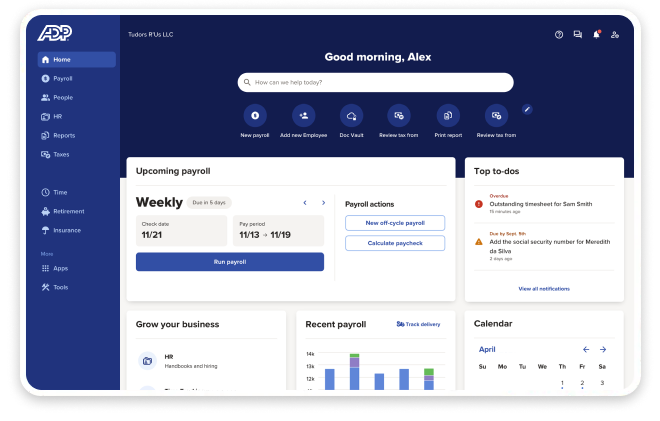
Connecting iCIMS with ADP cuts the admin when new hires move into employment. Relevant information flows from the talent acquisition process into the systems responsible for managing each employee.
For large organizations making thousands of hires, removing even small amounts of duplicate entry makes a significant difference. It also reduces basic errors from manually transferring names, contact information, job details, and other data between systems.
The integration therefore solves a different problem from most recruiting tools on this list: creating a smoother boundary between talent acquisition and the employee lifecycle that follows.
Key capabilities
- Recruit-to-HR handoff: Move relevant new-hire information from recruiting into downstream HR workflows.
- Reduced duplicate entry: Avoid manually recreating employee records after a candidate is hired.
- HR data management: Connect recruiting information with broader employee records.
- Payroll workflows: Support the transition from candidate data into payroll processes.
- More consistent data: Reduce errors introduced through manual transfers between systems.
- Enterprise HR connectivity: Connect iCIMS recruiting with a broader ADP-based HR technology stack.
Best for: Organizations that use iCIMS for recruiting and ADP for HR or payroll and want a cleaner handoff from candidate to employee.
4. UKG: broader workforce management.
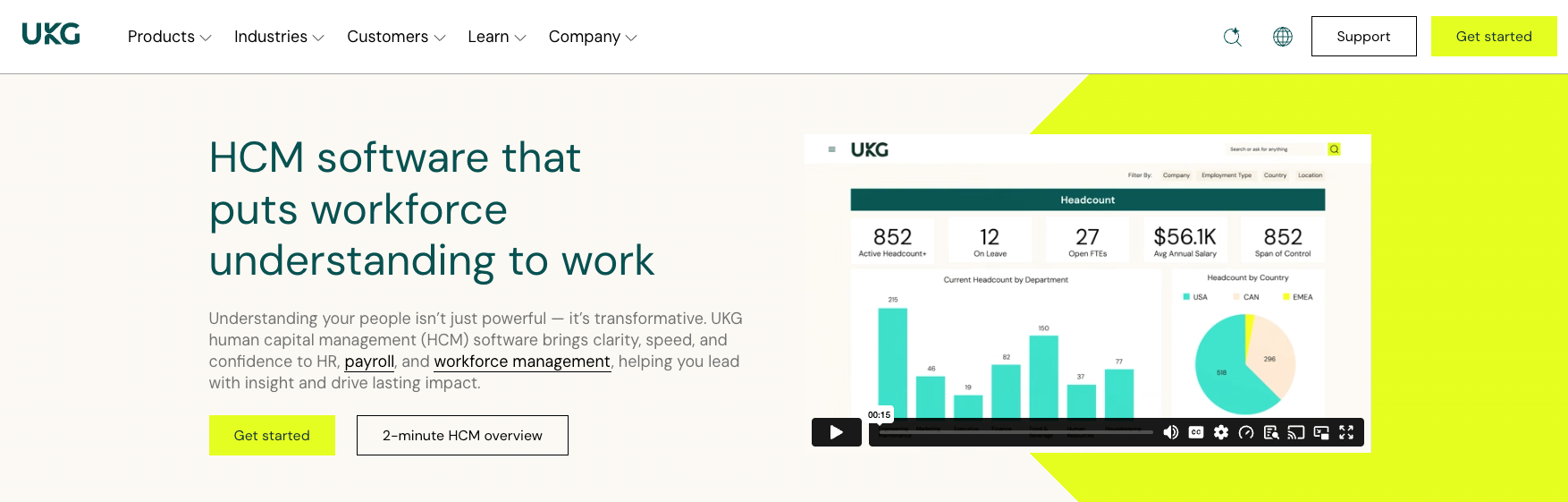
Similar to ADP, integrating iCIMS and UKG removes most of the admin (and errors) from transitioning candidates to employees. You seamlessly move new-hire information from your TA systems into the central HR and HCM database.
This can be particularly valuable for organizations with large hourly or distributed workforces, where high hiring volumes make manual data transfer impractical.
And key users can stick within the systems they know best. iCIMS remains focused on attracting and hiring talent, while UKG handles the employee and workforce management processes that follow.
Key capabilities
- Recruit-to-HR handoff: Move relevant new-hire information from iCIMS into downstream HR processes.
- Workforce management: Connect hiring with systems used for scheduling, time, attendance, and workforce operations.
- Payroll connectivity: Reduce manual steps between recruiting and payroll processes.
- Employee data management: Carry relevant information forward as a candidate becomes an employee.
- Reduced duplicate entry: Avoid recreating the same new-hire information across multiple systems.
- Enterprise scalability: Support large and complex workforces across locations and business units.
Best for: Organizations that use iCIMS for talent acquisition and UKG for HR, payroll, or workforce management.
5. Checkr: streamlined background checks.
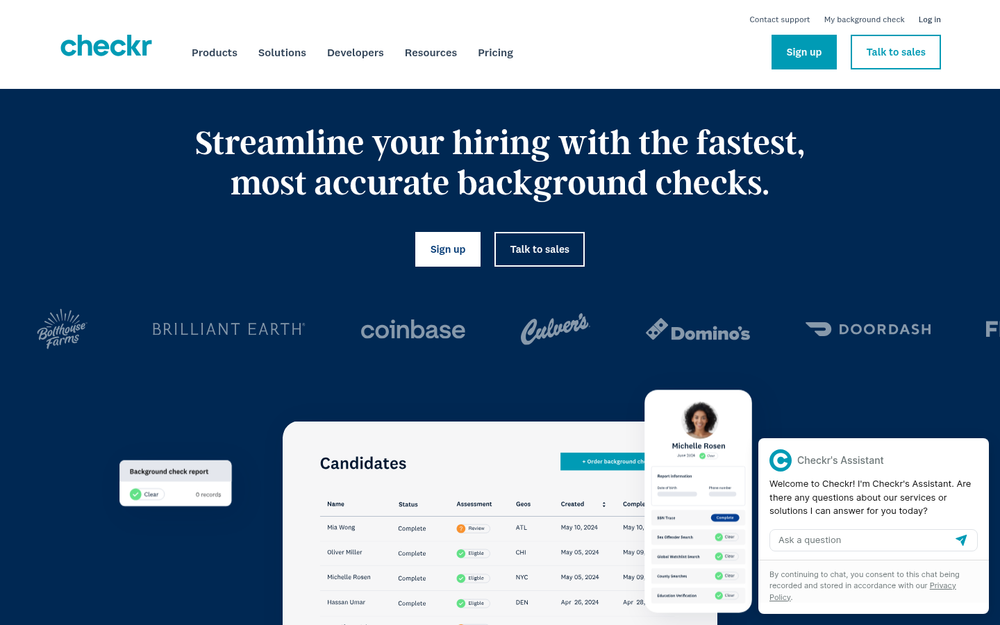
Background checks can become an awkward handoff late in the hiring process. Checkr helps connect background screening more closely with the recruiting workflow.
Its iCIMS integration lets you initiate background checks for candidates from your main TA platform. Relevant candidate information flows between systems, helping reduce repetitive data entry and giving you more connected candidate screening.
This is especially useful for organizations running background checks at scale, where even small manual steps become significant across hundreds or thousands of candidates.
Key capabilities
- Background screening: Run candidate checks as part of the hiring process.
- Connected workflows: Initiate screening from the existing recruiting workflow.
- Candidate data transfer: Reduce the need to manually enter information already held in iCIMS.
- Screening status: Keep recruiters informed as checks progress.
- Configurable packages: Apply different screening requirements based on role or hiring needs.
- High-volume screening: Support organizations running checks across large candidate populations.
Best for: Recruiting teams that want background screening to fit naturally into their existing iCIMS hiring workflow.
6. First Advantage (ex-Sterling): enterprise and global background screening.
First Advantage (previously Sterling) also provides background screening, specifically for enterprises hiring across different roles, regions, and regulatory environments.
The platform supports a broad range of screening and identity services, helping organizations manage different requirements across their workforce. Connecting these workflows with iCIMS keeps screening closer to the candidate's existing recruiting process rather than forcing recruiters to coordinate everything separately.
For multinational employers, a single background-check process may not make sense across every location or type of hire. Different candidates require different checks based on geography, industry, position, and company policy.
First Advantage makes the most sense for iCIMS customers that need an enterprise screening program, rather than the occasional one off.
Key capabilities
- Background checks: Screen candidates as part of pre-employment hiring workflows.
- Global screening: Support hiring requirements across multiple countries and regions.
- Identity verification: Verify candidate identities as part of relevant screening processes.
- Configurable screening programs: Apply different checks based on role, geography, or organizational requirements.
- iCIMS connectivity: Keep screening workflows linked to the candidate's recruiting record.
- Enterprise compliance: Support complex screening programs across large organizations and workforces.
Best for: Large or multinational employers with complex background screening, identity, and compliance requirements.
7. HackerRank: detailed technical assessments.
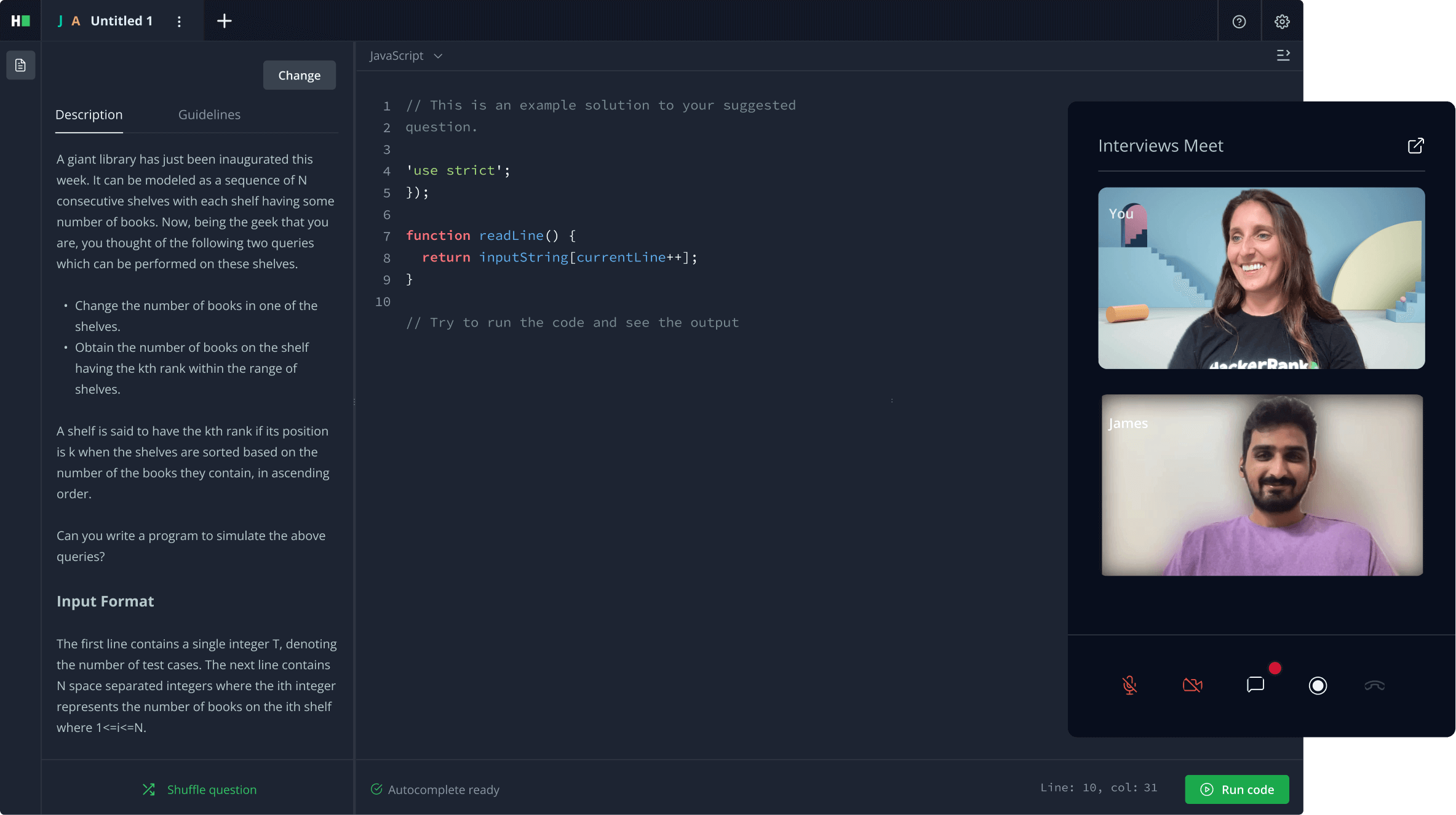
HackerRank adds skills-based technical assessment to the iCIMS hiring process. Recruiting teams use coding assessments and technical interviews to evaluate candidates based on demonstrated skills. Those evaluations are connected to the wider iCIMS candidate workflow.
This creates a more consistent way to decide who should progress. Recruiters and hiring teams can introduce technical evidence earlier, without coordinating separate tests and moving results between disconnected systems.
iCIMS manages the overall candidate journey, while HackerRank provides a specialized environment to assess technical ability.
Key capabilities
- Coding assessments: Evaluate candidates using practical technical challenges.
- Technical interviews: Run collaborative coding interviews with technical candidates.
- Skills-based evaluation: Assess demonstrated ability rather than relying entirely on resumes and credentials.
- Standardized assessments: Give candidates for the same role a more consistent evaluation.
- Technical skill coverage: Assess candidates across different programming languages, frameworks, and technical domains.
- Connected candidate workflows: Keep technical assessment activity tied to the wider iCIMS recruiting process.
Best for: Organizations hiring software engineers and other technical talent at scale.
8. GoodTime: automated interview scheduling.
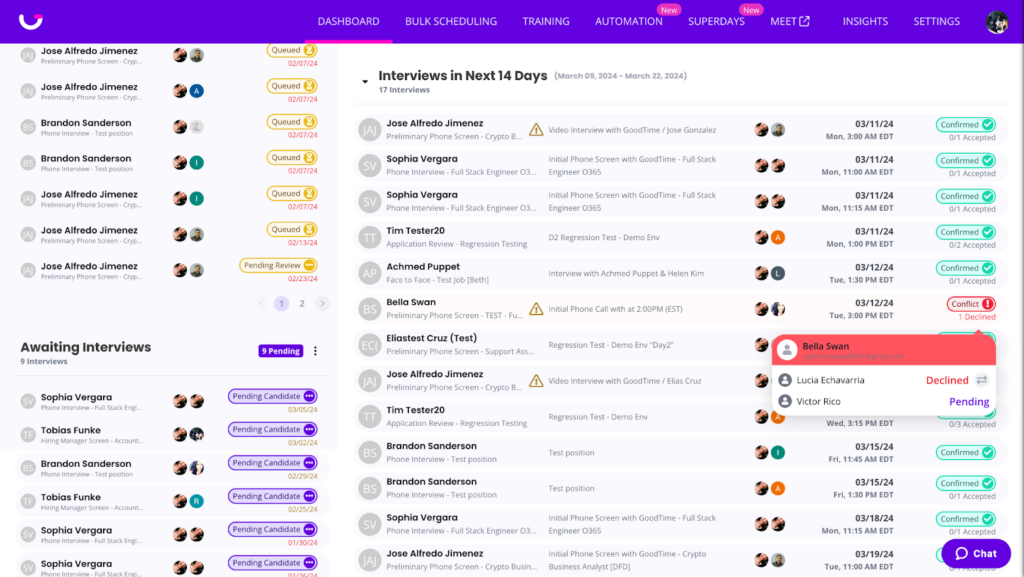
GoodTime is an interview scheduling and orchestration platform. It helps recruiting teams identify interviewers, find workable times, manage scheduling rules, and handle last-minute changes.
For large iCIMS customers, that means less recruiter time spent on logistics between candidate stages. It also helps organizations manage interviewer workloads and complex panel requirements as hiring volume grows.
Instead of replacing the candidate workflow in iCIMS, GoodTime gets candidates and interviewers into the same conversation at the right time.
Key capabilities
- Automated scheduling: Reduce manual coordination between candidates and interviewers.
- Panel scheduling: Organize interviews involving multiple stakeholders and availability constraints.
- Interviewer matching: Help assign appropriate interviewers based on defined requirements.
- Rescheduling: Handle changes without recruiters rebuilding interview schedules manually.
- Calendar connectivity: Coordinate availability across enterprise calendar systems.
- Scheduling analytics: Understand interviewer capacity and identify bottlenecks in the interview process.
Best for: Enterprise recruiting teams coordinating large numbers of interviews, panels, interviewers, and candidates.
9. DocuSign: offer sheets and hiring documents.
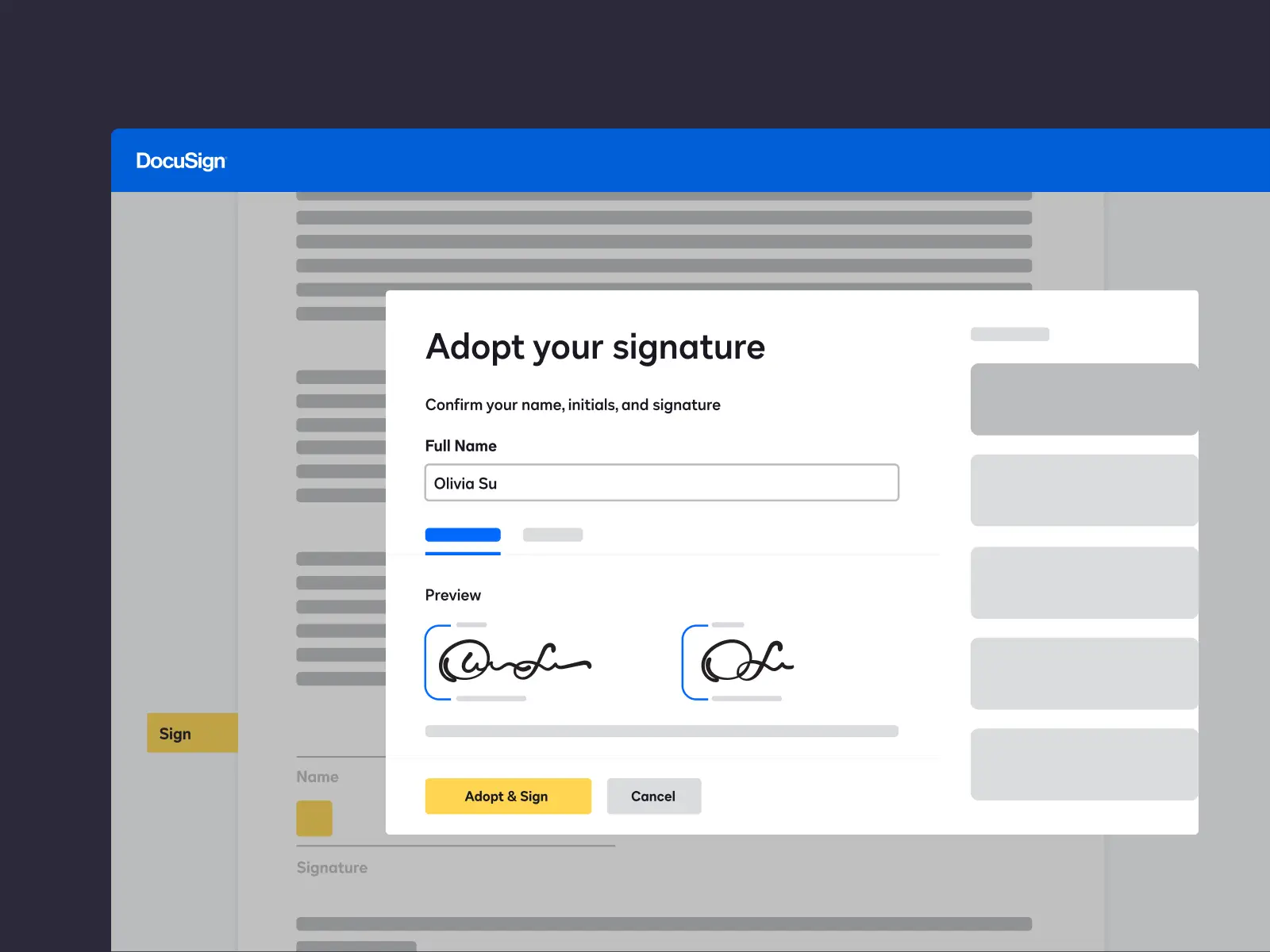
DocuSign adds electronic signatures and digital agreement workflows to iCIMS. Teams move from hiring decision to completed documentation without relying on printing, email attachments, or manually tracking signatures.
That's particularly valuable at enterprise scale, where small administrative steps multiply quickly across thousands of hires.
DocuSign is a simple addition, but that's the point. It helps automate a narrow, repetitive part of hiring that shouldn't require significant recruiter attention.
Key capabilities
- Electronic signatures: Collect digital signatures for offers and other hiring documents.
- Agreement workflows: Route documents through the required signing process.
- Reusable templates: Standardize commonly used hiring documents.
- Signature tracking: See which documents have been viewed, signed, or still require action.
- Multiple signers: Coordinate agreements requiring several signatures or approvals.
- Digital records: Keep completed agreements easier to store and retrieve.
Best for: Organizations that want to digitize signatures and document workflows at the end of the recruiting process.
10. LinkedIn Recruiter: connect LinkedIn sourcing with iCIMS.
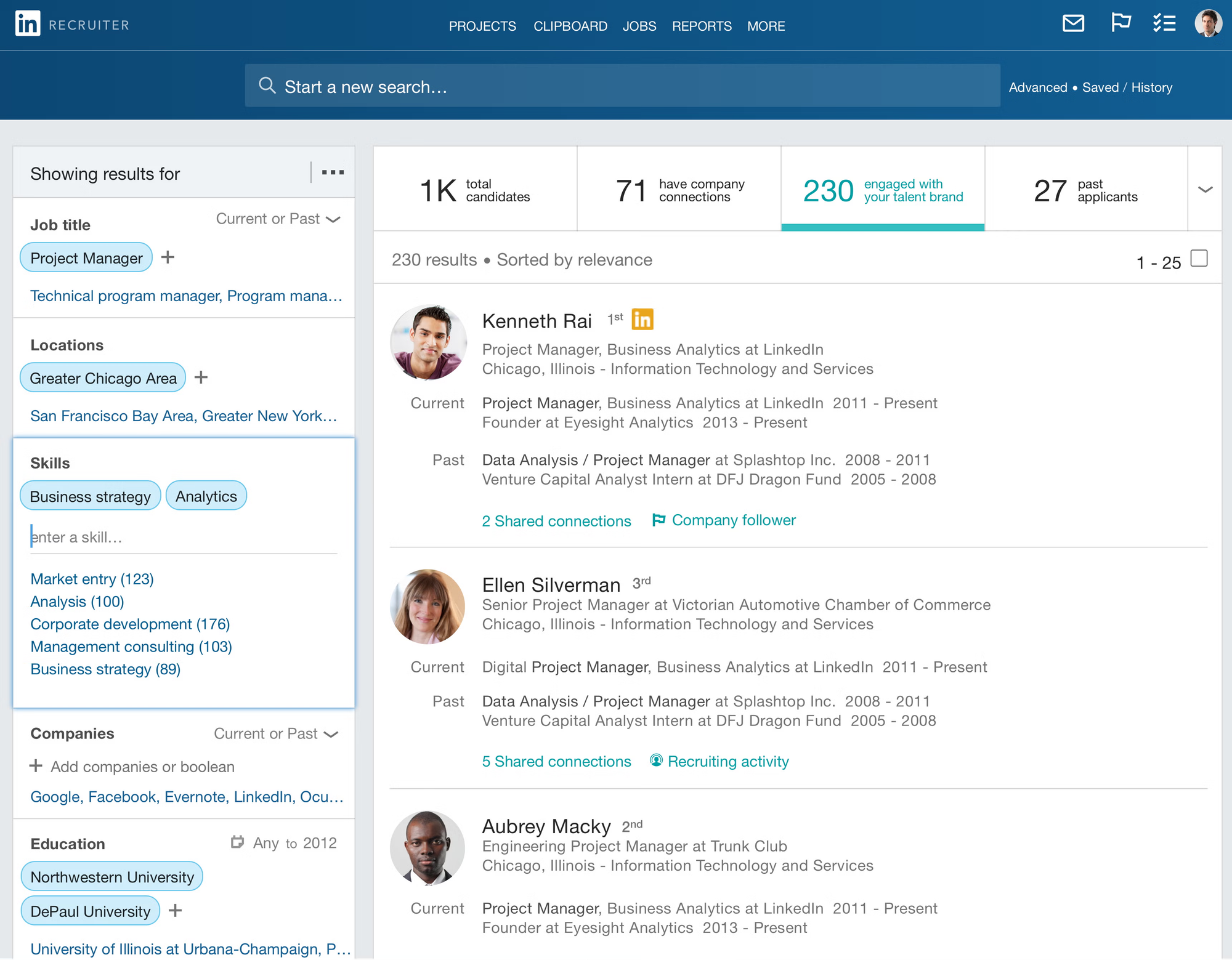
LinkedIn is where many recruiters discover and research candidates. iCIMS is where the organization manages the formal recruiting process.
LinkedIn Recruiter System Connect bridges the gap by connecting LinkedIn Recruiter with ATS information. Recruiters get more candidate context while sourcing, and avoid treating every LinkedIn profile as someone completely new to the organization.
That matters for large iCIMS customers with years of candidate history. Someone a recruiter finds on LinkedIn may already have applied, interviewed, or interacted with another part of the company.
Key capabilities
- Recruiter System Connect: Connect LinkedIn Recruiter with information held in iCIMS.
- ATS context: Access relevant recruiting history while researching candidates.
- Existing-candidate visibility: Identify people who may already exist in your recruiting database.
- Candidate history: Understand previous interactions before starting new outreach.
- Reduced duplicate work: Spend less time manually checking candidates across both systems.
- Connected sourcing: Bring LinkedIn candidate discovery closer to the wider iCIMS recruiting workflow.
Best for: Recruiting teams that rely heavily on LinkedIn Recruiter and want more context from their ATS while sourcing.
11. Tavio: complex enterprise HR integrations.
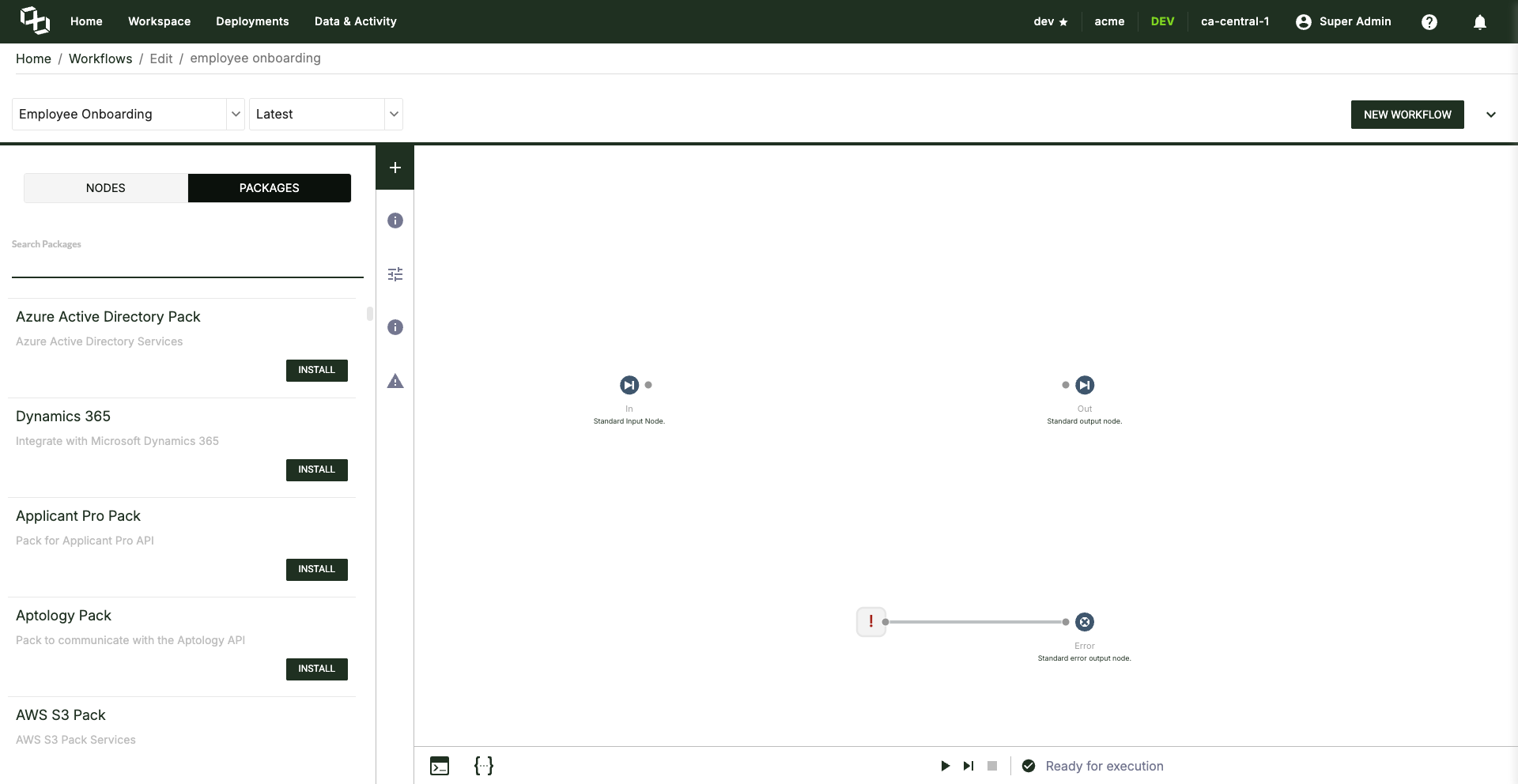
Tavio specializes in HR technology integrations, helping organizations connect platforms such as iCIMS with other systems across the employee lifecycle. Especially when an organization's requirements go beyond the standard connections available out of the box.
For large enterprises, those requirements can become complicated quickly. Recruiting data may need to move into an HRIS, payroll platform, identity system, or another internal application. Different fields, workflows, and business rules determine what happens along the way.
Tavio therefore fills a different role from the other iCIMS partners on this list: helping organizations make a complex HR technology ecosystem work together.
Key capabilities
- HR system integrations: Connect iCIMS with other platforms across the HR technology stack.
- Custom data flows: Support organization-specific requirements for moving information between systems.
- Field mapping: Align data stored differently across connected applications.
- Workflow automation: Trigger downstream processes as candidates move from recruiting into employment.
- Enterprise integration support: Handle more complex requirements than simple point-to-point connections.
- HR tech specialization: Build integrations around recruiting, HR, payroll, and related workforce systems.
Best for: Enterprises that need iCIMS to exchange data with a complex mix of HR, payroll, identity, and other business systems.
Build a smarter recruiting stack around iCIMS.
The right iCIMS partners let you add specialist capabilities while keeping your core recruiting infrastructure intact. You can automate interview scheduling, connect hiring with downstream HR systems, streamline background checks, improve technical assessments, and collaborate easily without rebuilding your recruiting stack.
Increasingly, you can also put AI to work across the recruiting process.
Metaview adds an AI recruiting layer around iCIMS, with agents that help teams source and rediscover candidates, review applications, conduct initial screens, capture interviews, and turn recruiting conversations into useful intelligence.
Your team gets more leverage from AI while iCIMS remains at the center of your recruiting operations.
Ready to put AI to work alongside iCIMS? Try Metaview for free.
Bring Metaview into your hiring stack.
Live notes, structured scorecards, and ATS sync - set up in under 10 minutes.
iCIMS integrations FAQs.
What integrations does iCIMS have?
iCIMS supports integrations across a wide range of recruiting and HR categories, including AI recruiting, sourcing, assessments, interview scheduling, background screening, HRIS and payroll, onboarding, compliance, and productivity tools.
The iCIMS Marketplace includes prebuilt partner integrations, while organizations with more complex requirements can also use APIs and integration services to connect other systems.
What is the iCIMS Marketplace?
The iCIMS Marketplace is the company's ecosystem of technology partners and integrations.
Organizations can find platforms that connect with iCIMS across different parts of recruiting and HR. The exact capabilities and implementation requirements vary between partners.
Does iCIMS integrate with AI recruiting tools?
Yes. AI recruiting platforms connect with iCIMS to add capabilities beyond traditional applicant tracking and recruiting workflow management.
Metaview works alongside iCIMS to provide AI Sourcing, candidate rediscovery, Application Review, screening agents, interview intelligence, and recruiting insights.
Can iCIMS integrate with Workday?
Yes. Organizations can connect iCIMS with Workday and use the two platforms for different parts of the employee lifecycle.
For example, a company might use iCIMS as its talent acquisition platform while Workday serves as its broader HCM or HR system. The integration can then help transfer relevant information once a candidate becomes an employee.
Can you use multiple iCIMS integrations at once?
Yes. In fact, large organizations commonly use multiple specialized platforms around their ATS.
A recruiting stack might combine iCIMS with an AI recruiting platform, assessment software, scheduling tools, background screening, an HRIS, and other systems. The important part is defining how those tools work together and where each type of data should ultimately live.
Do iCIMS integrations automatically sync candidate data?
It depends on the integration. Some integrations support deep or bidirectional data synchronization, while others exchange only specific records or trigger particular actions.
Before implementing an integration, check exactly what information moves between the platforms, how frequently it updates, and which system is treated as the source of truth.
How do I choose the right iCIMS partners?
Start with a specific recruiting problem rather than a list of available integrations. Identify where your team spends unnecessary time, where information becomes disconnected, or where your existing technology lacks a specialist capability.
Then compare iCIMS partners based on workflow fit, integration depth, recruiter adoption, security, scalability, and the amount of manual work they can actually eliminate.


