Paradox helped introduce recruiters to conversational AI. Its Olivia assistant interacts with candidates, automates screening and scheduling, and takes repetitive coordination work off recruiters' plates.
But recruiting AI has moved quickly.
Today's AI can do far more than guide candidates through an existing hiring process. AI agents can actively find candidates, review every inbound application, conduct personalized screening conversations, automate outbound recruiting, capture human interviews, and preserve the context recruiters and hiring managers create along the way.
So if you're comparing Paradox alternatives, the question is actually how much of your recruiting process you want AI to support.
Some Paradox competitors specialize in individual problems such as high-volume screening, assessments, sourcing, or scheduling. Others, including Metaview, take a broader approach: connected AI agents across sourcing, application review, screening, interviews, and hiring-team collaboration.
We've compared the nine best options below, particularly for teams that want AI to work across the hiring process rather than primarily around candidate interactions.
In brief: 9 best Paradox AI alternatives.
| Paradox alternative | Best for | AI sourcing | AI screening | Interview intelligence | Outbound automation |
|---|---|---|---|---|---|
| 1. Metaview | Complete AI recruiting | ✓ | ✓ | ✓ | ✓ |
| 2. fillmore | Complete outbound hiring automation | ✓ | ✓ | — | ✓ |
| 3. Humanly | Conversational screening | — | ✓ | ✓ | — |
| 4. HireVue | Assessments and structured screening | — | ✓ | ✓ | — |
| 5. Phenom | Enterprise talent experiences | ✓ | ✓ | — | ✓ |
| 6. Eightfold AI | Talent intelligence | ✓ | ✓ | — | ✓ |
| 7. Findem | Talent search and candidate data | ✓ | — | — | ✓ |
| 8. GoodTime | Interview scheduling and coordination | — | — | — | — |
| 9. Fountain | High-volume and frontline hiring | — | ✓ | — | ✓ |
What is Paradox AI?
Paradox is a conversational AI recruiting platform designed to automate candidate interactions and common recruiting workflows.
Rather than forcing candidates through forms, email chains, and manual scheduling, Paradox uses conversational interfaces to help them move through the hiring process. It's particularly associated with high-volume recruiting, where recruiters may need to process and coordinate large numbers of candidates quickly.
Paradox recruiting capabilities include areas such as:
- Candidate screening: Gathering qualification information and helping determine whether candidates meet role requirements.
- Interview scheduling: Coordinating interview availability without the usual back-and-forth between candidates and recruiting teams.
- Candidate communication: Answering questions and providing information throughout the hiring process.
- Application workflows: Helping candidates find roles and move through application steps conversationally.
- Recruiting events: Supporting candidate registration, communication, and coordination around hiring events.
- Recruiting automation: Reducing manual work around repetitive candidate-facing processes.
This makes Paradox particularly relevant for organizations where candidate volume and coordination are major recruiting challenges.
But that's also useful context when comparing Paradox competitors.
The newer generation of AI recruiting platforms isn't limited to making existing candidate workflows more conversational. AI can now work earlier in the process to find and engage talent, and later in the process to support human interviews and hiring decisions.
For teams evaluating Paradox today, the question is therefore whether they primarily need conversational recruiting automation or want AI to play a more connected role across the entire recruiting process.
Note: Workday acquired Paradox in October 2025, and Paradox's Conversational ATS is now available through Workday.
What is Paradox’s Olivia recruiting chatbot?
Olivia is Paradox's conversational AI recruiting assistant. It's the product most closely associated with Paradox, built to let candidates interact with the recruiting process through natural conversation.
Candidates can use Olivia to ask questions, find relevant jobs, provide screening information, schedule interviews, and complete other steps without waiting for a recruiter to respond manually.
Key Olivia capabilities include:
- Candidate Q&A: Answer common questions about jobs and the hiring process.
- Candidate screening: Gather qualification information conversationally.
- Interview scheduling: Find available times and coordinate interviews.
- Application support: Help candidates discover roles and move through application steps.
- Candidate communication: Keep candidates informed as they progress.
- Recruiting-event support: Automate common interactions around hiring events.
Olivia's appeal is easy to understand. Recruiting involves enormous amounts of repetitive interaction, and candidates don't necessarily need a human recruiter to answer every question or coordinate every calendar invitation.
8 best Paradox alternatives and competitors in 2026
The best Paradox alternative depends on what you're trying to add or change. Some tools overlap closely with Olivia's conversational screening capabilities, while others solve different parts of recruiting altogether.
Let's look at where each Paradox competitor fits.
1. Metaview: Paradox alternative for complete AI recruiting.
Best for: Recruiting teams that want a comprehensive AI recruiting platform spanning sourcing, inbound applications, screening, interviews, and hiring-manager collaboration, rather than a platform primarily centered on conversational candidate workflows.
Both Paradox and Metaview use conversational AI to screen candidates at scale. But Metaview takes AI further across the recruiting process, connecting sourcing, application review, screening, human interviews, and hiring-team collaboration.
It’s the best Paradox alternative for teams that don't just want to automate candidate interactions. Metaview's AI agents work alongside recruiters and hiring managers, using the context they create to improve what happens throughout hiring.
Where Metaview goes further
- AI sourcing: Metaview's Sourcing agents actively find candidates based on your hiring criteria, company context, and feedback. Instead of repeatedly rebuilding searches, recruiters can calibrate agents with natural-language feedback and examples of what good looks like.
- Application Review: Every inbound application is evaluated against your specific criteria and hiring context.
- Conversational AI Screening: Screening agents conduct personalized, unscripted conversations with candidates. They respond to answers, ask relevant follow-ups, and gather evidence.
- Interview intelligence: AI Notes captures interviews, produces structured scorecards, and preserves the evidence recruiters and hiring managers need.
- Hiring-manager collaboration: Intake conversations, feedback, interviews, and hiring decisions all create valuable context about what the team actually wants. Metaview can put that context to work rather than treating the job description as the only source of truth.
- Connected recruiting intelligence: The bigger differentiator is how these capabilities work together. What you learn during intake can inform sourcing and screening, while evidence gathered from candidates can carry into human interviews and debriefs.
Metaview has made my job as Tech Recruiter much easier. Before Metaview notes took me 1 to 2 hours. Now with Metaview, my notes are ready in 5 minutes. It has an AI assistant you can ask about the topics you cover in your call. When my lead announced we had the paid version, I was the happiest woman in the world.”
2. fillmore: conversational AI for outbound recruiting.
Best for: Teams that need to fill the top of the funnel with precision and at scale, but have better work to do than scouring profiles and booking calls.
If what appeals about Olivia is an AI recruiting assistant that takes work off your team's plate, fillmore is your go-to for outbound recruiting.
Olivia helps automate interactions with candidates moving through your hiring process. fillmore can own much of the work required to find, engage, and book those candidates in the first place.
You brief fillmore much like you'd brief another recruiter. Give it a job description, sample profiles, or natural-language guidance about who you're looking for, and it takes over from there.
The workflow
- Brief fillmore like a teammate. Explain the role and what good looks like in whatever format you already have.
- Find and research candidates. fillmore searches for relevant prospects and investigates individual profiles.
- Handle personalized outreach. It reaches out in your team's voice rather than simply blasting a generic sequence.
- Manage replies and follow-ups. The agent continues the conversation instead of handing every response back to the recruiter.
- Book the first call. Once someone is interested, fillmore handles the scheduling work needed to get them onto the calendar.
- Keep learning. Recruiter feedback helps refine its understanding of the profiles your team actually wants.
fillmore works through Slack, giving recruiting teams a familiar place to brief it, review candidates, and provide feedback. Teams can control how much autonomy it has for each role rather than taking an all-or-nothing approach to automation.
And because fillmore sits alongside Metaview's broader recruiting platform, the top-of-funnel work connects with screening, interviews, and the context created by recruiters and hiring managers later on.
We are thrilled. fillmore facilitated an incredible sourcing effort.”
3. Humanly: conversational candidate screening.
Best for: Teams whose main use case is conversational screening and interview automation, and that want another specialized platform in that part of the recruiting process.
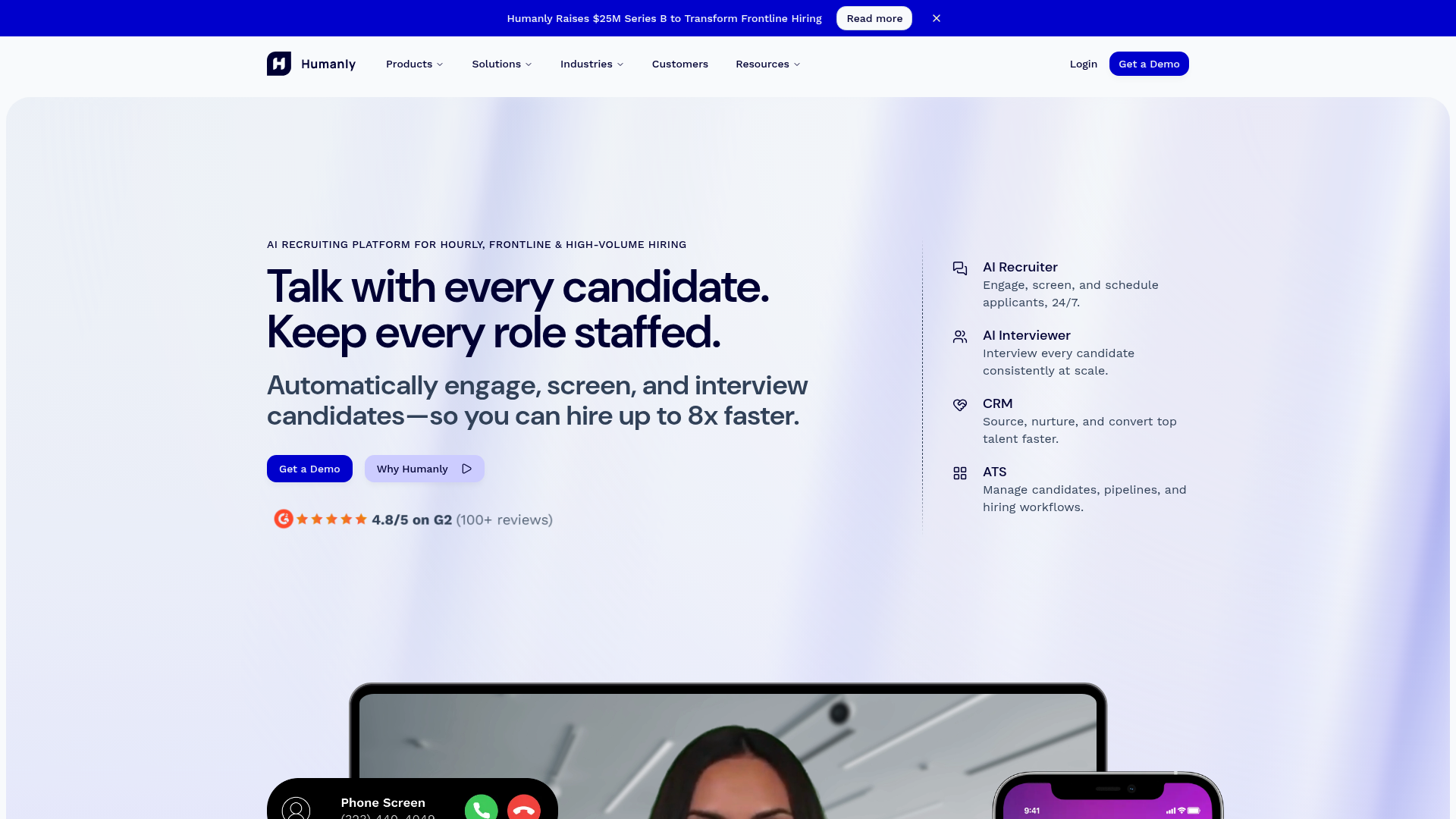
Humanly is one of the closer Paradox competitors for teams primarily interested in conversational AI.
It automates and supports candidate conversations, particularly around screening, scheduling, and interview workflows. Like Paradox, it aims to reduce the amount of repetitive candidate interaction recruiters need to handle manually.
Key capabilities
- AI candidate screening: Automates early-stage conversations and qualification.
- Conversational recruiting: Uses chat-based interactions to engage candidates throughout early hiring stages.
- Interview scheduling: Helps reduce manual calendar coordination.
- Interview support: Provides AI capabilities around recruiter-led interviews and candidate evaluation.
- Candidate engagement: Automates common communications and follow ups.
- Recruiting analytics: Helps teams understand candidate and interview activity.
Humanly is concentrated around conversational recruiting and interviewing. Teams that want AI sourcing, deeper application review, and connected intelligence across the full recruiting lifecycle may need additional tools.
It has really helped automate a lot of the process. We have texts and emails sent out with the Humanly link every twenty-four hours, which has saved us a lot of time.”
4. HireVue: assessments and structured screening.
Best for: Larger organizations that want structured candidate assessments and standardized screening, particularly where skills testing is a significant part of the hiring process.
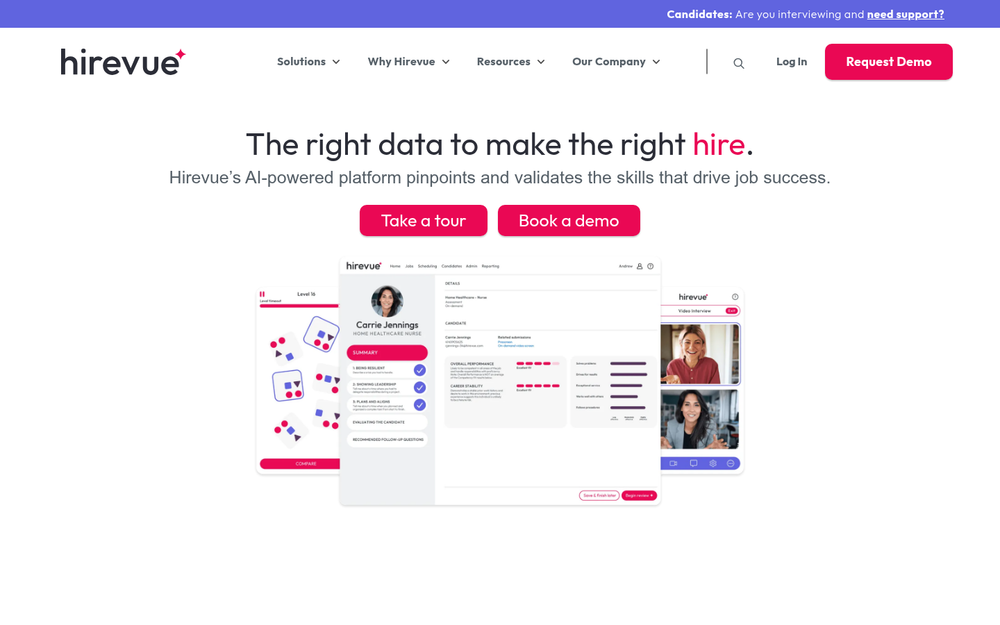
HireVue is a hiring platform focused on candidate assessment, interviewing, and screening. It's a Paradox competitor for larger organizations that need to evaluate high volumes of candidates through a standardized process.
Where Paradox emphasizes conversational recruiting and candidate workflows, HireVue puts more weight on structured interviews and assessments. It now includes AI-powered screening alongside skills assessments, video interviewing, and interview tools.
Key capabilities
- AI screening: Automates early candidate evaluation and helps teams identify candidates to progress.
- Skills assessments: Tests job-relevant competencies and abilities before later interview stages.
- Video interviewing: Supports structured live and on-demand video interviews.
- Interview tools: Helps teams standardize questions and evaluation across interviewers.
- Scheduling: Automates interview coordination and reduces administrative work.
- High-volume hiring: Supports organizations processing large candidate volumes across repeatable hiring workflows.
HireVue is strongest around evaluation and structured screening rather than proactive talent discovery. Teams looking to automate sourcing and outbound recruiting may need additional tools.
And while it can support candidates through several evaluation stages, it doesn't take the same connected approach as Metaview across sourcing, application review, conversational screening, and interview intelligence.
HireVue offers a strong set of features — from on-demand video interviews to structured rating guides and AI-enabled assessments. Integration with our ATS and other tools (like scheduling platforms) was fairly straightforward.”
5. Phenom: enterprise candidate experiences.
Best for: Large enterprises looking for a talent experience platform spanning candidate acquisition, CRM, career sites, and internal talent management.
Phenom is a broad talent experience platform built primarily for large enterprises. It combines recruiting technology with career sites, CRM, candidate engagement, talent marketing, automation, and internal talent management.
That makes it a very different kind of Paradox alternative. Rather than focusing mainly on a conversational recruiting assistant, Phenom aims to provide a large ecosystem for managing how candidates and employees interact with an organization.
Key capabilities
- AI candidate discovery: Helps recruiters find and match potential candidates.
- Career sites: Creates personalized job discovery and candidate experiences.
- Talent CRM: Builds and manages candidate pipelines for future hiring.
- Candidate engagement: Supports personalized communications and recruiting campaigns.
- Recruiting automation: Automates repetitive workflows across candidate journeys.
- Internal talent marketplace: Extends beyond external recruiting into employee mobility and development.
Of course, not every team needs such breadth. If you simply want to add a few AI agents to an existing stack, Phenom is probably not a great fit.
But if the overall candidate experience is your chief concern and you’re ready to build it with intention, this is a great place to start.
I appreciate the voice screening feature, which enables 24/7 screenings and the scheduling automation that allows immediate interview scheduling upon application submission. It's great that we no longer have candidates waiting days or weeks to get an interview.”
6. Eightfold AI: best for talent intelligence.
Best for: Large organizations that want AI-powered talent intelligence, matching, and internal mobility alongside external recruiting.
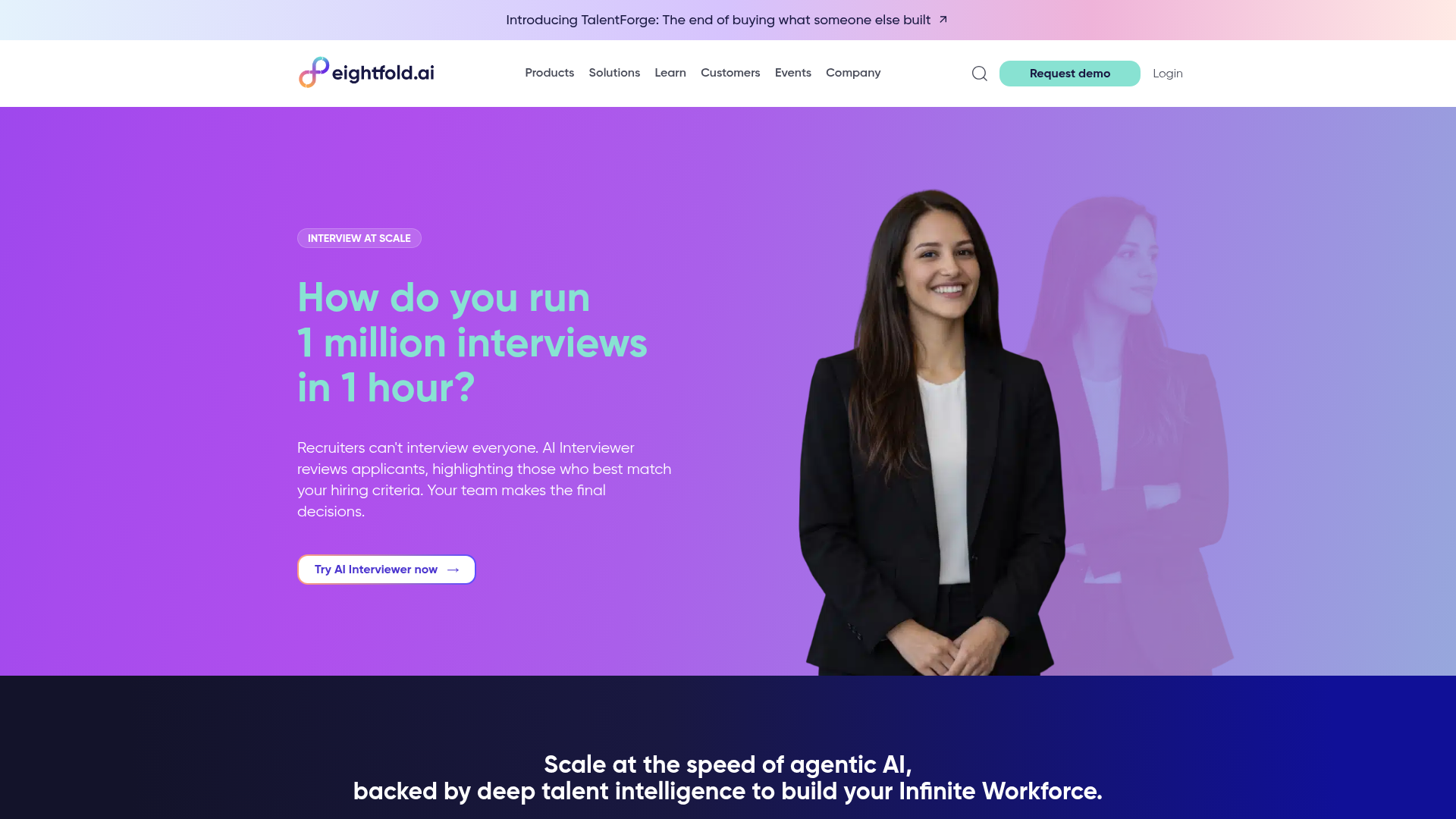
Eightfold AI approaches recruiting from a talent intelligence perspective. It uses AI to understand skills, experience, and potential across external candidates and existing employees, helping organizations match people with opportunities.
Eightfold is particularly interesting when the bigger need isn't conversational screening but making better use of a large talent dataset.
Key capabilities
- Talent matching: Uses AI to connect candidates with relevant opportunities based on skills and experience.
- Candidate sourcing: Helps recruiting teams discover potential candidates for open roles.
- Talent intelligence: Builds a deeper picture of skills and potential across talent pools.
- Internal mobility: Matches existing employees with roles and development opportunities.
- Workforce planning: Helps organizations understand existing skills and future talent needs.
- Candidate engagement: Supports recruiting teams in building and managing talent pipelines.
Eightfold is fundamentally oriented around talent intelligence and matching rather than owning the recruiting conversation from end to end. Teams looking for personalized AI screening conversations, detailed interview intelligence, or an autonomous top-of-funnel recruiting agent may prefer Metaview.
Being able to look at hiring data by gender, ethnicity, location, department, position, and recruiter gives us a much clearer picture of our hiring trends. The visual breakdowns and comparisons also make the information easier to understand when reviewing hiring performance with the team.”
7. Findem: best for talent search and candidate data.
Best for: Recruiting teams that want a sourcing-first tool with strong candidate data, search, and outbound capabilities.
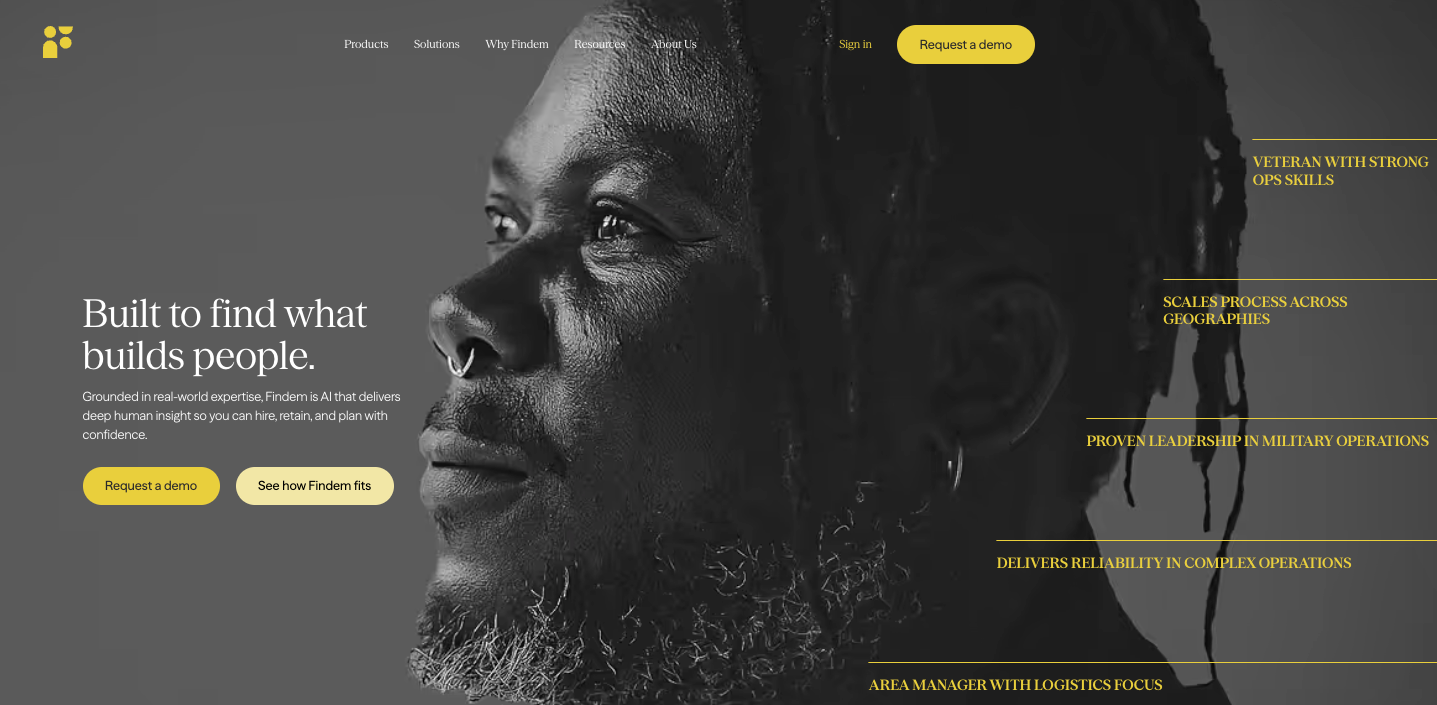
Findem is an AI-powered talent acquisition platform with a strong focus on candidate search, talent data, and outbound recruiting. It's a useful Paradox alternative for teams whose biggest priority is finding qualified candidates rather than automating inbound candidate interactions.
It combines candidate information from multiple sources to help recruiters search for people based on detailed attributes and build targeted talent pools. Findem also supports outreach and CRM workflows, giving sourcing teams tools to move from candidate discovery to engagement.
Key capabilities
- AI talent search: Helps recruiters discover candidates using detailed, contextual search criteria.
- Candidate data: Brings together information from multiple sources to create richer talent profiles.
- Talent pools: Lets teams build and manage pipelines of potential candidates.
- Outbound recruiting: Supports candidate engagement and recruiting campaigns.
- Talent CRM: Helps teams organize prospects and maintain relationships over time.
- Recruiting analytics: Provides insights into talent pools, pipelines, and recruiting activity.
Findem's biggest strengths sit toward the sourcing and talent-data end of recruiting. Teams looking for conversational AI screening and deeper intelligence around human-led interviews may need other tools alongside it.
It’s a seamless integration with Greenhouse, and they continue to roll out new features that help with current recruiter challenges like candidate fraud and overapplications. Even includes a feature that helps identify suspicious applications, which is a growing challenge across talent acquisition.”
8. GoodTime: best for interview scheduling and coordination.
Best for: Teams that want automated interview scheduling and coordination, particularly for complex interview processes.
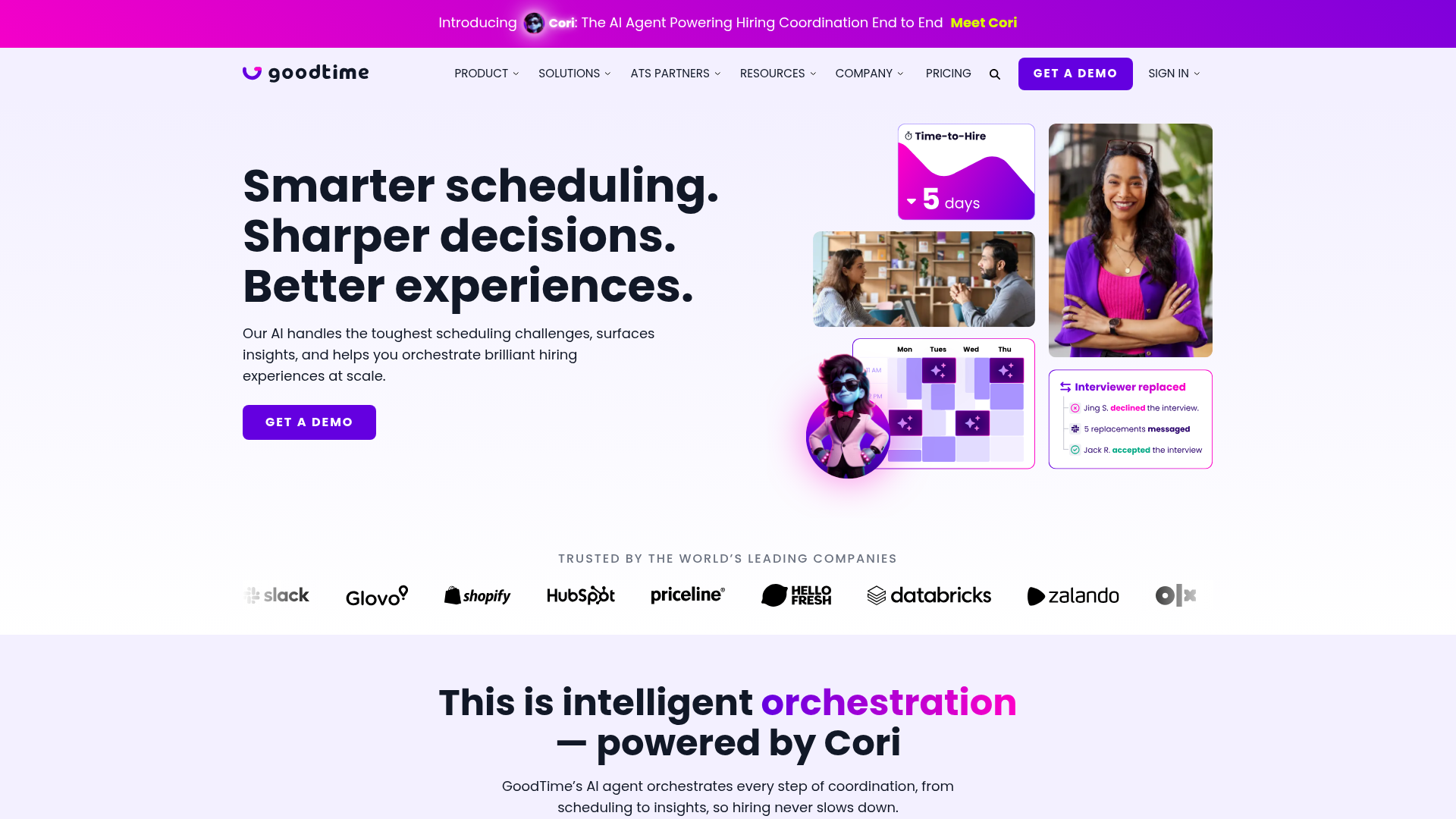
GoodTime is a highly specialized Paradox competitor focused on interview scheduling. The platform automates coordination between candidates and interview teams, helping recruiters manage complex calendars without endless emails and manual scheduling.
It also provides tools for interview orchestration and interviewer management.
Key capabilities
- Automated interview scheduling: Finds suitable times across candidate and interviewer calendars.
- Complex panel coordination: Helps organize multi-stage and multi-interviewer processes.
- Candidate self-scheduling: Gives candidates more flexibility to select appropriate interview times.
- Interviewer management: Helps teams distribute interview workloads and select appropriate interviewers.
- Interview orchestration: Supports the workflows surrounding interview loops and scheduling changes.
- Scheduling analytics: Gives recruiting teams visibility into interview operations and bottlenecks.
GoodTime is intentionally narrower than Paradox, Metaview, and the broader platforms on this list. It solves interview coordination rather than sourcing, screening, or evaluating candidates.
That's not necessarily a disadvantage. If scheduling is the main Paradox capability your team needs, a focused platform may be more appropriate than replacing it with another large recruiting suite.
As a recruiter, this makes my life so much easier! I'm able to spend time on things that are more important. Easy to implement and easily integrate with tools (MS Teams and MS Outlook)”
9. Fountain: best for high-volume and frontline hiring.
Best for: Organizations that need to hire hourly or frontline workers at high volume and want to automate as much of the candidate journey as possible.
Fountain is designed for high-volume hiring, particularly in organizations recruiting large numbers of hourly, frontline, or distributed workers.
Its platform automates much of the candidate journey, from application and screening through scheduling, document collection, and onboarding. That makes Fountain one of the closer alternatives for companies attracted to Paradox because of its ability to handle recruiting at significant scale.
Key capabilities
- High-volume applicant processing: Helps teams manage large numbers of candidates across repeatable hiring workflows.
- Automated screening: Uses qualification steps and workflows to identify candidates who meet role requirements.
- Candidate communication: Automates messages and updates throughout the hiring process.
- Interview scheduling: Lets qualified candidates progress without extensive recruiter coordination.
- Workflow automation: Moves candidates through predefined stages based on their actions and qualifications.
- Onboarding support: Extends beyond candidate selection into post-hire workflows.
Fountain is particularly optimized for high-volume and frontline hiring rather than the broader range of professional, technical, and executive recruiting use cases.
Its workflow-oriented approach also differs from Metaview's emphasis on AI agents that reason from hiring context, gather richer candidate evidence, and support recruiters and hiring managers through later-stage interviews.
Instead of manually reviewing the thousands of applicants we receive, we automate some of the review based on key qualifiers that Fountain's system will filter through for us.”
Why look for a Paradox alternative?
There's no single reason to replace or look beyond Paradox. The right alternative depends on which parts of recruiting you most want AI to improve.
You might consider a Paradox alternative if:
- You want AI sourcing as well as screening. Modern recruiting agents can actively find and evaluate candidates rather than primarily working with people already interacting with your hiring process.
- You want deeper interview intelligence. AI can support the human interviews that follow screening with transcripts, structured notes, scorecards, and evidence capture.
- You want closer hiring-manager collaboration. The strongest recruiting AI can learn from intake conversations and ongoing feedback rather than relying only on configured workflows and job requirements.
- You want sourcing, inbound, screening, and interviews connected. A broader platform can carry context between stages instead of treating each recruiting task as an isolated automation.
- You want more autonomous outbound recruiting. AI agents can increasingly research prospects, personalize outreach, manage replies and follow-ups, and schedule interested candidates.
- You need a different specialist tool. If your main challenge is assessments, sourcing, scheduling, or talent intelligence, a focused Paradox competitor may be a better fit than another broad conversational recruiting platform.
Paradox remains relevant for conversational candidate experiences and high-volume recruiting workflows. The alternatives below take different approaches, from specialist screening and sourcing tools to more comprehensive AI recruiting platforms.
Paradox vs Metaview: how do they compare?
| Capability | Paradox | Metaview |
|---|---|---|
| Conversational AI screening | ✓ | ✓ |
| Candidate communication | ✓ | ✓ |
| Interview scheduling | ✓ | ✓ |
| AI sourcing | More limited | ✓ |
| Application review | ✓ | ✓ |
| Autonomous outbound recruiting | Some capabilities | ✓ |
| Interview transcription and notes | More limited | ✓ |
| AI-generated scorecards | More limited | ✓ |
| Technical interview intelligence | More limited | ✓ |
| Hiring-manager context | ✓ | ✓ |
| Connected intelligence across recruiting | Some | Core platform approach |
Paradox is compelling for organizations focused on conversational candidate experiences, high-volume workflows, and recruiting automation, especially those already heavily invested in Workday.
Metaview is built for teams that want AI working across more of the recruiting process. Sourcing agents find candidates, Application Review evaluates inbound talent, Screening agents conduct personalized conversations, and interview intelligence captures the evidence from the human interviews that follow.
From recruiting chatbot to agentic recruiting.
Paradox helped bring conversational AI to the recruiting world. But the possibilities for recruiting AI now go much further.
AI agents can find candidates before they apply. They can review every inbound application, conduct personalized screening conversations, and handle outbound recruiting. Once humans take over, AI can capture interviews, structure evidence, and help preserve everything recruiters and hiring managers learn.
Metaview is built around that model. AI agents handle sourcing, Application Review, and Screening, fillmore can own outbound recruiting from search to booked call, and interview intelligence helps humans get more from every conversation that follows.
Try Metaview free and see what recruiting looks like when AI works across the entire hiring process.
Bring Metaview into your hiring stack.
Live notes, structured scorecards, and ATS sync - set up in under 10 minutes.
FAQs: Paradox recruiting and alternatives.
What is Paradox AI recruiting?
Paradox is a conversational AI recruiting platform owned by Workday. It uses AI to automate candidate-facing recruiting activities such as screening, candidate communication, interview scheduling, and other hiring workflows.
Paradox is particularly associated with high-volume recruiting, where conversational automation can help organizations process and communicate with large numbers of candidates efficiently.
What is the Paradox Olivia recruiting chatbot?
Olivia is Paradox's conversational AI recruiting assistant. Candidates can interact with Olivia to find jobs, answer screening questions, schedule interviews, get answers to common questions, and move through other parts of the hiring process.
Olivia is often described as a recruiting chatbot, although its capabilities extend beyond simply answering candidate questions into broader workflow automation.
Who are the main Paradox competitors?
Paradox competitors include platforms such as Metaview, Humanly, HireVue, Phenom, Eightfold AI, Findem, GoodTime, and Fountain.
They aren't all direct substitutes. Humanly overlaps more closely with conversational screening, GoodTime specializes in scheduling, Findem emphasizes sourcing, and Metaview provides a broader AI recruiting platform spanning sourcing, application review, screening, and human interviews.
What are the best alternatives to Paradox AI?
The right alternative depends on what you use Paradox for.
Metaview is designed for teams looking for more comprehensive AI across recruiting. Humanly focuses on conversational screening, HireVue on assessments and structured evaluation, Findem on sourcing and talent data, GoodTime on scheduling, and Fountain on high-volume frontline hiring.
Does Paradox offer AI candidate screening?
Yes. Candidate screening is one of Paradox's core conversational recruiting use cases. Its technology can gather candidate information and qualifications as part of automated recruiting workflows.
Teams comparing screening platforms should consider not only whether screening is automated, but how conversational the experience is, what evidence is gathered, and how that information connects with the rest of the hiring process.
What should you look for in a Paradox alternative?
Start with the parts of recruiting you want AI to own or improve.
Consider conversational screening, sourcing, outbound recruiting, application review, scheduling, interview intelligence, ATS integrations, and hiring-manager collaboration. It's also worth asking whether context carries between these activities or whether each feature operates largely independently.
What's the difference between a recruiting chatbot and an AI recruiting agent?
A recruiting chatbot primarily interacts with candidates through conversation. It may answer questions, collect information, screen candidates, or trigger predefined recruiting workflows.
An AI recruiting agent can take more ownership of a goal. For example, an agent might search for suitable candidates, research their backgrounds, decide who to contact, personalize outreach, handle replies, and continue working until an interview is booked.
That's why the market is increasingly moving beyond the traditional recruiting-chatbot model: conversation is one useful interface for AI, but it's no longer the limit of what recruiting AI can do.