
Outbound recruiting has a capacity problem. Every new role means more searching, more outreach, more follow-ups, and more scheduling. You can only manage so many roles at once.
The latest outbound recruiting tools promise to make that work easier. But there's a big difference between platforms that help recruiters do outbound faster and those that actually take the work off their plate.
This guide compares 10 of the best outbound recruiting platforms available today. We’ll see established sourcing tools like LinkedIn Recruiter, to AI-powered search platforms, and fully autonomous outbound engines.
We'll look at what each does well, how much of the process it automates, and how much work still falls to the recruiter.
Outbound recruiting tools at a glance.
| Tool | Best for | Sourcing | Outreach | Recruiter involvement |
|---|---|---|---|---|
| fillmore | Autonomous outbound recruiting | Agentic AI sourcing and research | Fully personalized, multi-channel outreach | Low and configurable |
| Juicebox | Candidate search with AI | Natural-language search | AI-assisted outreach | Medium |
| Gem | Recruiting CRM and engagement | Sourcing and talent pools | Sequences and nurture campaigns | Medium-high |
| hireEZ | Sourcing and candidate engagement | AI-assisted talent search | Automated engagement | Medium |
| SeekOut | Deep candidate discovery | AI search and talent data | Outreach capabilities | Medium-high |
| LinkedIn Recruiter | LinkedIn talent access | Advanced LinkedIn search | InMail | High |
| Ashby | Outbound within your ATS | Sourcing and CRM workflows | Sequencing | Medium-high |
| Loxo | All-in-one recruiting | AI sourcing and contact data | Multi-channel outreach | Medium |
| Findem | Data-driven talent search | Attribute-based AI search | Candidate engagement | Medium |
| AmazingHiring | Technical sourcing | Specialized technical talent search | Outreach tools | High |
What are outbound recruiting tools?
Outbound recruiting tools help hiring teams proactively find and engage potential candidates. They help you search talent, research candidates, find contact information, send personalized outreach, manage follow-ups, and build candidate pipelines.
But "outbound recruiting platform" now describes several quite different types of software. Some are primarily candidate databases and search tools. Others combine AI sourcing, recruiting CRM, and engagement features to make outbound workflows faster.
And a newer category goes further: autonomous outbound recruiting. Instead of helping recruiters complete each step, these tools can take ownership of the workflow from the initial hiring brief through to an interested candidate appearing on the recruiter's calendar.
That's an important distinction. A great sourcing platform can make an individual recruiter much more productive. An autonomous outbound platform changes how much recruiter capacity you need in the first place. And it shifts your focus to interviewing and building connections, where it belongs.
Can the right tools make outbound recruiting easy?
If a platform cuts a 30-minute sourcing task down to 10 minutes, that's certainly useful. But if you still need to run searches, review profiles, research prospects, write or approve messages, manage follow-ups, and schedule interested candidates, you’re essentially still operating the entire process yourself.
That's why we'll look beyond individual features in this comparison. We'll consider:
- Candidate discovery: How much work does it take to find the right people?
- Candidate vetting: Does the platform assess whether someone is actually worth contacting?
- Research and personalization: Does it understand each candidate, or simply personalize a reusable template?
- Outreach and follow-ups: Can the platform run engagement autonomously, or does the recruiter manage campaigns?
- Scheduling: Does automation stop when someone replies, or can it turn interest into a booked interview?
- Recruiter control: Can teams set guardrails and decide where they want to stay involved?
- Overall recruiter involvement: Once you've briefed the platform, how much work remains?
Outbound recruiting tools sit on a spectrum from assistance, where software makes individual tasks faster, through automation, where parts of the workflow run automatically, to autonomy, where the platform owns the workflow within guardrails set by the recruiting team.
10 best outbound recruiting tools and platforms.
The right outbound recruiting tool depends on where you need the most help. Some platforms are built primarily for finding candidates, others add CRM and engagement features, while a smaller number automate larger parts of the process.
But the first tool on this list handles the full outbound flow.
1. fillmore: autonomous outbound recruiting.
When hiring volume increases, the traditional answer is more recruiting headcount or agency support. Both require resources to solve your top-of-funnel problem.
fillmore takes that work off the recruiter's plate. You brief it on who you're looking for, and its agents source and deeply research potential candidates, vet them against your hiring bar, reach out, follow up, and book directly onto your team's calendars. Recruiters take over where they're most valuable: talking to candidates.
The emphasis is on quality over volume. Every candidate is evaluated before they're contacted, and fillmore learns more than the requirements written in a JD. It calibrates to team feedback and the instincts behind who you consider a strong candidate, sharpening its search as it goes.
Outreach works differently, too. fillmore starts with the individual candidate and creates a unique subject line, angle, and message based on its research into that person. It can reach candidates through email, LinkedIn, and WhatsApp, and selects your most credible team member as the sender (you can choose too, of course).
The best part? All of your interactions happen in Slack, where you’re already working. You don’t even need to open another platform.
Here’s the workflow:
- You brief fillmore: Share a job description or describe who you're looking for in whatever format is easiest.
- fillmore sources: Agents find and deeply research potential candidates.
- fillmore reaches out: Vetted candidates receive individually created outreach.
- fillmore follows up: Engagement continues without recruiters manually managing sequences.
- fillmore books interviews: Interested candidates land directly on the appropriate calendar.
- You show up and screen: The human part of recruiting starts when there's actually a human worth talking to.
Handing off the work doesn't mean handing over every decision. You can give fillmore as much guidance and feedback as you like. But as it dials to your specifications and preferences, you’ll quickly find yourself barely doing a thing.
It's the first product I'm genuinely excited about in years. ”
Pricing: Book a demo for pricing. Launch your first search in 15 minutes.
2. Juicebox: AI candidate discovery.
Juicebox is a clear example of how generative AI can make traditional talent search easier. Instead of complex Boolean searches and filters, recruiters describe the candidates they're looking for in natural language and use AI to find relevant profiles.
The platform combines search with data, enrichment, AI-powered research, and outreach capabilities. That makes it useful for recruiters who want to move quickly from a hiring brief to a workable list of prospects without spending as much time wrestling with search syntax.
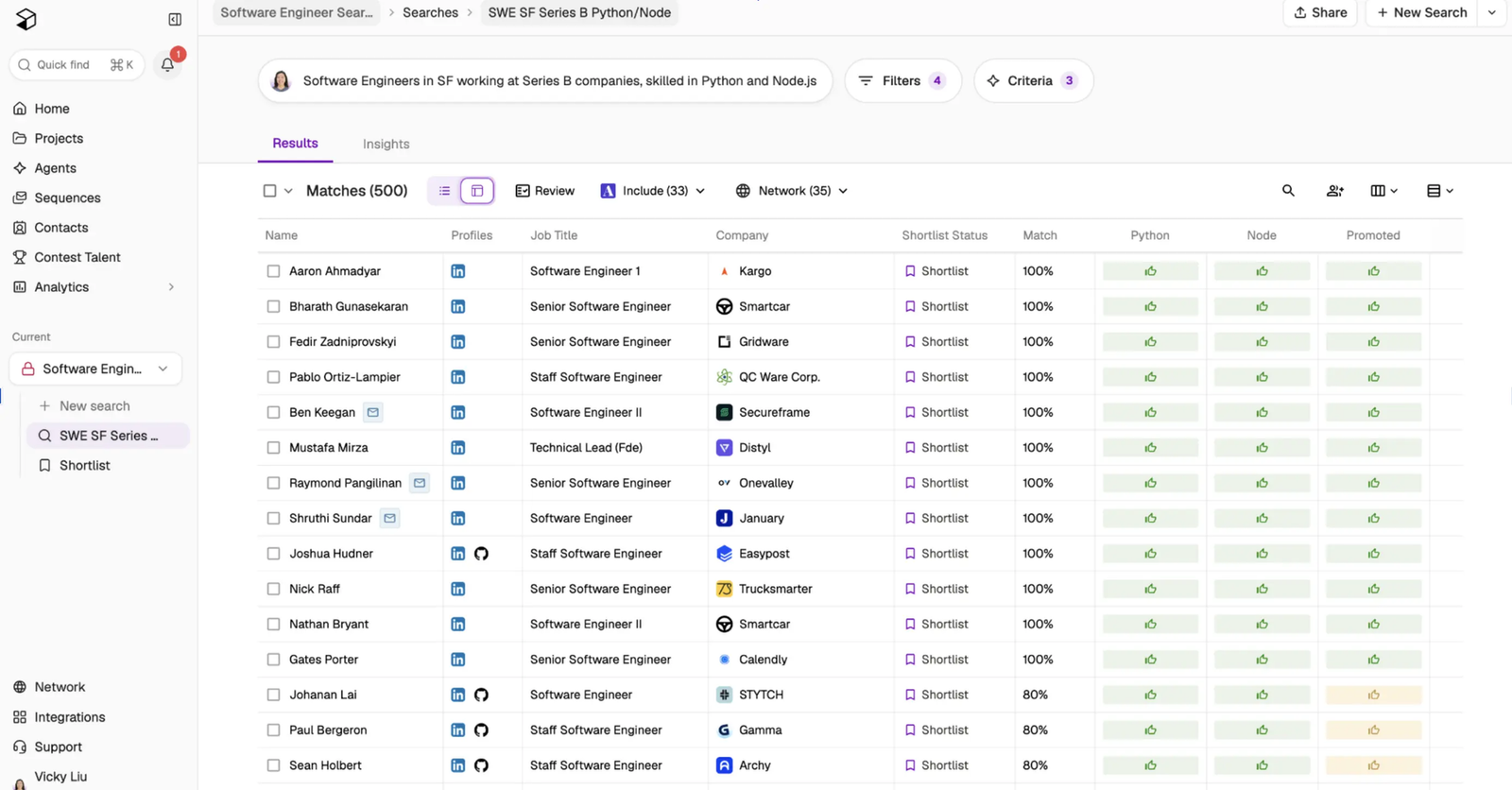
Juicebox is nice when finding the right people is the main bottleneck, even if it doesn’t automate the full process like fillmore. Recruiters can search with more nuanced criteria than a typical keyword-based database allows and use AI to explore and refine the talent pool.
Pricing: Free trial available; Starter from $99/user per month; Growth from $179/user per month.
3. Gem: recruiting CRM and engagement.
Gem is a recruiting CRM and talent engagement platform to organize and scale outbound. It brings candidate relationships, outreach, pipeline management, and recruiting analytics together, making it particularly useful for larger TA teams.
For outbound recruiting, Gem helps you build talent pools, create outreach sequences, track engagement, and nurture promising candidates over time. Recruiters can automate repetitive tasks see which campaigns, messages, and channels are actually producing results.
Its CRM capabilities are a major strength. Instead of treating every sourcing campaign as a fresh start, teams can maintain relationships with previous prospects and rediscover candidates already in their network. That makes Gem particularly useful for organizations that invest heavily in long-term talent pipelines.
But Gem is still fundamentally infrastructure for recruiters running outbound. Automation can reduce the manual work involved in campaigns and follow-ups, but recruiters remain responsible for building and managing the pipeline. Compared with fillmore, you're getting a sophisticated outbound workspace rather than delegating the job itself.
Pricing: Talk to sales for details.
4. hireEZ: Best for combining sourcing and candidate engagement.
hireEZ combines AI-assisted talent search with candidate engagement, contact information, and recruiting integrations. It's designed to help recruiters move from finding potential candidates to contacting them without stitching together as many separate sourcing and outreach tools.
Search across a broad talent pool using AI-assisted criteria, with candidate profiles enriched by information gathered from multiple sources. Then find contact details, organize prospects into projects, and run engagement campaigns from the same platform.
hireEZ is a good middle ground for teams that want more than a recruitment database. There are useful automations throughout the workflow, particularly around search, candidate matching. Recruiters can get through outbound work considerably faster than with a fully manual process.
But the recruiter still drives that process. You initiate searches, evaluate results, build candidate pools, and oversee engagement. hireEZ automates parts of outbound recruiting; it doesn't take ownership of outbound recruiting.
Pricing: Request a demo for full details.
5. SeekOut: deep candidate discovery.
SeekOut is a talent sourcing and intelligence platform built to find niche or specialized candidates. Candidate data, powerful search and AI make discovery easier and more tailored.
Recruiters use SeekOut to uncover candidates beyond their immediate networks. Its broader talent intelligence capabilities can also help teams understand talent pools and make more informed decisions about where and how to search.
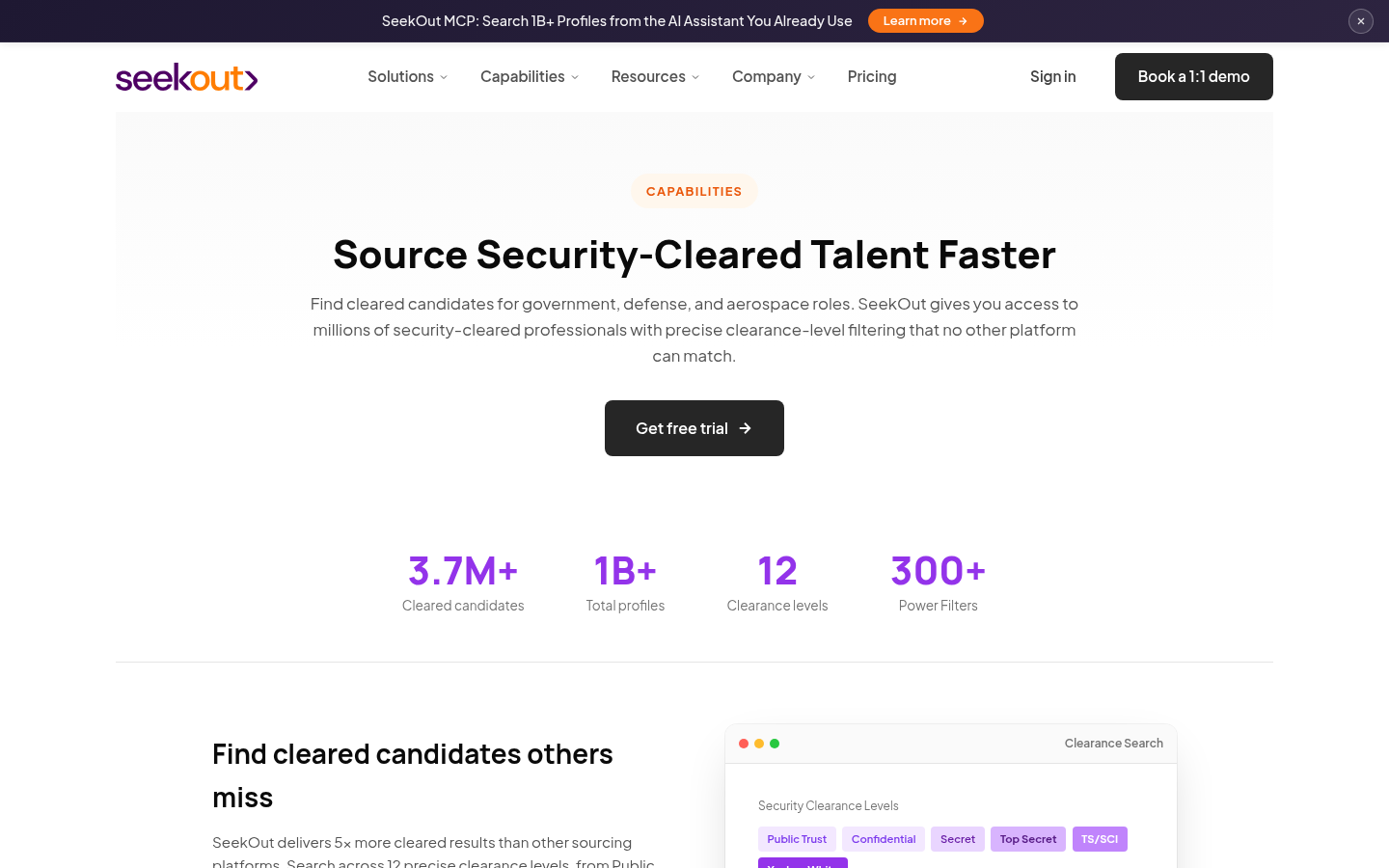
That depth makes SeekOut valuable for specialized or hard-to-fill positions. If your biggest outbound challenge is simply identifying enough genuinely relevant people, its search and candidate intelligence can give recruiters a much stronger starting point.
But finding the right people is only one part of outbound. Recruiters still need to steer the search, decide who to pursue, and manage much of what happens after discovery. SeekOut is better understood as a powerful candidate discovery platform than an autonomous outbound recruiter.
Pricing: SeekOut Recruit Core starts at $149/month. Custom plans are available by request.
6. LinkedIn Recruiter: access to the LinkedIn talent network.
LinkedIn Recruiter is the default outbound sourcing tool for many hiring teams. It gives recruiters direct access to LinkedIn's enormous professional network, with advanced search filters, candidate recommendations, projects, and InMail for contacting potential hires.
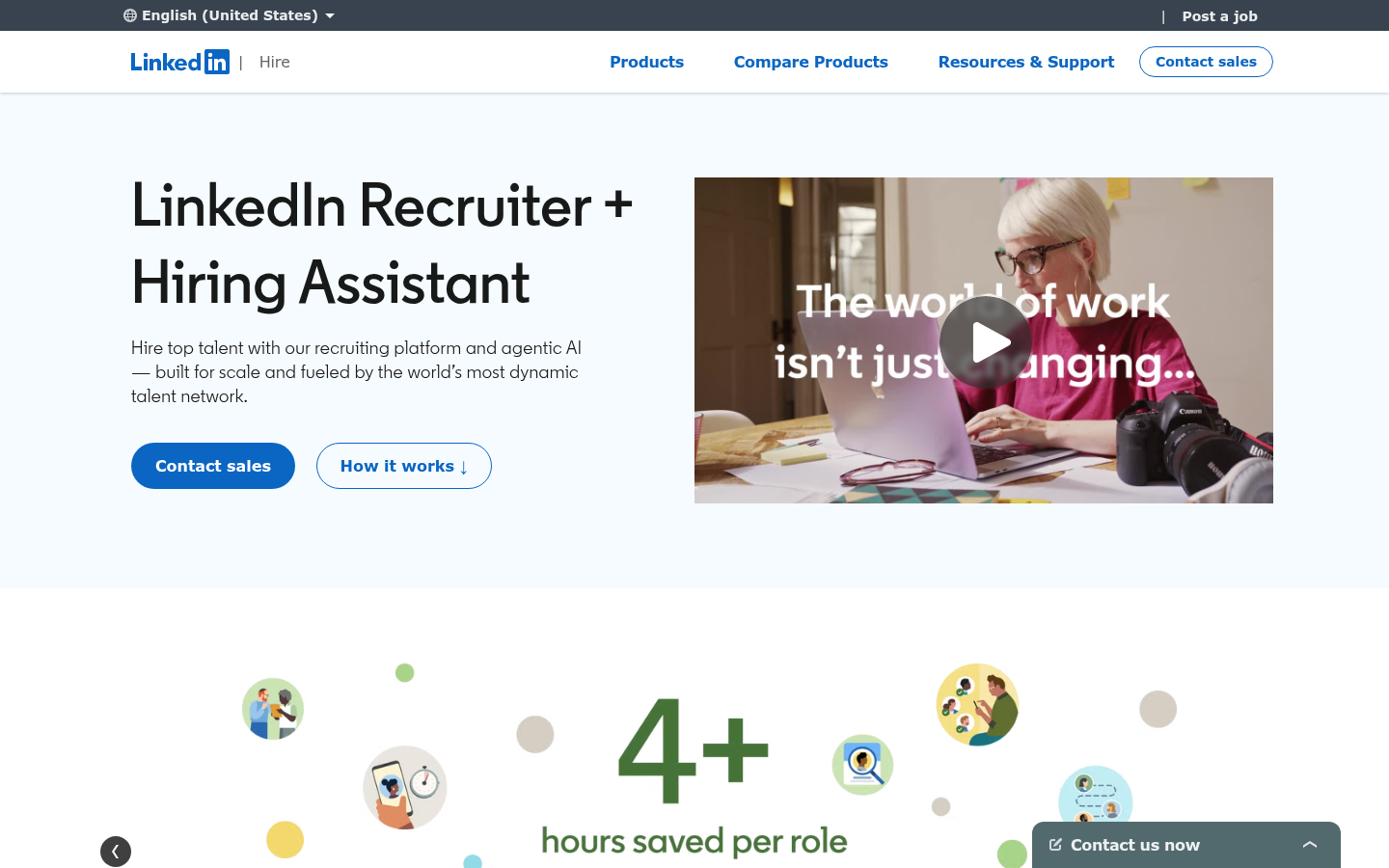
One of its biggest advantages is the data itself. Candidates maintain their own LinkedIn profiles, so you should get current information on roles, employers, experience, skills, and career moves.
And most recruiters already know how to search LinkedIn, and candidates are accustomed to hearing from recruiters there. But you still need to run the searches yourself, inspect profiles, decide who's worth contacting, craft outreach, manage responses, follow up, and move interested candidates forward.
LinkedIn Recruiter gives you access to the talent pool; it doesn't run outbound recruiting for you.
Pricing: LinkedIn Recruiter Lite typically costs $170-270 per month, but most teams will need custom pricing.
7. Ashby: outbound recruiting inside your ATS.
Ashby’s CRM and sourcing functionality make it a credible option for outbound recruiting, even if that’s not what it’s best known for. Teams already running their hiring process in Ashby can source prospects, organize talent pools, run outreach sequences, and track candidate relationships without adding a separate recruiting CRM.
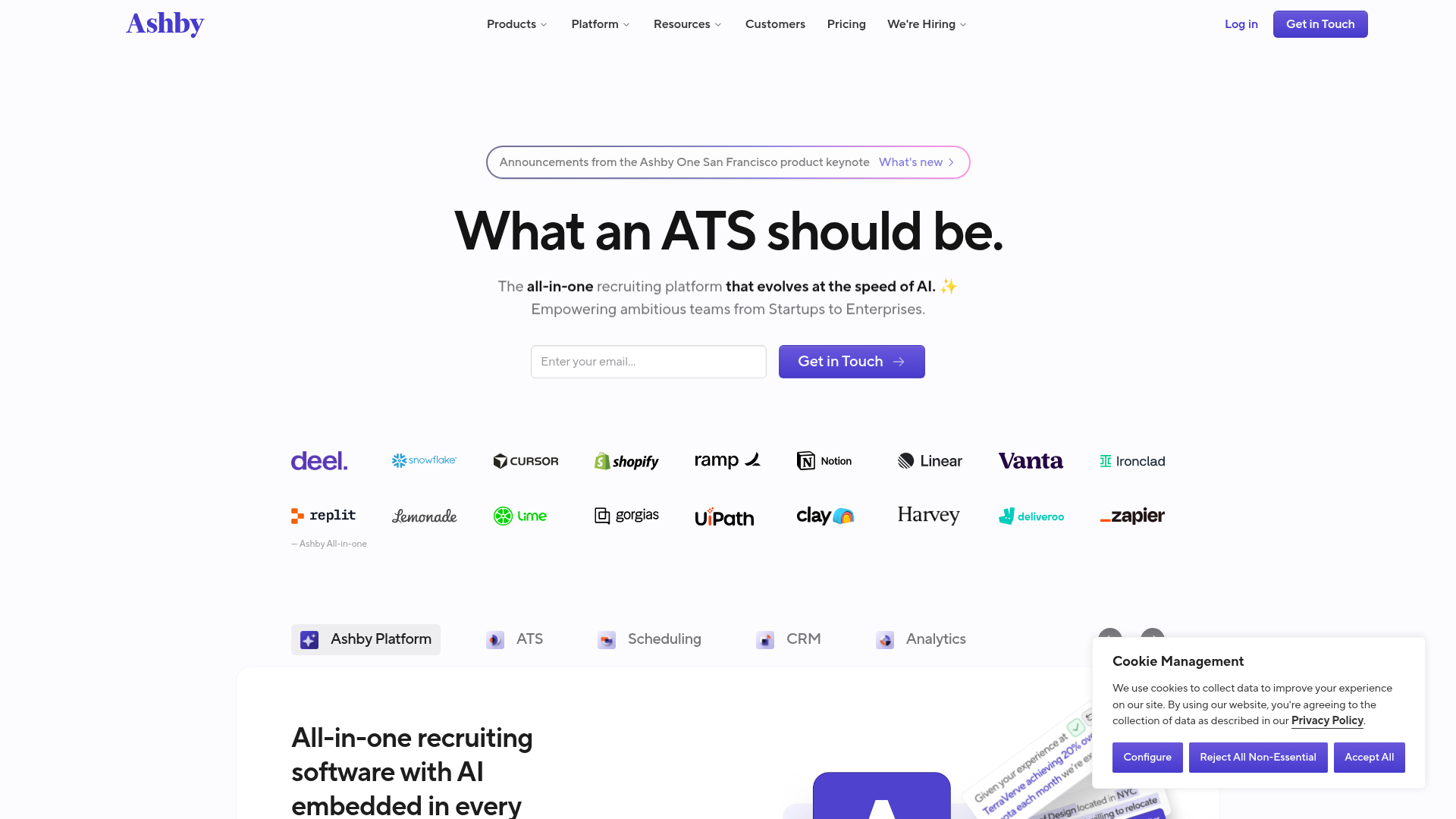
Consolidation keeps candidate activity closer to the rest of the hiring process, reducing the need to move between a sourcing tool, CRM and ATS.
Ashby also provides useful outreach and candidate management automation. It's a different proposition from fillmore, though. With Ashby, recruiters are still searching, choosing candidates, managing campaigns, and keeping the pipeline moving.
Pricing: Foundations plan from $400 per month; Plus and Enterprise plans available by request.
8. Loxo: all-in-one recruiting platform.
Loxo takes an all-in-one approach to recruiting, combining ATS and CRM functionality with candidate sourcing, contact data, outreach, and AI features. Rather than buying separate tools for each stage of outbound, teams can manage much of the process in one place.
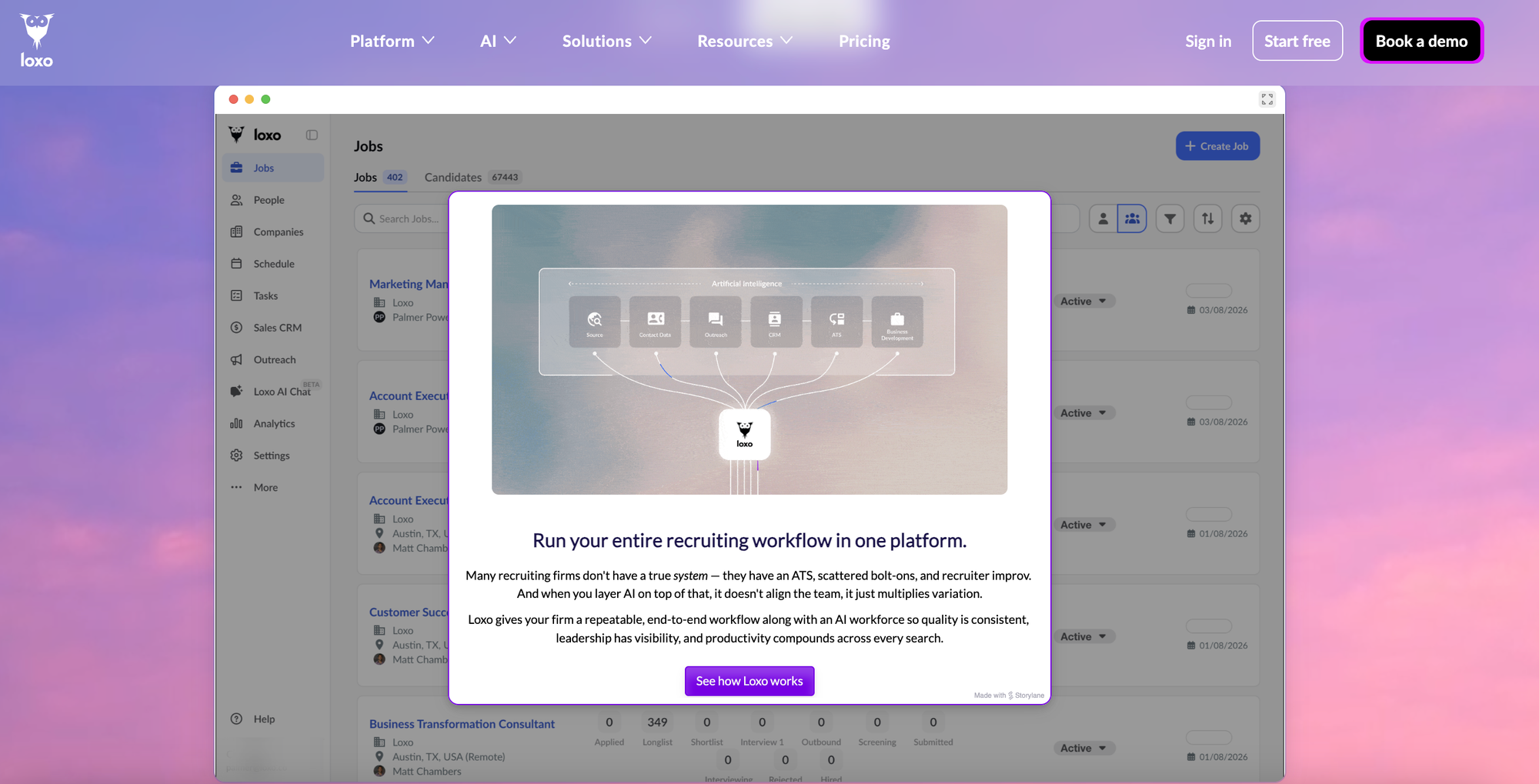
For sourcing, Loxo helps you discover candidates and access contact information before moving prospects into outreach workflows. The CRM then gives teams a place to manage relationships and keep track of candidates over time, while automation helps reduce some of the repetitive work involved in engagement.
Breadth is Loxo's main appeal. It's useful for teams that have accumulated recruiting point solutions and would rather bring sourcing, outreach, and candidate management together.
But an all-in-one platform still needs someone to operate it. Recruiters remain responsible for directing searches, screening candidates, overseeing outreach, and managing the resulting pipeline. Loxo can consolidate and automate parts of outbound, but it’s not a truly autonomous outbound recruiting tool.
Pricing: Core plan from $149/user per month; Professional plan from $199/user per month.
9. Findem: data-driven talent search.
Findem is an AI-powered talent acquisition platform with a strong focus on rich candidate data. Rather than relying on job titles and keywords, recruiters search using a person's experience, skills, background, and career trajectory.

This approach is particularly useful when the person you want is difficult to describe. Recruiters can build more nuanced talent pools, use AI to identify matches, and draw on Findem's talent data to understand candidates before reaching out.
Teams get a more connected workflow, from identifying potential candidates to building and engaging outbound pipelines. It's a sophisticated approach to finding talent, but the recruiter is still heavily involved in directing the process. Findem provides the data and intelligence to run better outbound searches, but you still need to do the searching yourself.
Pricing: Book a demo for details.
10. AmazingHiring: technical sourcing.
AmazingHiring stands apart from most tools on this list because it's built specifically for technical recruiting. You find developers, engineers, data specialists, and other technical candidates by bringing together professional information from sources beyond the typical resume or LinkedIn profile.
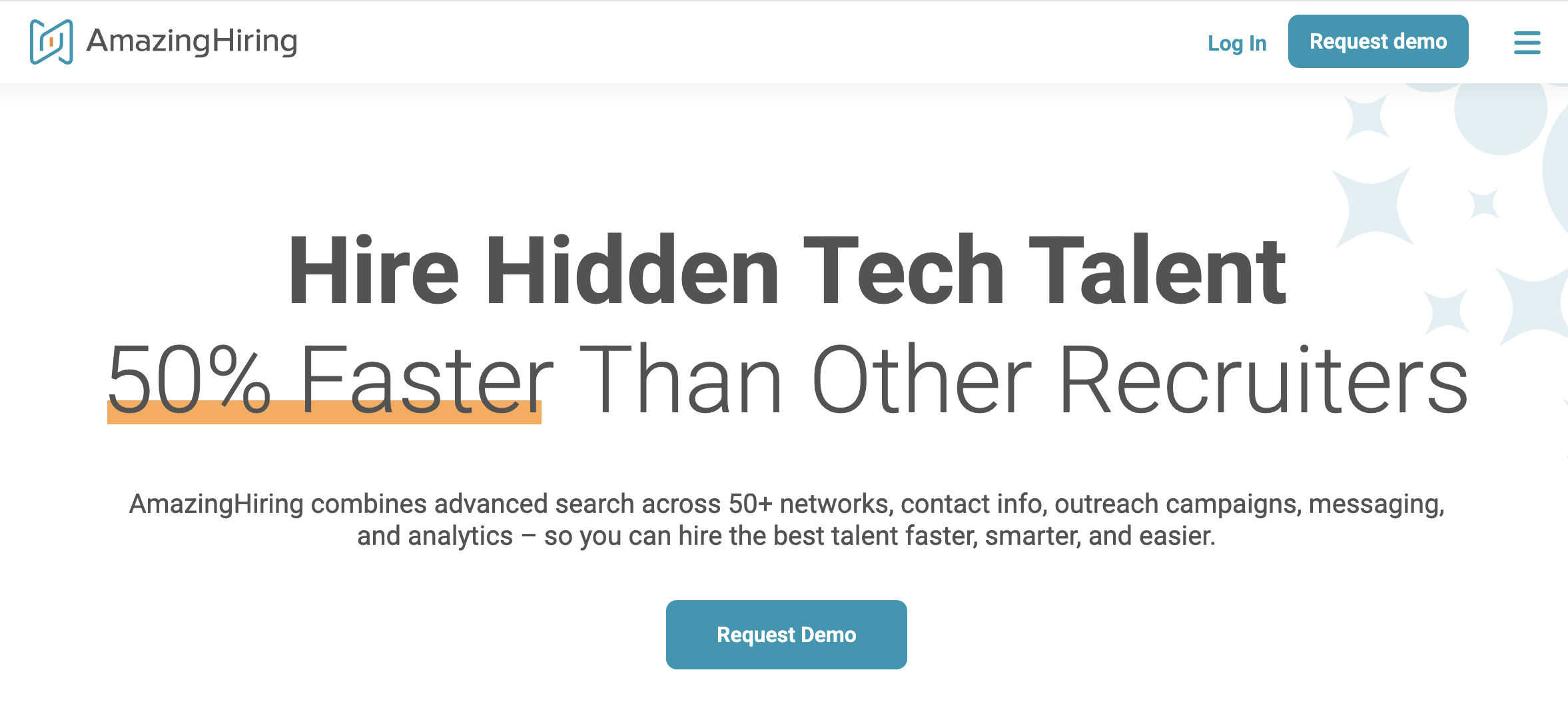
AmazingHiring also provides contact information and outreach, helping technical recruiters move from discovery to engagement. But its main strength remains specialized candidate sourcing, rather than end-to-end outbound automation.
That makes it a strong option when technical talent discovery is the specific problem you're trying to solve. For companies hiring across sales, marketing, finance, operations, and other functions as well, a broader outbound platform will typically be a better fit.
Pricing: Request a demo for pricing details.
Outbound recruiting platforms compared: assistance, automation, or autonomy?
The tools above all make outbound recruiting easier, but they don't necessarily make it easier in the same way.
At one end are candidate access and discovery tools like LinkedIn Recruiter, SeekOut, and AmazingHiring. Their biggest value is helping recruiters find people they might otherwise miss.
Platforms like Juicebox, hireEZ, and Findem bring more AI into the process to search, research, and engage candidates faster. Gem, Ashby, and Loxo go broader again, adding CRM, sequences, automation, and workflow management so teams can run outbound more efficiently.
And then there's autonomous outbound, led by fillmore. You brief it, define how much autonomy it has, and let it source, vet, research, contact, follow up with, and book candidates.
Do you want to give recruiters better tools for doing outbound, or give them back the time they're currently spending on it?
There's no shortage of software that can make a good sourcer faster. But when recruiter capacity itself is the bottleneck, improving the workflow only gets you so far. Removing that flow from their workload altogether is a fundamentally different proposition.
The easiest outbound recruiting runs itself.
Making sourcing faster still means sourcing. Making outreach easier still means managing outreach. And adding another platform can sometimes leave recruiters with a more sophisticated version of the same workload.
fillmore takes a different approach. Brief it on the role, tell it how you want outbound handled, set your guardrails, and decide how much autonomy you're comfortable with. It handles the search, vetting, research, outreach, follow-ups, and bookings, while your recruiters focus on the conversations where human judgment actually matters.
We fill your calendar. You hire more candidates.
Outbound recruiting that runs itself.
Fillmore is the AI coworker that finds candidates, runs personalized outreach, and books screening calls. Autonomously.
FAQs.
What are the best outbound recruiting tools?
The best tool depends on what you need from outbound. LinkedIn Recruiter is a strong choice for accessing LinkedIn's professional network, Juicebox offers AI-native candidate search, Gem combines CRM and talent engagement, and AmazingHiring specializes in technical sourcing.
For teams that want to automate the entire top-of-funnel workflow rather than give recruiters another sourcing tool to operate, fillmore is the strongest option. It can source, research, vet, contact, follow up with, and book candidates autonomously.
What is the easiest outbound recruiting platform to use?
Ease of use isn't only about having a simple interface. The easiest outbound recruiting platform may be the one that requires the least ongoing recruiter involvement.
Juicebox can make candidate search much easier, while platforms like Gem can streamline outreach and pipeline management. fillmore goes further by executing the outbound workflow itself, so recruiters don't need to spend their time operating sourcing searches and campaigns.
Can outbound recruiting be automated?
Yes. Many outbound recruiting platforms automate individual tasks such as candidate matching, contact enrichment, message generation, sequencing, and follow-ups.
Autonomous recruiting goes further by connecting those tasks into a workflow that can run with limited human intervention. fillmore can manage the process from a hiring brief through to booked interviews, while recruiters decide how much approval and oversight they want for each role.
What is the difference between sourcing software and outbound recruiting software?
Sourcing software primarily helps recruiters find potential candidates. This usually includes candidate databases, search filters, AI matching, profile enrichment, and other discovery features.
Outbound recruiting software can cover a broader workflow, including candidate research, outreach, follow-ups, relationship management, and scheduling. Some platforms combine both, while autonomous tools can execute these stages as a connected process.
What outbound recruiting tool is best for technical hiring?
AmazingHiring is a strong specialist option for technical sourcing because it's designed around discovering developers, engineers, data professionals, and other technical talent across multiple sources.
SeekOut and LinkedIn Recruiter offer broader candidate discovery capabilities that can also work well for technical roles. For teams whose main problem is recruiter capacity rather than technical candidate discovery specifically, fillmore can automate outbound across technical and non-technical roles.
Can AI handle outbound recruiting?
AI can already handle much of the operational work involved in outbound recruiting, including candidate discovery, research, vetting, personalization, outreach, and follow-ups.
The important question is where humans should remain involved. Recruiters and hiring managers bring judgment, persuasion, relationship-building, and context to candidate conversations. A strong autonomous workflow removes the repetitive work required to get the right candidates into those conversations in the first place.


